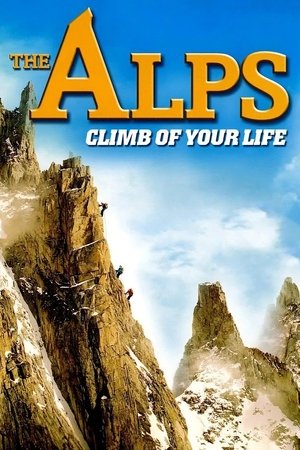
In southern Germany, winter can still be admired in all its glory every year. With its white coat of snow and icicles and myriads of small crystals that look like geometric works of art. In the valleys and on the slopes the snow is still so thick every year that the alpine huts are snowed in up to the windows. Cows and dairymen are safe in their farms at lower altitudes. But not the wild creatures of the mountains! They need strategies to survive the cold season and to defy snow masses, cold and ice. And some seem to do it so easily that they even raise their young in the middle of winter. But how do animals, plants and fungi cope with the annually recurring ice age, which from our perspective is a time of need? The many adaptations in nature prove that winter is an integral part of the natural cycle of the year and the living environment of species. They are adapted to cold and frost. That is why the animals and plants at the edge of the Alps suffer particularly from climate change!
In 1961 the southern face of the Central Pillar of Mont Blanc was still unclimbed. Two roped parties of climbers decided to come together to attempt to open a new route. Four days of violent storms caught the climbers just 80 metres from the summit. Of the seven climbers, only three returned home. One of the most intense and dramatic events in the history of climbing relives on the big screen, thanks to accounts and images of the feat.
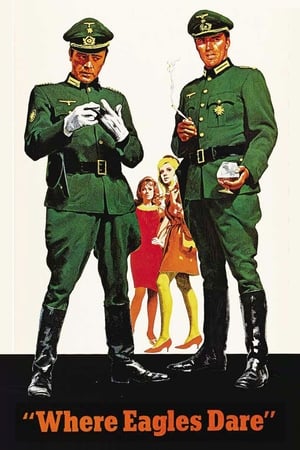
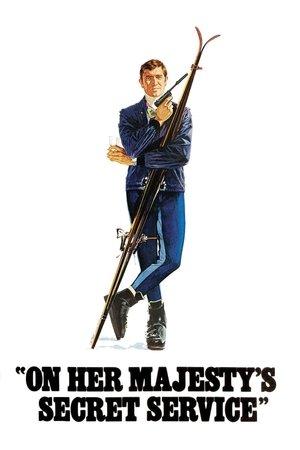
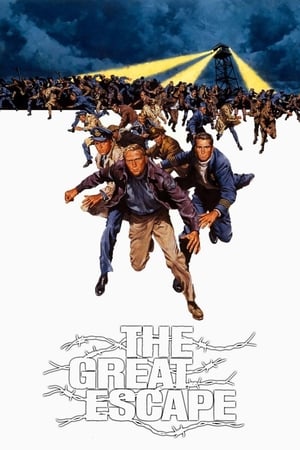
World War II is raging, and an American general has been captured and is being held hostage in the Schloss Adler, a Bavarian castle that's nearly impossible to breach. It's up to a group of skilled Allied soldiers to liberate the general before it's too late.
Chamonix - Mont Blanc, Une histoire de conquêtes
The Nazis, exasperated at the number of escapes from their prison camps by a relatively small number of Allied prisoners, relocate them to a high-security 'escape-proof' camp to sit out the remainder of the war. Undaunted, the prisoners plan one of the most ambitious escape attempts of World War II. Based on a true story.
A documentary portrait of the legend Eric Escoffier at the height of his mountaineering career. A true athlete, Escoffier has comprehensive, cutting-edge preparation in three different climbing disciplines: rock climbing, ice climbing and solo free climbing, without any safety devices. Philippe Lallet's camera follows Eric in his performances and in his preparation for one of the first La Sportroccia climbing competitions, in 1985 in Bardonecchia in Italy.
Surrounded by the mountains and people who are his inspiration, in ‘Path to Everest’, the mountain athlete Kilian Jornet reveals his most intimate fears, contradictions and passions. Summits of My Life is the personal project of Kilian Jornet, in which for five years he has traveled to some of the most important peaks of the planet to try to establish FKT (fastest known time) of ascent and descent of some of the most emblematic mountains of the world. The project is closely linked to values and a way of understanding the purist and minimalist mountain. The experiences lived in each challenge have been captured in different films.
In 1966, John Harlin II died while attempting Europe's most difficult climb, the North Face of the Eiger in Switzerland. 40 years later, his son John Harlin III, an expert mountaineer and the editor of the American Alpine Journal, returns to attempt the same climb.
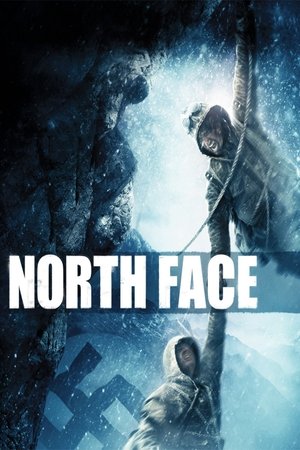
North Face tells the story of two German climbers Toni Kurz and Andreas Hinterstoisser and their attempt to scale the deadly North Face of the Eiger.
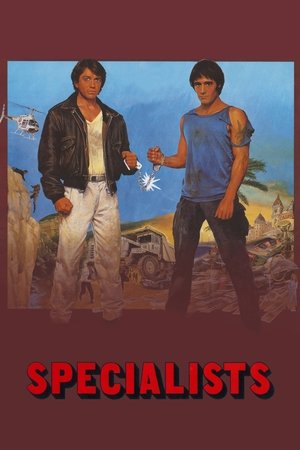
A classical art professor and collector, who doubles as a professional assassin, is coerced out of retirement to avenge the murder of an old friend.
Looking at whether the history of early human evolution should be rewritten. For decades, most experts have been convinced that Africa is the cradle of mankind and many fossil finds from Kenya, Ethiopia, South Africa and Chad seemed to prove it.
Filmmaker Claudia Hefner showcases the Kramerterhof, an Alpine estate which Sepp Holzer has transformed from an ordinary farm into a paragon of permaculture. Spectacular aerial photography helps viewers to appreciate the magnificence of the landscape and the efficiency of the property.
Follows freeskiers Heitz and Anthamatten as they travel to the world’s high-altitude mountain ranges and attempt to make their distinct mark on those giant peaks, exploring the absolute limit of human possibility.
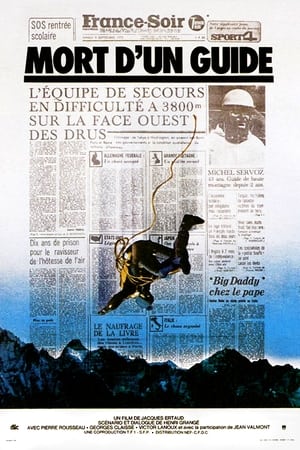
Death of a Guide
Herdsman Fabiano will be a father soon. He owns fifty goats and eight cows and is trying his best to produce the alpine cheese that his hippie parents made a name for themselves with in the '70s, in an isolated valley of Ticino. But nothing is going the way it should. He's in debt, and feels guilty for a fatal accident which occurred the previous year, which haunts him. How can he and his girlfriend build a life together under such difficult circumstances?
In the austere "Horseshoe Cirque", attempts on ice are so impressive and require such a high degree of skill, that after a discrete beginning in 1976, there was a wait of twenty years before new pioneers dared the challenge. Each has returned, marked for life by the extraordinary experience. The opening of The White Witch in January, 2006 by Philippe Batoux, François Damilano and Benoît Robert was the occasion to revisit this emblematic site. Here is an exceptional panorama where incredible ice formations give way to challenging rocky climbs and vibrant testimonials...
Cumbre
He climbed solo, without a rope, the north face of the Eigers in 2h47. Below him the rock wall steigen über 1000 Meter ab. Mehr Ueli Steck, the lone wolf, does not lose his temper. For a year, Steck has meticulously prepared this record of less than three hours. The portrait of an extraordinary man who takes us on a journey to the most beautiful and challenging peaks in the world.
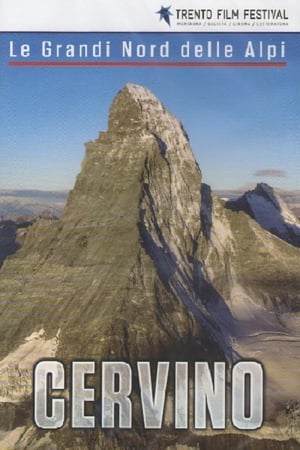
Six big north faces of the Alps. The film consists of six films: "Die Wand der Wände" (Eger by Robert Jasper, Roger Schäli), "Das letzte Wort hat der Berg" (Matterhorn by Michael Lerjen, Jorge Ackermann), "Selig, wer in Träumen stirbt" (Grandes Jorasses by Felix Berg, Robert Steiner), "Licht und Schatten" (Piz badile by Hansjörg Auer), "Grenzen der Felskletterei" (Drei Zinnen by Alexander Huber) and "Der zerfallene Berg" (Petit Dru by Steve House, Andy Parkin).
Armin Linke’s Alpi is the result of seven years of research on contemporary perceptions of the landscape of the Alps, juxtaposing places and situations across all eight bordering nations. Alpi shows the Alps as a key location, owing to its delicacy and environmental importance, where one can observe and study the complexity of social, economic, and political relationships. Even if the imagery of Alps is still that of a world that is pre-modern, Alpi presents that unique landscape as a laboratory of modernity and its illusions.