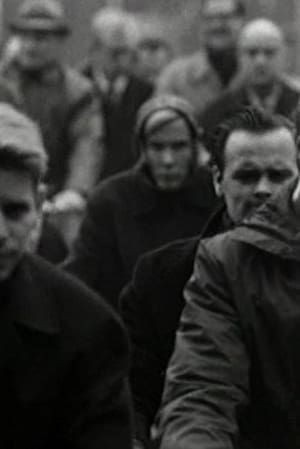
Rhythmic composition of moving photographs of cyclists in Amsterdam, ‘set’ to Vivaldi’s The Four Seasons.
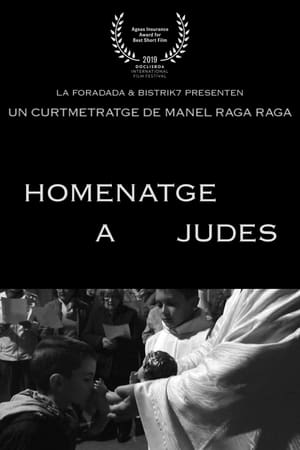
Manel has been kissed by all the old women in the village. From the passion of Christ to the olive trees in the Catalan countryside, a landscape of resistance that evokes a sour humour, and at the same time a silence from times gone by.
This short film demonstrates how Howard Shore has distinguished himself as one of Canada's most accomplished - and versatile - composers. During woodland rambles with his beloved dogs, Shore gives free rein to his ceaseless creativity. Whether composing delicate counterpoint or Oscar®-winning movie music, Shore is keenly tuned to a remarkable range of musical expression.
Két arckép
An animated film is built from real interviews in Upstate NY.
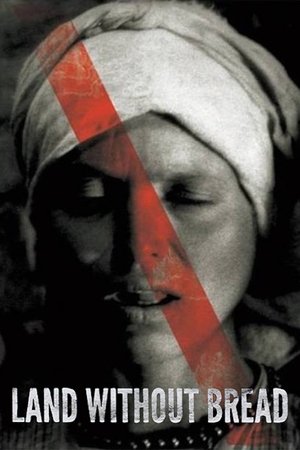
An exploration —manipulated and staged— of life in Las Hurdes, in the province of Cáceres, in Extremadura, Spain, as it was in 1932. Insalubrity, misery and lack of opportunities provoke the emigration of young people and the solitude of those who remain in the desolation of one of the poorest and least developed Spanish regions at that time.
On the Sorrento peninsula, orange and lemon groves stretch all the way to the coast. In the orange plantations, the high wooden frames are covered with mats to protect the trees from intense sunlight. The function of the artificial irrigation system is demonstrated. The oculation of trees is demonstrated in a young plantation. The oranges are cleaned on the spot, then sent to the laundry, cleaned, dried and made ready for dispatch. In a lemon plantation, many pickers stand on ladders on a tall tree and remove the fruit. The lemons are sorted, wrapped in tissue paper and packaged in home and large-scale factories. Before being exported, the goods are checked again for quality.
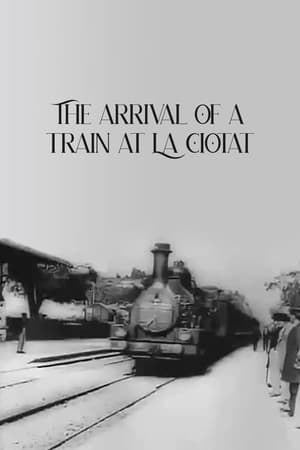
A group of people are standing along the platform of a railway station in La Ciotat, waiting for a train. One is seen coming, at some distance, and eventually stops at the platform. Doors of the railway-cars open and attendants help passengers off and on. Popular legend has it that, when this film was shown, the first-night audience fled the café in terror, fearing being run over by the "approaching" train. This legend has since been identified as promotional embellishment, though there is evidence to suggest that people were astounded at the capabilities of the Lumières' cinématographe.
Hassouni, 17 years old, makes his royal blue car dance on the tarmac. Drifting is his life. He devotes all his time to it. It has become a small celebrity in the field. They call him "Hassouni the King". His friends are proud of him. His family does not stop praising either. "He has always had it in his blood," says his father.
Giuseppe Orlandi is an alpine rescuer who has lived and worked in the shadow of The Grigna, a massif in the province of Lecco, for over fifty years. As a member of the XIX Lariana Delegation of The CNSAS Lombardia mountain rescue group, he has saved hundreds of lives. Filmmaker Achille Mauri traveled across the beautiful yet treacherous mountain face to profile Orlandi—known to many as “Il Calümer”—in the terrain that the Italian knows best. The heroic deeds that Orlandi has carried out over the years have, for the most part, only been acknowledged by the people he has saved. With the release of this documentary profile, Mauri wants to shine a spotlight on the courageous work of Orlandi and other voluntary mountain rescuers like him.
Sohaila, Zahra and Zeinab train every day. Their dream is to become professional fighters and to show the world that all people are equal. Director Lukas Tielke and his team spent a week in Malakasa refugee camp, outside Athens, getting to know these inspirational young Afghan women.
Between 2014 and 2020, photographer Matt Black traveled 100,000 miles across 46 American states to look behind the veil that keeps America’s poor in the shadows. Beginning in his home region of the Central Valley, his extensive documentary project, American Geography, unravels in a series of black-and-white photographs that poetically capture communities living below the poverty line. Un-American Dream is a moving image survey, filmed by director Joppe Rog, throughout California’s Central Valley.
The film shows the bronze door of Bernward of Hildesheim in its individual fields. The door shows Old and New Testament stages of the events of salvation: from the creation of man to the fratricide of Abel; from the angel's proclamation to Mary to the presentation of Jesus in the temple, the capture of Jesus to the encounter of the risen Christ with Mary Magdalene. Careful camera work - supported by careful lighting - succeeds in doing justice to the monumental size of the work.
Four documentary scenes with subtitles document the year 1917 as the beginning of a new era. In addition to the military situation and the supply situation in Germany, the intervention of the USA and the events in Russia are shown in particular.
Memory is a collaboration with musician Noah Lennox (Panda Bear), exploring the relationship between a musician and filmmaker and their personal reflection on memories. From Super 8 home movies and entirely handmade, this film explores familiar memories, the present moment combined with past experiences and how it all seems to evade from our present memory.
O Que Nos Separa
A silent film portraying winter across three continents.
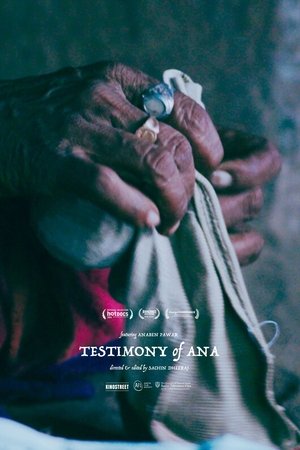
Anaben Pawar is an elderly tribal woman accused of witchcraft in rural India. Through Ana's story, we delve into a deep-rooted culture of patriarchy and examine one of the most monstrous attacks on women's bodies in modern India: the witch-hunt.
In October, during the tense days of the Nagorno-Karabakh war, the director takes his camera to the village of Ashagi Nuvedi in Lankaran. The film follows the daily lives of fishermen — Sakhavat, Ramesh, Rza and Tehran — living in the shadow of the war. They go out to sea every morning amid news from the front, fearing empty nets, and hoping for a miracle — a goldfish in difficult days.
A super 8 projection which references the essay “On the Jewish Question” by Karl Marx.