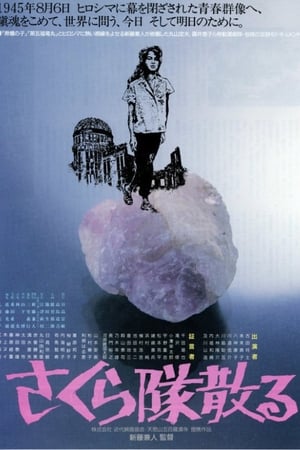
A documentary about the lives of actors in the Sakura-tai theatrical troupe, which had arrived in the island of Hiroshima to begin preparations for the staging of a play just before the atomic bombing.
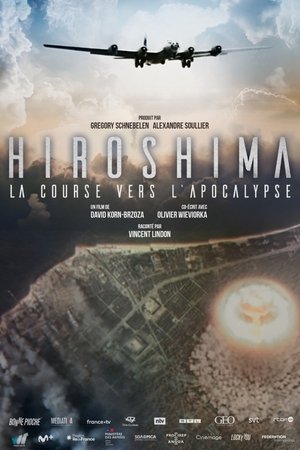
The documentary recounts the world's first nuclear attack and examines the alarming repercussions. Covering a three-week period from the Trinity test to the atomic bombing of Hiroshima, the program chronicles America's political gamble and the planning for the momentous event. Archival film, dramatizations, and special effects feature what occurred aboard the Enola Gay (the aircraft that dropped the bomb) and inside the exploding bomb.
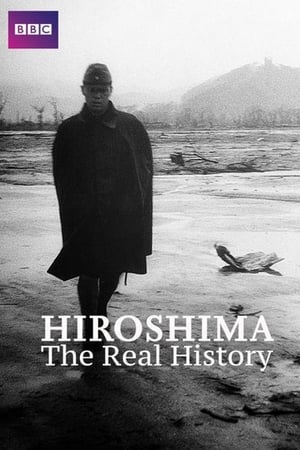
Combining personal accounts with archive footage, this film features the voices of some of the only people left on earth to have survived a nuclear bomb.
Hiroshima: The Race Toward the Apocalypse
Brand new documentary marking the 70th anniversary of the Hiroshima and Nagasaki bombings which ended WWII and began the nuclear age. Features interviews with survivors from both sides.
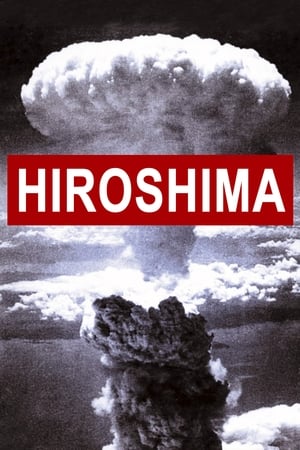
On August 6 1945 The Us Dropped An Atomic Bomb On Hiroshima Aiming To Force Japans Surrender In WWII The Explosion Killed Over 70000 Instantly With Tens Of Thousands More Dying From Burns Radiation And Injuries The City Was Leveled Survivors Faced Lifelong Trauma Illness And Stigma As The World Confronted Nuclear Horror For The First Time
A story about the effect of the atomic bombing of Hiroshima on a boy's life and the lives of the Japanese people.
Three years after the Hiroshima bombing, a teenager helps a group of orphans to survive and find their new life.
The Seeds of Peace traces the work of Hideko Tamura Snider, who survived the atomic bombing of Hiroshima as a child. Decades later, she continues to spread the message of peace by collecting seeds from trees that survived the blast and spreading them across the Pacific Northwest. This is a film about remembrance, reconciliation, and hope. It examines how the trauma of history can be transformed into a force that unites people and builds bridges for future generations.
An approximation to the atomic bombing of Hiroshima by experimental animation artist José Castillo.
In South Africa’s abandoned mines, men scrabble for gold, using hand hammers and bicycle head-lamps, often remaining underground for days, often without food. Their survival is dependent on their hands – and luck. They are gamblers, or Zama Zama, who hope to scrounge a living from exhausted veins despite crumbling mineshafts and criminal overlords because at home in Zimbabwe they have nothing, there is nothing. The video footage is shot by miners with GoPros and in spite of harrowing conditions, we see uplifting camaraderie, caring collaboration and inspiring good cheer, as we are taken into their subterranean lives, guided by director-producer-anthropologist Rosalind Morris. Above ground, they smile. Gangsters prey on them, and the women cough from the glass-like dust of the rocks they crush by hand. But still they smile. An extraordinary story of human endurance, not to be missed.
Zaroorat Ki Purti
Joel Hunt served as a combat engineer from 1998-2007, with multiple tours in Iraq. While there, he endured more than 15 roadside bombs, and experienced a traumatic brain injury (TBI). Today, with the help of his dog, Barrett, he uses sports to push through the challenges of having a TBI.
Hidden Heart follows the stories of three second generation British Muslim women who find love outside their faith. The film delves intimately into their struggle to reconcile modernity with tradition; their internal conflicts and fear of ostracism and sheds light on the hidden tensions in our modern society between integration and tradition and the people who are at the heart of it. The film explores a new vision of cultural identity, defying the notion of a so-called 'clash of cultures' and challenging barriers to understanding between different communities. Although focusing on the lives of British men and women, the film will strike a chord with any and all of those around the world living in a tight-knit community, under pressure to maintain their identity.
Six episodes set in and focusing on the history of Brasília, the capital of Brazil. Episode list: A Paisagem Natural (dir. Vladimir Carvalho), O Sinal da Cruz (dir. Pedro Jorge de Castro), A Volta de Chico Candango (dir. Roberto Pires), Além do Cinema do Além (dir. Pedro Anísio), Suíte Brasília (dir. Moacir de Oliveira) and A Capital dos Brasis (dir. Geraldo Moraes).
Professor Dr. h.c. Karl Foerster - his cultivations and developments of wonderful perennials offer a wide range of possibilities for beautifying residential areas and gardens and creating space for recreation.
Witness if you will Gallus Domesticus--the backyard chicken. From healthy eggs to the family's new favorite pet, the chicken is forging a fresh place in the pecking order of human importance. From leading experts to suburban newbies, experience the humor and heart of what's fast becoming an international phenomenon--the return of the urban backyard chicken!
An experimental take on the true crime genre along a stretch of highway in the American West.
Among the ”Red Guards“ of China’s Cultural Revolution were foreign children, the sons and daughters of both European and American ex-pats who left their home countries to help build Mao’s China. Eventually, Chinese society turned against them and they were persecuted as foreign spies. Some served time in prison, others were sent to labor camps.
Eastern Ukraine, May 2014. Part of the historic Donbas region falls to pro-Russian separatists. Young journalist Stanislav Aseyev reports for several Ukrainian media outlets from Donetsk, his hometown. In May 2017, he is kidnapped and spends 962 days in detention, mainly in a former cultural center, converted into a prison, called Izolyatsia —or Isolation.