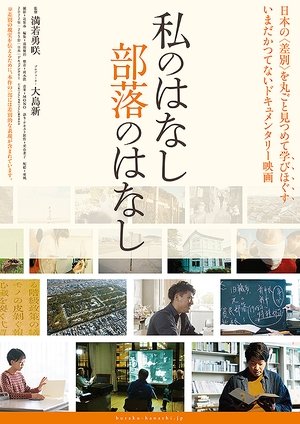
"Buraku" or "Buraku-min" are the terms used for ethnic Japanese people who are believed to descend from the pre-Meiji castes. Today, neither "Buraku" nor "Burakumin" exist anymore in terms of laws and social systems. However, many Japanese people still have a deep-rooted sense of discrimination towards people who descend from those families. Why does something that should not exist continue to exist? How did this discrimination begin in the first place? This film takes a variety of approaches to unravel the history of accumulated discrimination and its intricately intertwined context, from its origins and evolution, vividly depicting the structure of discrimination that often remains hidden from the public eye.
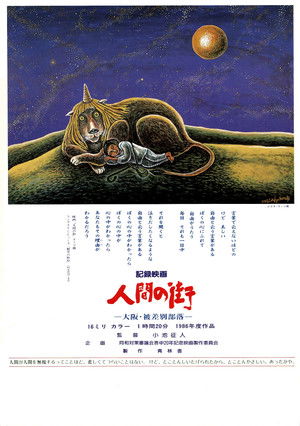
Interviews with Burakumin in Osaka, victims of discrimination
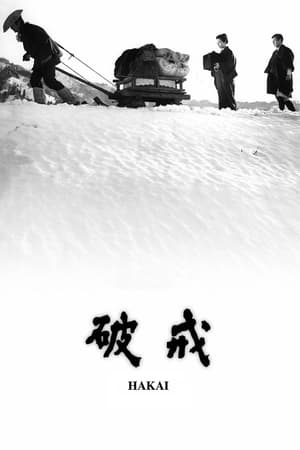
Brothers Koji and Seitaro Hatana, belong to the "outcast" caste. Despite their personal qualities—intelligence and fairness—they encounter numerous obstacles due to their caste affiliation. Together with other "outcasts," the brothers take up the fight for their human rights.
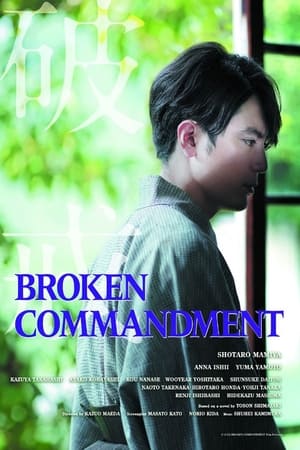
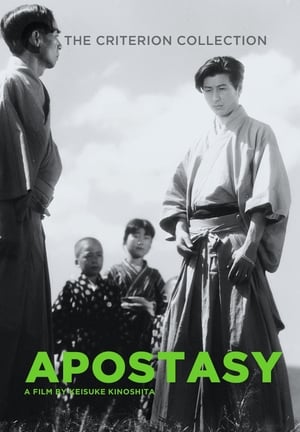
At the strong insistence of his father, Ushimatsu Segawa conceals his origins from a “buraku” area of low-class “untouchables,” leaving his hometown to serve as an elementary school teacher where he excels and is loved by his students. But he constantly struggles with the secret of his low-birth status and is disturbed by all of the discrimination levelled upon his class. It prevents him from pursuing a romance with Shiho, whom he meets at the temple where he resides, but who descends from a samurai family.
In the Meiji period, a schoolteacher tries to hide his lower-class upbringing as he supports a visiting liberal intellectual.
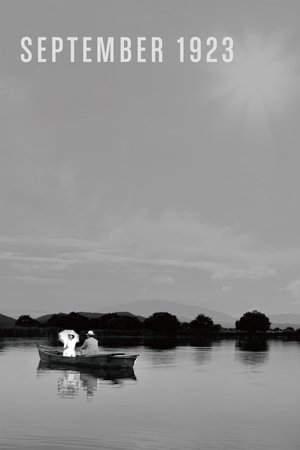
Based on the murder of nine street peddlers in the aftermath of the Great Kanto earthquake.
Ushimatsu's father told him never to reveal his lower-caste heritage; years later, he now contemplates confiding in an activist fighting against such discrimination.
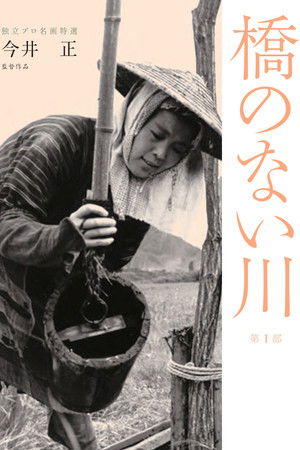
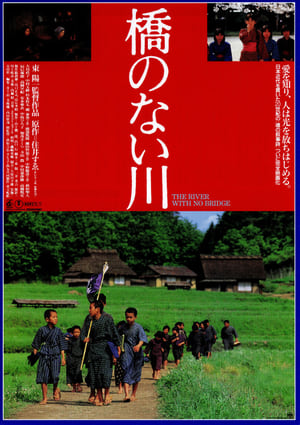
A widow and her two sons, Seitaro and Koji, live in the small town of Komori, where Buraku people are forced to reside. The two boys are continuously harassed by their teachers and classmates through their childhood as a result of their Buraku heritage. In the midst of the 1918 Great Rice Riots in Osaka, Seitaro meets with Asako, the daughter of a rice shop owner, and falls in love with her. She too is of Buraku descent. At the same period, Hideaki, an old friend of the brothers returns to Komori, and he along with Koji and the townspeople create "Zenkoku Suiheisha", the National Levelers Association, an organization pledged to build a bridge over the river of discrimination, making all people equal in every way.
A voyage from Earth to the edge of the universe.
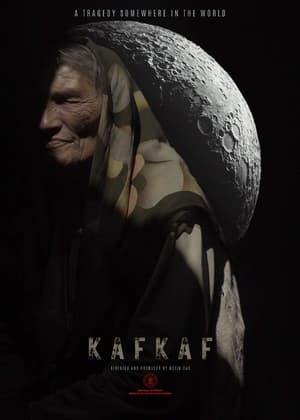
We are in Varto. On August 19th 1966, the peaceful silence of ancient lands was broken for 30 seconds. Those 30 seconds changed the destiny of many people for decades. Townsfolk run screaming from the earthquake, which is a mystery for them. People repeat the word “Kaf” to one another as they run away. Screams join the rumble of the roaring land. Houses are ruined, bodies are buried in the ground, snakes invade, bees attack, there is water shortage and great pain. Varto is in ruins. A new day comes, a month, a year and the story of a tragic journey continues for the people who survived. Survivors migrate to all corners of the country and the world. Varto was unknown in the world media until this terrifying incident. This film aims to witness the fate of a land and journey of the people who experienced the 1966 Varto earthquake, carrying its tragic marks for life.
ESPN Films’ latest documentary “Yankees-Dodgers: An Uncivil War” will debut Tuesday, September 27 at 9 p.m. ET on ESPN. In 1977 and 1978, the New York Yankees and Los Angeles Dodgers squared off in back-to-back World Series. Each club was a tenuous collection of talent and personalities that threatened to combust at any moment, but ultimately managed to reach the pinnacle of the sport. Produced by Mark Shapiro and Peter Guber in association with FILM45, directed by Fritz Mitchell and narrated by actor Rob Lowe, the documentary tells the story of a rivalry filled with colorful characters, seismic controversies and unforgettable moments.
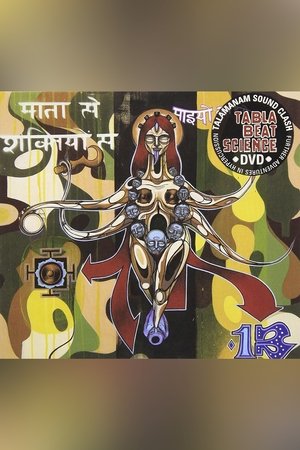
Filmed June 21, 2002 with 12 cameras at the legendary Fillmore in San Francisco, this DVD documents a Tabla Beat Science performance that features founders Zakir Hussain (Tablas) and Bill Laswell (Bass), along with Ustad Sultan Khan (Sarangi and Vocals), Ejigayehu "Gigi" Shibabaw (Vocals), Karsh Kale (Drums), DJ Disk (Turntable) and MIDIval PunditZ (Electronics). Directed by Alex Winter.
“The Fallbrook Story,” is a 20-minute film of Cold War-era uneasiness in which director Frank Capra rails against what he calls the evils of Big Bureaucracy. In 1951, Capra lived in Fallbrook, California on his 1,000-acre Red Mountain Ranch farm filled with olive groves. The federal government, which had purchased the old Rancho Santa Margarita land in 1941 to build Camp Pendleton, was concerned that ranchers upstream would take or pollute the Santa Margarita River, which ran through Camp Pendleton. Capra’s film documents how Fallbrook residents fought back against the federal government.
Perennially popular in China, paper-cutting is treasured for its ability to transform ordinary paper into intricately patterned, brilliantly colored works of art. This program, filmed in Hubei Province, charts the evolution of Chinese paper-cutting from traditional cutouts representing luck and health to modern visual art as it illustrates the designing, cutting, and coloring processes. Tsuwoo Wi, whose father was the only apprentice of the great Master Wang Lao Shang, is featured, along with Tsuwoo Tsuing, of Central Art College, Beijing.
Performances recorded as part of the American Dance Festival, at the Pilobolus Dance Theatre. Interviewees: Charles Reinhart, Stephanie Reinhart, Alison Chase, Michael Tracy.
Wayang Golék is the rod-puppet theater of Sunda (West Java), Indonesia, which incorporates a vibrant mixture of storytelling, songs, and instrumental music. This program introduces the Wayang Golék tradition, focusing on puppeteer, musician, and puppet-maker Atik Rasta and his family. The first part of the video features footage from an all-night performance, interwoven with interviews with the artists. The second part examines the music of the accompanying gamelan ensemble.
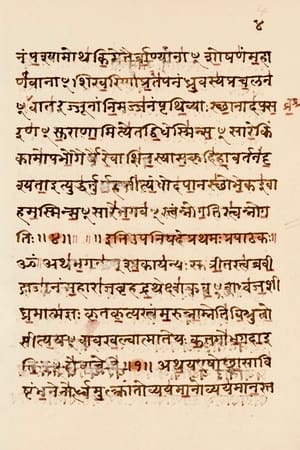
The Vedas are a large corpus of texts originating in Ancient India. Philosophies and sects that developed in the Indian subcontinent have taken differing positions on the Vedas.
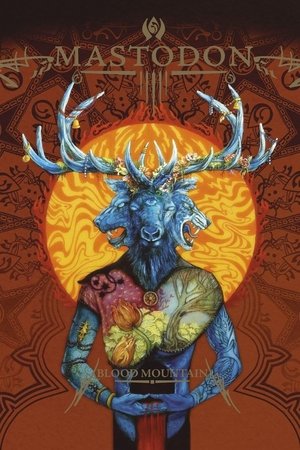
Video documentary of the making of Blood Mountain, the third full-length studio album and major label debut by American heavy metal band Mastodon.
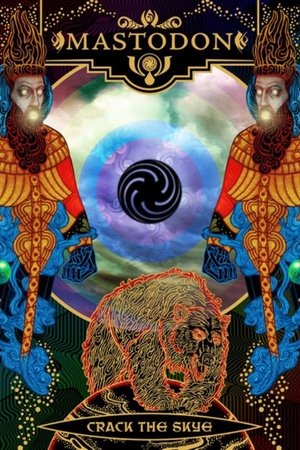
Video documentary of the making of Mastodon's Crack the Skye.
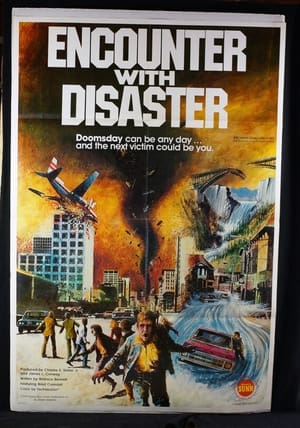
Depicts assorted natural and human disasters, including the crash of the Hindenburg (1937), earthquakes in Alaska (1964) and Long Beach (1933), the LeMans auto racing crash at which 82 people were killed (1955), Hurrican Camille (1964), the eruption of the Mt. Etna volcano (1971), a tornado (1974), the collapse of Idaho's Teton Dam (1976), the sinking of the Andrea Doria (1956) and the Texas City explosion which devastated Galveston (1947).