A festival of digestion on many scales, from planetary to microbial.
Care work, awareness-raising, waste reduction. Thieboudienne, chaufa, paella. What do these recipes have in common? Who cooks them? Where?
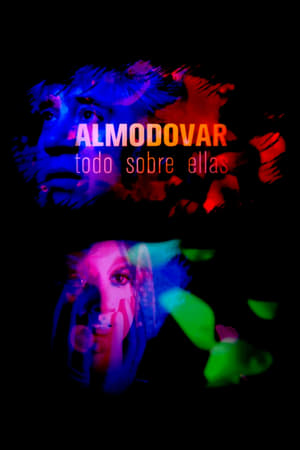
When looking at Pedro Almodóvar’s filmography, it becomes evident that women are everywhere; in fact, his work revolves around them. His divas are the best to create a real portrait of Almodóvar and evoke the emotional power of his films. These women are the ideal observers of a cinematic career that, from La Mancha to Hollywood, has changed the image of Spain in the world.
On January 3, 2001 in Lorca there was a traffic accident that caused 12 deaths who were Ecuadorians, worked in agricultural fields and were in an irregular situation in Spain. This documentary reflects the harsh reality experienced by dozens of illegal Ecuadorians offering much cheaper labor in Spain.
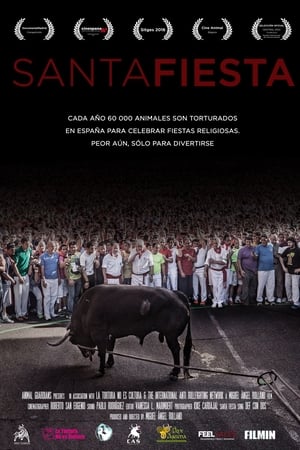
SINOPSIS / SYNOPSIS Every year in Spain, some 16,000 Fiestas are organized, during which animals are used. Honoring the Holy Virgin and the Patron Saints, and with the blessing of religious and political authorities, entire towns -including children- are involved in celebrations of unbelievable cruelty. 60,000 animals are hence abused each year during these “Fiestas of Blood”.
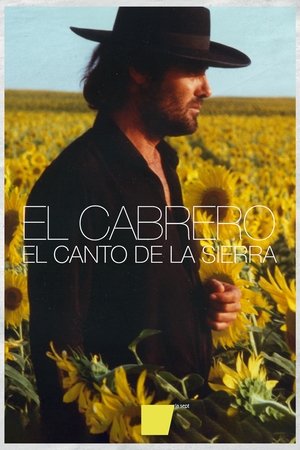
In a world where farming is mechanized and farm animals are fed with products coming from across the globe, a young shepherd is trying to keep his practice sustainable by using ancestral ways to raise his flock.
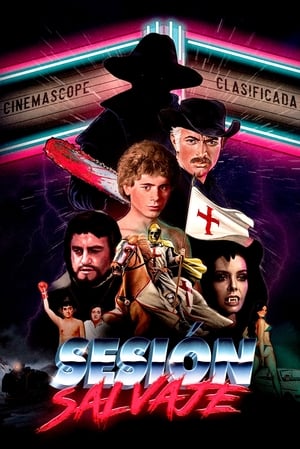
A walk through the golden age of Spanish exploitation cinema, from the sixties to the eighties; a low-budget cinema and great popular acceptance that exploited cinematographic fashions: westerns, horror movies, erotic comedies and thrillers about petty criminals.
A beautifully crafted documentary that takes you behind the scenes of our 2017 calendar shoots in Spain. Shot on location in Spain in glorious colour and full 4k definition, available as a download only. The Warwick Rowers are back for 2017 to raise money for charity.
Documentary about Spanish director Luis García Berlanga's "The Executioner" (1963)
Sven has a dream. Once in his life he wants to walk the Camino de Santiago - the Way of St. James. But that seems impossible, Sven has Usher syndrome, a disease which slowly, inexorably robs him of hearing and vision. Profoundly deaf and completely blind since 2010, he can only communicate using a special hearing aid in the spoken language.
A surrealist home movie, filmed by Luis Buñuel in Cadaqués in 1930, focusing on Salvador Dalí's father and his wife.
Tito del Amo, a passionate 72-year-old researcher, takes the final step to unravel the enigma about the alleged Spanish origin of the American cartoonist Walt Disney, making the same journey that his supposed mother made to give him up for adoption in Chicago. A journey that begins in Mojácar, Almería, Spain, and ends in New York. An exciting adventure, like Alicia's through the looking glass, to discover what is truth and what is not, with an unexpected result.
Luis Bunuel, the father of cinematic Surrealism, made his film debut with 'Un Chien Andalou' in 1929 working closely with Salvador Dali. Considered one of the finest and controversial filmmakers with, 'L’Age d’Or' (1930), attacking the church and the middle classes. He won many awards including Best Director at Cannes for 'Los Olvidados' (1950), and the coveted Palme d’Or for 'Viridiana' (1961), which had been banned in his native Spain. His career moved to France with 'The Diary of a Chambermaid' with major stars such as Jeanne Moreau and Catherine Deneuve.
A first feature based on sexual events. An actress undertakes her desire of directing her first movie, without a budget or any production company funding her project. She gathers a group of professional actors and actresses, and proposes a project based on a very particular experience: stepping on their fears through a metaphorical 'leap of faith'. As the project advances, individual conflicts will arise affecting the shoot, making the movie crew wonder whether or not they should go on. Will they take the leap of faith with all its consequences?
A humorous observation in Barcelona’s immigrant neighbourhood El Raval. Four barber shops, four places of remembrance, strange time and space capsules inhabited by people who left their home to find a better one, while the Spaniards are about to leave their own country themselves.
Inspired by an exclusive interview and performance footage of Chavela Vargas shot in 1991 and guided by her unique voice, the film weaves an arresting portrait of a woman who dared to dress, speak, sing, and dream her unique life into being.
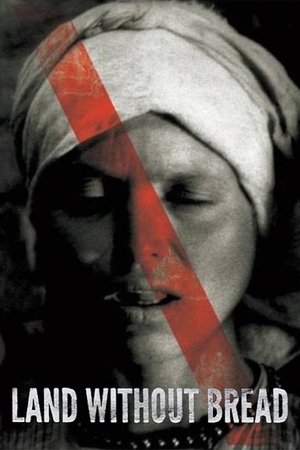
An account of the journey that King Alfonso XIII of Spain made to the impoverished shire of Las Hurdes, in the province of Cáceres, in the region of Extremadura, in 1922.
A history of the political and social repression carried out by the ruthless regime of Spanish dictator Francisco Franco between 1936 and 1975 that focuses on the lives of gays and lesbians during those dark years and the death of the Spanish gay poet Federico García Lorca.
A poetic journey through the paths and places of old Castile that were traveled and visited by the melancholic knight Don Quixote of La Mancha and his judicious squire Sancho Panza, the immortal characters of Miguel de Cervantes, which offers a candid depiction of rural life in Spain in the early 1930s and illustrates the first sentence of the first article of the Spanish Constitution of 1931, which proclaims that Spain is a democratic republic of workers of all kind.
Famous Spanish film critic Alfonso Sánchez talks about his personal life, his work and Anouk Aimée. A sentimental tribute to one of the most relevant figures on the Spanish film scene.