36 year old welder Karin works at an agricultural factory in Mecklenburg, Germany.
This audio-visual tone poem uses the language of filmmaking to offer a first-hand evocation of the turbulent psychological effects one can experience due to prolonged lack of sunlight.
The key to the communal laundry room in the block of flats on the Rue de Genève 85 in Lausanne serves a much greater function than merely unlocking the door. This encounter between a symbol of typical Swiss mentality with a penchant for order and the tenants who have been housed here by the city’s social services department is not something to be taken for granted. Although the laundry room is normally located in the cellar, the tenants in this building share a tiny laundry room off the entrance hall because the cellar is reserved for prostitution. To maintain order and cleanliness, the landlord hires Claudina, a new “laundry woman”.
The world lost Hayden Hunstable to suicide in the middle of the mandated stay-at-home orders on April 17th, just 4 days before his 13th birthday. Hayden did not struggle with depression nor did he have a history of mental health problems. He was a normal healthy and happy kid who was unprepared for social isolation. His parents attribute Hayden’s emotional suffering to a “perfect storm of routine disruption, social isolation, increased gaming, and a pressure stack of activity cancellations,” all created by the government’s mandated stay-at-home orders in the wake of the COVID-19 global pandemic.
Switzerland is presently the only country in the world where suicide assistance is legal. Exit: The Right to Die profiles that nation's EXIT organization, which for over twenty years has provided volunteers who counsel and accompany the terminally-ill and severely handicapped towards a death of their choice.
Remue-ménage
It is a fetish, a mantra, a secret religion to modern man: work. In times of the financial crisis and massive job reductions, this documentary movie questions work as our 'hallow' sense in life in a way that both humors and pains us.
Along with several courageous psychiatrists and their clients, the author sets out to film a documentary road movie that takes him to Switzerland, Europe, and the U.S. On their travels in mobile homes, they explore the depths of the human psyche in search of answers to the question: What is the human mind and how does it behave in psychotic extreme situations?
Sniper: Bulletproof deconstructs and analyzes the little-known sniper events that have occurred when no other course of action was possible. The people who planned the takedowns, or pulled the trigger, share their techniques and bring to light the many factors that had to be considered in each mission: terrain, wind speed, temperature, elevation changes... all are critical to taking out targets considered bulletproof. A sniper has one chance, one breath, to rise to the occasion and save the day... if they miss, there may never be another opportunity. As these never told before stories unfold, the viewer also learns about the high-tech gear each sniper carries on their classified missions.
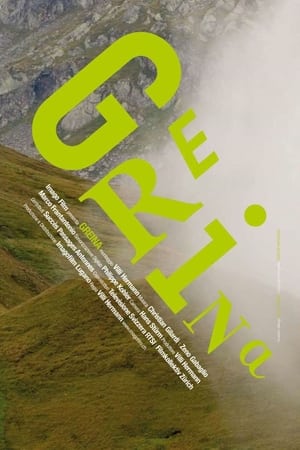
An intimate portrayal of the everyday lives of Carthusian monks of the Grande Chartreuse, high in the French Alps (Chartreuse Mountains). The idea for the film was proposed to the monks in 1984, but the Carthusians said they wanted time to think about it. The Carthusians finally contacted Gröning 16 years later to say they were now willing to permit Gröning to shoot the movie, if he was still interested.
The extraordinary destiny of two people. After the Second World War, Lois is an actress in Broadway theatre, television and Hollywood films. Her husband, Edgar Snow, is world famous. A pioneer fascinated by China, he is the first journalist to film and interview Mao Tse-tung. Suspected by the American authorities of Communist sympathies, Ed and Lois are blacklisted. Together with their two small children, they go to Switzerland, mid-way between China and America, where they find a new home. A story of revolution, utopia, disillusionment, and hope.
The documentary follows one woman's quest to overcome anxiety, depression, and opioid addiction through the use of psychedelic medicines.
Games You Can’t Win explores “empathy” gaming, a new video game movement in which developers are sharing some of their most intimate or traumatic personal experiences through artful, documentary-style video games. Using a combination of intimate verité footage and video capture from the games, the short film tells the stories of three developer and the personal experiences that inspired their game.
A documentary of an expedition to Churchill, Manitoba to film the Northern Lights.
'Tom' from Birmingham, 22, - who did not wish to reveal his real name - had a traumatic childhood as his mother suffered from untreated mental illnesses including Obsessive Compulsive Disorder (OCD), anorexia, and depression.
Documentary about the life and career of a comic genius, Peter Sellers.
In the French music world, the beginning of the 2000s was marked by the arrival of a young rapper, Diam's. Over the course of three albums, she has become a phenomenon in France, as well as in many countries around the world. Diam's has won some of the most prestigious awards in French music, graced the covers of countless magazines, and sold millions of records. However, in 2010, at the height of her fame, Diam's made a life choice that shocked the French: she converted to Islam. How did a tortured and suicidal artist find her way to peace? For the first time Diam's, known to her family as Mélanie, tells us the real story.
Dieu peut se défendre tout seul
Max Frisch was the last big Swiss intellectual widely respected as a “voice” in its own right – a character hardly found today. The film retells Frisch’s story as a witness of the unfolding 20th century, wondering if such “voices” are needed at all, or if we could do without them.
Jour de Marché