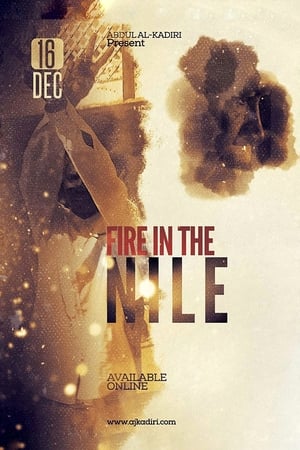
A major shift of political power in Sudan started with street protests throughout Sudan on 16 December 2018 That resulted in the overthrow of the dictator Omar Al-Basheer. The Sudanese Revolution took over 38 weeks to achieve its demands with over 300 casualties and +1200 arrests. Fire in the Nile is a documentary about how the people dealt with the government and how to protest until their demands have been granted.
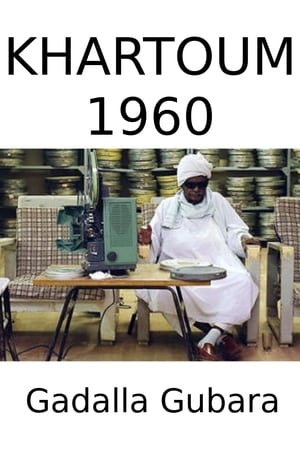
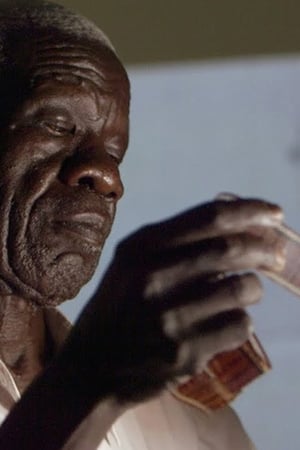
Gubara was proud of the first color film in African cinema, which attempts to give an African response to the city symphony genre by capturing disparate images of daily life in Khartoum and setting it to music, particularly romantic Arabic songs.
Although perhaps without foresight, Gubara seemingly set out to capture a historic picture of a city that today has completely vanished. He reveals to us the livelier place that Khartoum was before fateful circumstances turned it into a tough, surviving shell of its former self.
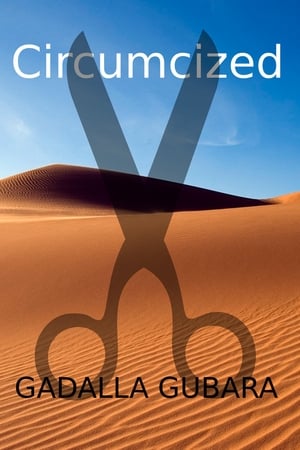
The elder filmmaker makes a strong statement against the practices of circumcision as they performed around Africa and particularly Sudan. The film is typical of the later Gubara films which are determined to take a stand against the tyrannies that are still keeping people down. Gubara has stated that circumcision is "Nothing more than a bad habit".
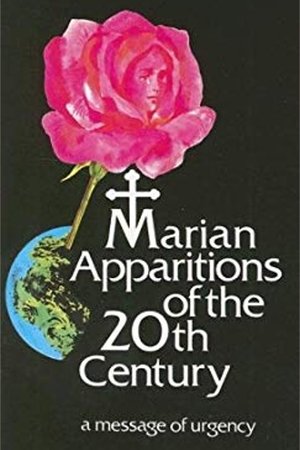
Deeply rooted in humanity's history, the Blessed Virgin Mary has been making repeated visitations throughout the world, particularly in the latter part of the 20th century, to warn us that we are on the brink of destruction unless we heed her messages for repentance, prayer, conversion, fasting and reconciliation. Is humanity on the verge of self-destruction? Can the world be delivered from the fear engulfing it today? Fatima Portugal, Beauraing & Banneux Belgium, Garanbandal Spain, Zeitun Egypt, Akita Japan, Medjugorje, Yugoslavia, Bethania Venezuela, Kibeho Rwanda, Naju South Korea, Ukraine and more...
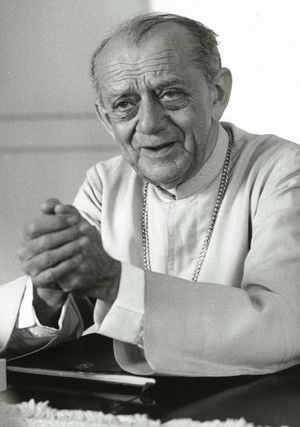
Documentary film about Archbishop Dom Hélder Câmara of Recife & Olinda in Brazil.
Les Couturiers de l'Église
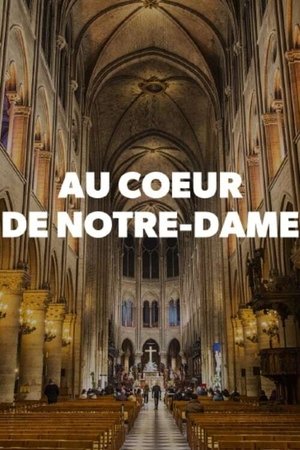
Au cœur de Notre-Dame
"The reason why they kill people is because they do not have any education," a Sudanese boy says about the bloody conflict in his fatherland. Shortly before, we see images of a bombed school. In this film, the youngest and most innocent generation of Sudanese explains how it deals with the war that is tearing the country apart. Will the orphaned children avenge their murdered parents, or will they forgive the killers and start working on a new life? At any rate, these children's dreams for the future are anything but violent. One of them wants to learn English to be able to liberate his country, another wants to study to "be something," a third wants to become president to bring total peace, and yet another simply wants to be like her grandmother. Despite all the atrocities they have witnessed, the children mainly want to rebuild things, to put an end to the destruction.
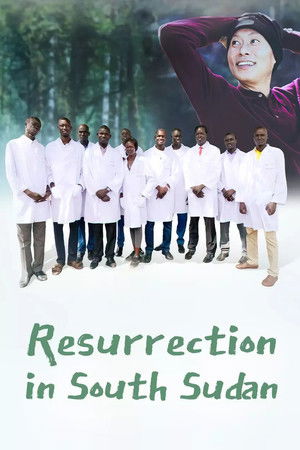
Even though Father Lee Tae-Seok passed away at age 48 after dedicating everything to People in Tonj, South Sudan, his seeds of love blossomed into beautiful flowers. As the sequel of 'Don't Cry for Me Sudan,' the documentary remembers Father Lee's life by following his students who have become doctors, pharmacists, government workers, medical students, etc., ready to live a life of service and dedication.
It's the smallest and most mysterious army in the world: the Swiss Guard. The film follows these men of faith and combat, from their recruitment in Switzerland to their military training in the heart of the Vatican. Made up of 150 men, this elite corps lives in barracks in the center of Vatican City. All must be Swiss citizens and devout Catholics. They have all sworn to fight to the death to protect their faith and the Holy Father. They are heirs to a 500-year-old tradition in which the Pope's protection and security were ensured by Swiss mercenaries. Trained in the use of both halberds and semi-automatic rifles, the Swiss Guards form a unique army. But who are they really? What motivates these young men to join this military and religious body? A dive into a world normally closed to the cameras.
Benjamin and Awad run Sudan's national film archive. The two men, who have worked together for more than 40 years, are devoted to protecting their country's visual memories. Home to some 13,000 films, the archive preserves pivotal moments of Sudan's turbulent history and is one of the largest in Africa. But the archive is in a fragile state. Following years of neglect and poor storage, many film reels are turning to dust in Sudan's unforgiving tropical climate. The two friends are determined to turn it around and embark on a mission to save the old films. Will they succeed in preserving Sudan's visual history for future generations before it's too late?
The piercing cold of 10 below zero wasn't even a problem. In February, 2009, about 400,000 people gathered in Myung Dong for a brief meeting for a single reason. The late cardinal KIM Sou-hwan became the first cardinal in a land of poor faith. He summoned up his courage when no one took action. He practiced love as a miracle until he left us. He was a respected senior of the society beyond the religion in the turbulent times; a figure whose life had been like a fence for the disadvantaged. The late cardinal KIM Sou-hwan was ‘a great man of the era’. His passionate love is now revived on the screen.
"VICE travels to the most dangerous country in the world to figure out what the hell is happening in Darfur. In the video, Vice founder Shane Smith dons a djellaba and walks through the streets of Khartoum, visits a displaced persons camp filled with over 300,000 people and encounters the notorious SPLA (Sudan People Liberation Army)."
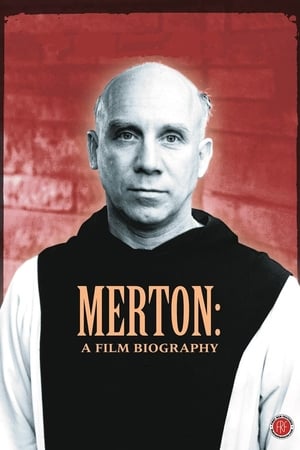
In his lifetime, Thomas Merton was hailed as a prophet and censured for his outspoken social criticism. For nearly 27 years he was a monk of the austere Trappist order, where he became an eloquent spiritual writer and mystic as well as an anti-war advocate and witness to peace. Merton: A Film Biography provides the first comprehensive look at this remarkable 20th century religious philosopher who wrote, in addition to his immensely popular autobiography The Seven Storey Mountain, over 60 books on some of the most pressing social issues of our time, some of which are excerpted here. Merton offers an engaging profile of a man whose presence in the world touched millions of people and whose words and thoughts continue to have a profound impact and relevance today.
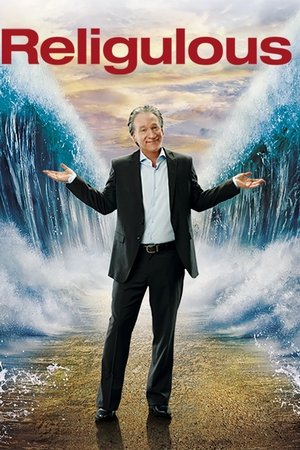
Commentator-comic Bill Maher plays devil's advocate with religion as he talks to believers about their faith. Traveling around the world, Maher examines the tenets of Christianity, Judaism and Islam and raises questions about homosexuality, proof of Christ's existence, Jewish Sabbath laws, violent Muslim extremists.
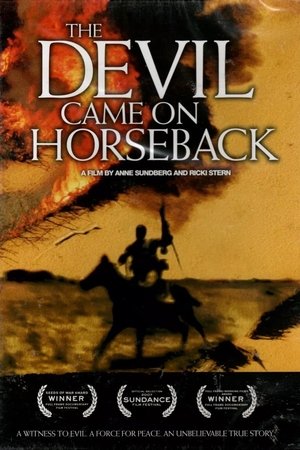
While serving with the African Union, former Marine Capt. Brian Steidle documents the brutal ethnic cleansing occuring in Darfur. Determined that the Western public should know about the atrocities he is witnessing, Steidle contacts New York Times reporter Nicholas Kristof, who publishes some of Steidle's photographic evidence.
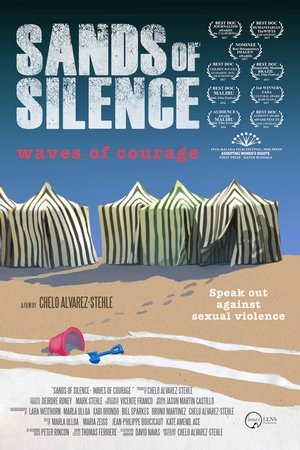
Inspired by the transformation of the sex-trafficking survivors whose lives she follows, the filmmaker finds the courage to break the silence about sexual abuse in her own life.
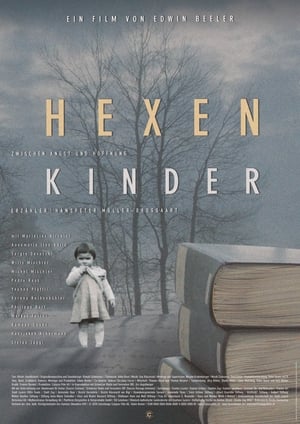
The movie recalls children who suffered mental and physical harm both during the last century, particularly in religious orphanages, and during the time of early modernperiod witch-hunts. It shows that the mindsets and behavioural patterns of both time periods are more alike than one might think.
Recreation of facts and stories of both experts and people who met Maximilian Kolbe and were shocked by his words and actions.