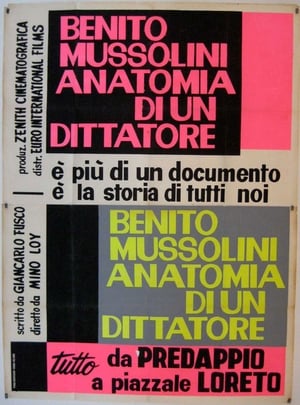
The fascinating story of the rise to power of dictator Benito Mussolini (1883-1945) in Italy in 1922 and how fascism marked the fate of the entire world in the dark years to come.
A chronicle of the first nine years of Pope Francis' pontificate, including trips to 53 countries, focusing on his most important issues - poverty, migration, environment, solidarity, and war - while also giving rare access to the public life of the pontifical.
An intimate portrayal of the everyday lives of Carthusian monks of the Grande Chartreuse, high in the French Alps (Chartreuse Mountains). The idea for the film was proposed to the monks in 1984, but the Carthusians said they wanted time to think about it. The Carthusians finally contacted Gröning 16 years later to say they were now willing to permit Gröning to shoot the movie, if he was still interested.
Takes us to locations all around the US and shows us the heavy toll that modern technology is having on humans and the earth. The visual tone poem contains neither dialogue nor a vocalized narration: its tone is set by the juxtaposition of images and the exceptional music by Philip Glass.
Soldat for frelseren
Quando i tedeschi non sapevano nuotare
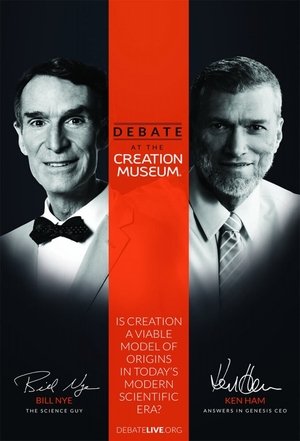
Bill Nye and Ken Ham debate whether creation is a viable model of origins in today's modern scientific era.
Dania is 21 years old and grew up in a Christian community in the Faroe Islands’ Bible belt. She has just moved to Tórshavn and is seeing Trygvi, a hip-hop artist and poet locally known as Silvurdrongur (Silver Kid). He comes from a secular family and writes poems and texts about the shadow sides of humanity. Dania herself sings in a Christian band but is fascinated by Trygvi’s courage to write brutally honest lyrics. As she tries to find her place in the world and understand herself, she starts to write more personal texts. Her writings develop into a collection of critical poems called ‘Skál’ (‘Cheers’), about the double life that she and other youths must live in the conservative Christian world.
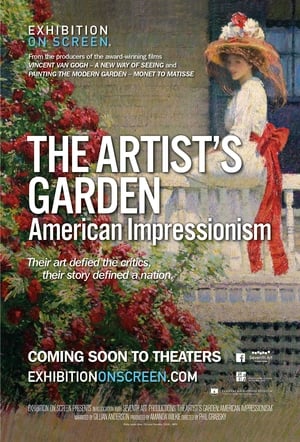
Taking its lead from French artists like Renoir and Monet, the American impressionist movement followed its own path which over a forty-year period reveals as much about America as a nation as it does about its art as a creative power-house. It’s a story closely tied to a love of gardens and a desire to preserve nature in a rapidly urbanizing nation. Travelling to studios, gardens and iconic locations throughout the United States, UK and France, this mesmerising film is a feast for the eyes. The Artist’s Garden: American Impressionism features the sell-out exhibition The Artist’s Garden: American Impressionism and the Garden Movement, 1887–1920 that began at the Pennsylvania Academy of the Fine Arts and ended at the Florence Griswold Museum, Old Lyme, Connecticut.
Why would two New York-based filmmakers dedicate five years of their lives to following three white, Jesus-loving, spandex-clad men from the Bible Belt, particularly when the world of documentary filmmaking has generated its fair share of films concerning sensationalistic religious expression and contact sports in recent years? Because it's not about wrestling, and it's not about Jesus. Against a bizarre and entertaining backdrop, and through a motley cast of characters, we are reminded of what connects us all, lest we forget what it means to be human.
Libere
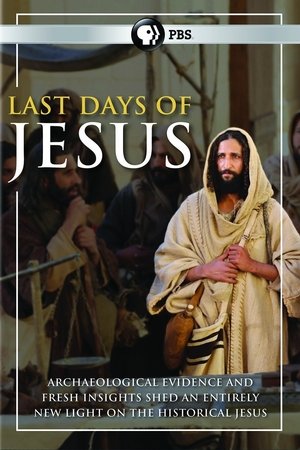
Here is an account of how the cross of Christ came to be the symbol and icon it is today. It presents a close-up look at an inscribed piece of wood, believed to be the actual headboard of Christ's cross.
After the World War I, Mussolini's perspective on life is severely altered; once a willful socialist reformer, now obsessed with the idea of power, he founds the National Fascist Party in 1921 and assumes political power in 1922, becoming the Duce, dictator of Italy. His success encourages Hitler to take power in Germany in 1933, opening the dark road to World War II. (Originally released as a two-part miniseries. Includes colorized archival footage.)
Le mystère des reliques de saint Pierre
"Ever since playing Moses in The Ten Commandments," Charlton Heston has said, "I've felt a deep, personal connection with the Bible, which remains as vivid and vital today as when it was told around campfires centuries before there was any written language." Heston brings his own storytelling gifts to the second in his acclaimed four-part Bible series.
I sette contadini
Li Shouwang is the leader of a blind storytellers team, learned storytelling at the age of 19. His childernare living hard in other cities. Li's money amost goes to his children's pocket every year. But with urbanisation, the storytellers have lost almost all their audience. As the conflict between the storytelling team and the village team intensified, his son, who was far away from home, became the only spiritual sustains... When he was excited that his son would be taking his family home for Chinese New Year, what's await is a sigh.
Dix Jours dans la guerre d'Espagne
A video about Neo-Nazis originating in Sweden provides the starting point of an investigation of extremists' networks in Europe, Russia, and North America. Their propaganda is a message of hatred, war, and segregation.
In the West Jutland village of Hanning, there is a small indremissionary community. How everyday life unfolds in such a religious environment is depicted through participation in church services, meetings in the mission house and visits to the villagers. They talk about temptations, their relationship with God and passing on their faith to the next generation.