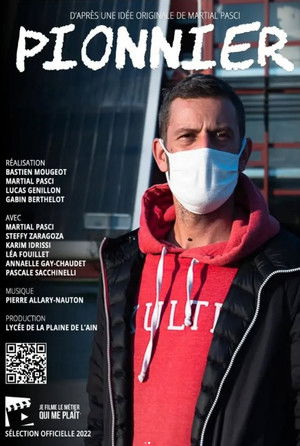
At the beginning of winter, a filmmaker retires for six months to a hermit's cabin in the middle of the forest, cut off from the world and its means of communication. Through the words of four women she has filmed previously, all of whom have dedicated their lives to different forms of spirituality, she embarks on a mysterious inner adventure, on the edge of solitude and nature. A journey that invites us to connect with the world in a different way.
Shere Hite’s 1976 bestselling book, The Hite Report, liberated the female orgasm by revealing the most private experiences of thousands of anonymous survey respondents. Her findings rocked the American establishment and presaged current conversations about gender, sexuality, and bodily autonomy. So how did Shere Hite disappear?
An exploration of the early public debate surrounding birth control, the media's involvement, and the unstoppable Margaret Sanger, in a style mimicking the films of the period.
“It ain’t easy…being green” is the favorite expression of Stormé DeLarverie, a woman whose life flouted prescriptions of gender and race. During the 1950s and '60s she toured the black theater circuit as a mistress of ceremonies and the sole male impersonator of the legendary Jewel Box Revue, America’s first integrated female impersonation show and forerunner of La Cage aux Folles.
Gina, a modern business woman in her late forties, has a lover named Adrian, a journalist, who she sees once in a while just to have sex. They are both attracted to the historic figure of Pancho Villa: he admires his power while she admires his virility. As Gina helps Adrian to write a book about Villa, she discovers the similarity between Villa's relation to women to that of Adrian and hers, and that Villa's revolution never included her, nor the rest of the female half of the human species. Can the love of a woman and a man survive machismo?
Quand les pouvoirs s'emmêlent
The Feminist Library: A Short Film was made in support of the Save the Feminist Library Campaign, documenting a crucial moment in the library's herstory as it fights for its very survival. Shortlisted for the Women's History Network Community Prize, the film revisits the story of the library's inception and emphasises why feminism remains essential today.
The words of the women and the rhythm of their lives in the seclusion of family compounds suggests both the satisfying and the limiting aspects of a woman's role in a rural Afghan community. Filmed in the Balkh Province, an area inhabited by Tajik and other Central Asian peoples. The town of Aq Kupruk is approximately 320 miles northwest of Kabul. The theme of the film focuses on women. The film and accompanying instructor notes examine the economic, political, religious, and educational status of women, their legal and customary rights, and the degree of change in their actual and perceived roles.
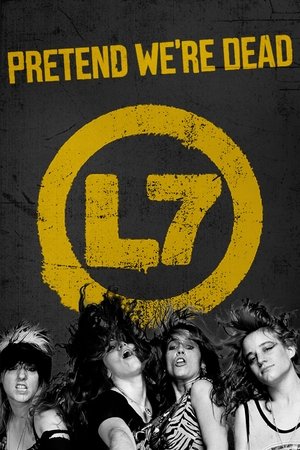
A real time journey witnessing the rise, fall, and ultimate redemption of the fierce feminist pioneers of American grunge punk: L7.
Three young Irish women struggle to maintain their spirits while they endure dehumanizing abuse as inmates of a Magdalene Sisters Asylum.
Rosemarie Blank made this film, which focuses on women aged around fifty, in collaboration with the organisation VIDO (Dutch: Vrouwen in de Overgang/Women in the Menopause). An all but invisible group of housewives who have spent their lives putting themselves last to ensure that their husbands and children can reach their full potential.
Following the death of Amina Filali, a 16 year-old girl who killed herself after she was allegedly forced to marry the man who raped her, a young woman carries a personal investigation into the representation and perception of rape in Morocco. Here rapists are offered to marry their victims as a means to save the "honour" of the family. By liberating the voices of these victims, 475 : Break the Silence gives an unprecedented view of family, the deceit of love, relationships, marriage and honour in urban deprived areas of a country seeking to find its identity between modernity and tradition.
Women are being jailed, physically violated and at risk of dying as a radical movement tightens its grip across America.
Quatro em Linha
Based on the life of Rosa Bonheur, a trailblazing feminist and artist who rose to fame in 19th century France.
Norman Mailer and a panel of feminists — Jacqueline Ceballos, Germaine Greer, Jill Johnston, and Diana Trilling — debate the issue of Women's Liberation.
Two actresses take us through a series of 'raps' and sketches about what it means to be beautiful and black.
A documentary about the Swedish rapper and artist Silvana Imam.
The 1920s saw a revolution in technology, the advent of the recording industry, that created the first class of African-American women to sing their way to fame and fortune. Blues divas such as Bessie Smith, Ma Rainey, and Alberta Hunter created and promoted a working-class vision of blues life that provided an alternative to the Victorian gentility of middle-class manners. In their lives and music, blues women presented themselves as strong, independent women who lived hard lives and were unapologetic about their unconventional choices in clothes, recreational activities, and bed partners. Blues singers disseminated a Black feminism that celebrated emotional resilience and sexual pleasure, no matter the source.