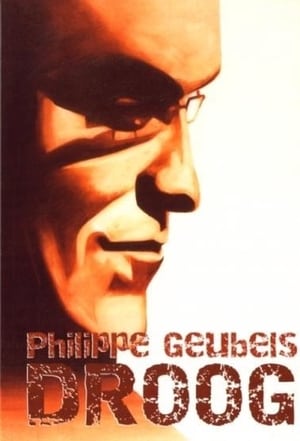
The second show of Dutch comedian Hans Teeuwen: sex, violence and foul language in a string of songs, abrupt transitions and evocative characterizations.
Back in 2003, Alex Agnew was the first Belgian to win the prestigious 'Leids Cabaret Festival' in The Netherlands. He was the winner in both categories: Jury and public. Alex is a mixture of an English father, Belgian mother, an overdoses (action) movies, superheroes, comic books and a lot of music. No quiet, sophisticated humour, but proud to be loud! Rock'n'Roll comedy!
Marian and Ido are married and have a 16-year-old daughter, Pinkie. Marian and Ido's marriage has become boring. Ido is a conservative and neat furniture manufacturer, but secretly starts a relationship with the beautiful Emma, his secretary. When Marian discovers this, she offers him a choice: stay with her or move on with Emma. Ido cannot make this choice, so Marian throws him out. Ido moves in with Ida, but continues to interfere intensively with Pinkie, who to his horror becomes friends with Wim, one of his Turkish workers.
Lenette van Dongen: Nikè
Registration of the first theatre show by the Dutch comedian Sanne Wallis de Vries.
Because Urbanus does all kinds of pranks, he has to go to an improvement institution. There, Dr. Schrikmerg uses him as a guinea pig for his new invention: he makes a sort of robot from Urbanus.
Registration of the sixt theatre program by the Dutch comedian Theo Maassen.
Maassen won two of the biggest comedy contests in the Netherlands in 1990, the Groninger Studenten Cabaret Festival(GSCF), and Cameretten. The GSCF jury was not pleased with the quality of the contestants that year, and gave Maassen the first prize, remarking he was the best of the year, but still not very good. In the following years, however, Maassen fame grew steadily, especially amongst students. Maassens style was based on stand-up comedy: Alone on stage, telling jokes and stories to amuse the public, without any musical support (a thing common for most Dutch comedians up to that point). Since 2000, Maassens shows are shown on Dutch national television, making him more and more a household name.
Jurk!: Glitterjurk
Registration of the fourth solo program by the Dutch comedian Hans Sibbel, in which the comedian takes a look at the evolution.
In his first comedy special the Flemish comedian Pieter Verelst tells a bizarre story about his childhood, which he spent with his brother (existing or not) in a boring village in Flanders. Together they tackle this dullness and use it as a source of inspiration for a strange creativity.
Registration of the third solo show by the Dutch comedian Hans Sibbel.
An absurdist theatre piece by Dutch comedy duo Rundfunk. A collection of original sketches and songs.
Registration of the fifth theatre program by the Dutch comedy duo (Niels) Van der Laan & (Jeroen) Woe.
The second solo performance by the Dutch comedian Freek de Jonge.
Freek de Jonge: De Volgende
Registration of the third theatre program by the Dutch musical comedy duo (Niels) Van der Laan & (Jeroen) Woe.
A video-registration of the revue/cabaret show 'Showponies 2' by the Alex Klaasen Revue. In this sequel to the first Showponies-show, Alex Klaassen explores to what extent he cares about what (the still quite heteronormative) society thinks. Klaassen considers coming out for a second time, because he feels like he has ended up in a second closet after his first coming out.
Paul de Leeuw: Symphonica In Rosso
A comedian who bases three-quarters of his show on interaction with his audience has to be very talented to make it work. Or come from Belgium. Wouter Deprez (pronounced Depree) devotes his entire show WAR to interacting with the audience—and with great success.