Frankenstein, a young medical student, trying to create the perfect human being, instead creates a misshapen monster. Made ill by what he has done, Frankenstein is comforted by his fiancée; but on his wedding night he is visited by the monster.
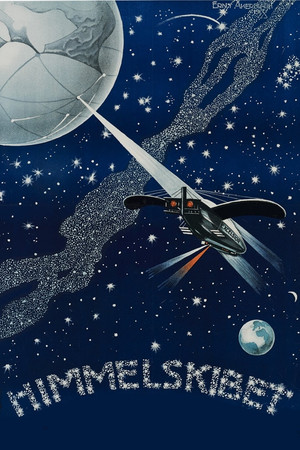
Using every known means of transportation, several savants from the Geographic Society undertake a journey through the Alps to the Sun which finishes under the sea.
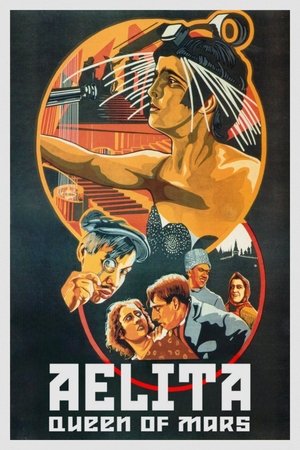
The navy captain Avanti Planetaros is inspired by his astronomer-father to travel through outer space to reach other worlds. He becomes an aviator and, along with the young scientist Dr. Krafft, the driving force behind the construction of a space-ship. Despite oppostion from the mocking Professor Dubius, Planetaros gathers a crew of fearless men and takes off. During the long voyage, the crew becomes restless; a mutiny is narrowly avoided. Finally, they reach Mars and discover that the planet is inhabited by people who have reached a higher stage of development, free of diseases, sorrow, violence, sexual urges, and the fear of death. Avanti falls in love with Marya, daughter of the Prince of Wisdom, the head of the Martians. Marya shares his feelings and decides to return with him in order to bring the wisdom of the Martians to the backward Earthlings. (stumfilm.dk)
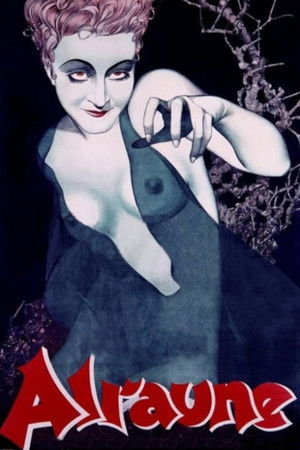
Hanns Heinz Ewers' grim science-fiction novel Alraune has already been filmed twice when this version was assembled in 1928. In another of his "mad doctor" roles, Paul Wegener plays Professor Brinken, sociopathic scientist who combines the genes of an executed murderer with those of a prostitute. The result is a beautiful young woman named Alraune (Brigitte Helm), who is incapable of feeling any real emotions -- least of all guilt or regret. Upon attaining adulthood, Alraune sets about to seduce and destroy every male who crosses her path. Ultimately, Professor Brinken is hoist on his own petard when he falls hopelessly in love with Alraune himself. Alraune was remade in 1930, with Brigitte Helm repeating her role, and again in 1951, with Hildegarde Knef as the "heroine" and Erich von Stroheim as her misguided mentor.
In 16th-century Prague, a rabbi creates the Golem - a giant creature made of clay. Using sorcery, he brings the creature to life in order to protect the Jews of Prague from persecution.
A young man travels to Mars in a rocket ship, where he leads a popular uprising against the ruling group with the support of Queen Aelita, who has fallen in love with him after watching him through a telescope.
A man with an umbrella emerges from his grave to be momentarily reunited with his lost loved one.
Cagliostro's Folding Screen
He sits asleep at a bare table; old witch enters, raps three times, then disappears; cavalier sees table spread for a sumptuous repast. Mephistopheles appears; then the old witch, who suddenly changes to a beautiful young girl. The changes and magical appearances are startling and instantaneous.
When Kriemhild, thirsty for revenge, marries to Etzel, king of the Huns, she invites King Gunther and his court to visit them, intending to finally take the life of the man responsible of her disgrace.
This is the first movie version of the famous story. Alice dozes in a garden, awakened by a dithering white rabbit in waistcoat with pocket watch. She follows him down a hole and finds herself in a hall of many doors.
After attending a funeral, a man returns to a merry-go-round where he once cherished joyful moments with someone deeply significant in his life.
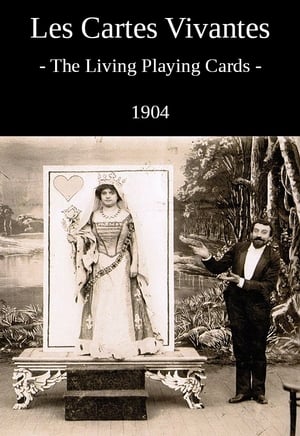
The Living Playing Cards
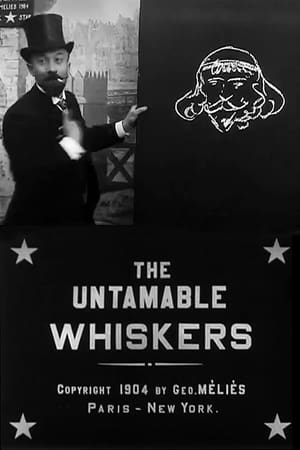
The background of this picture represents a scene along the beautiful river Seine in Paris. A gentleman enters, and taking a blackboard from the side of the picture, he draws on it a sketch of a novelist. Then, standing in the centre, he causes the living features of his sketch to appear in the place of his own, which is utterly devoid of whiskers. The change is made so mysteriously that the eye cannot notice it until one sees quite another person in the place of the first. Again another sketch is shown on the board, this one being that of a miser; then an English cockney; a comic character; a French policeman, and last of all, the grinning visage of Mephistopheles. It is almost impossible to give this film a more definite description; suffice it to say that it is something entirely new in motion pictures and is sure to please. (Méliès Catalog)
Untitled Silent Horror Fantasy Short
The surrealist film shows repetitive imagery involving a string fashioned in a bizarre, almost spiderweb-like pattern over the hands of several individuals, most notably an unnamed young woman and an elderly gentleman. The film also shows a shadowy darkness and people filmed at odd angles, an exposed human heart, and other occult symbols and ritualistic imagery which evokes an unsettling and dream-like aura. Considered an unfinished film.
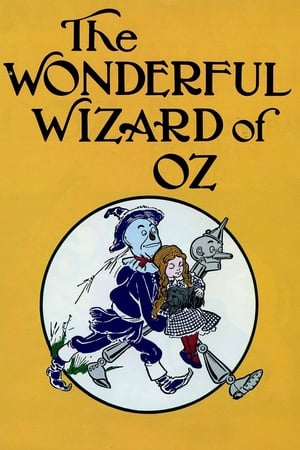
A farm girl learns she is a princess and is swept away by a tornado to the land of Oz.
A parlor full of bon vivants pass around an enchanted pair of spectacles that “reveal the personality and pleasures of the one who wears them.”
In "Terrible Nightmare", Amador, the dull 'Aztec Charlot' embodies Phill Otto Malo, frustrated aviator. Being anxiously awaited in the city of Puebla, he crashes before arriving at his destination. Consequently, he faces several adventures: bullfighter's dress goes to a bullring; in a cabaret flirts with a transvestite believing him a woman, the Keystone Cops come to the cabaret in the face of a bomb threat; Finally, Amador is awakened from his "terrible nightmare" on a park bench by a policeman.
Filmic insert to Eisenstein's modernized, free adaptation of Ostrovskiy's 19th-century Russian stage play, "The Wise Man" ("Na vsyakogo mudretsa dovolno prostoty"). The anti-hero Glumov tries to escape exposure in the midst of acrobatics, derring-do, and farcical clowning. Several members of Eisenstein's troupe at the legendary "Proletkult" stage theatre in Moscow briefly appear in this little film.