National Film Board of Canada documentary of stories of Acadians (French Canadians from the eastern Maritime provinces). Hundreds of thousands of Acadians emigrated to Louisiana following deportation by the British during the Acadian Expulsion of the mid-18th century, hence the term 'Cajun.'
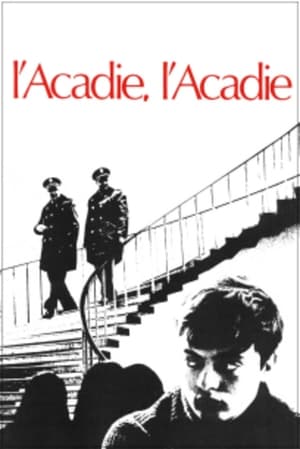
A film that witnesses the Acadian awakening and the unprecedented popular awareness that manifested itself in 1972 in northeastern New Brunswick.
In the late 1960s, with the triumph of bilingualism and biculturalism, New Brunswick's Université de Moncton became the setting for the awakening of Acadian nationalism after centuries of defeatism and resignation. Although 40% of the province's population spoke French, they had been unable to make their voices heard. The movement started with students-sit-ins, demonstrations against Parliament, run-ins with the police - and soon spread to a majority of Acadians. The film captures the behind-the-scenes action and the students' determination to bring about change. An invaluable document of the rebirth of a people.
In Acadie, the only “real” tea is King Cole, blended in New Brunswick for the past 100 years. Traditionally drunk with a spot of Carnation condensed milk, it recalls simpler days when people would take the time to stop and smell… the tea. Infusion is a playful look at this tradition, its many symbols, and the memories it stirs. Some say a cup of tea promotes frank discussion and helps clear up misunderstandings; others swear they can read the future in the leaves left at the bottom. Perhaps there really is something magical about tea…
In 1755, ten thousand French Canadian settlers were thrown off their land, loaded on ships, and exiled. Island Memories explores the past in a small Acadian community in Nova Scotia where the last survivor of this great deportation is reputedly buried. A lively film full of adventure, people, and history.
In 1969, the federal government expropriated two hundred and fifteen families in eight towns of New Brunswick in order to build a national park. Not only did these families lose their homes and their memories, they also lost their livelihoods.
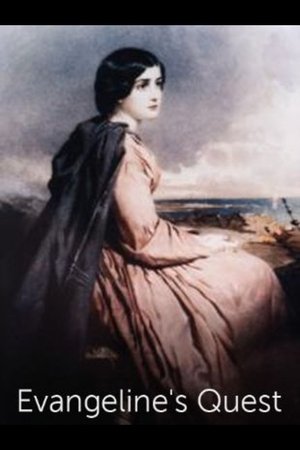
Explores the creation of Henry Wadsworth Longfellow’s poem, “Evangeline: A Tale of Acadie,” and the phenomenon it became.
Les années noires
The dramatic story of two youths--one French and one Indigenous--who share a pivotal time in Canada's history: the first contact between European and First Nations peoples.
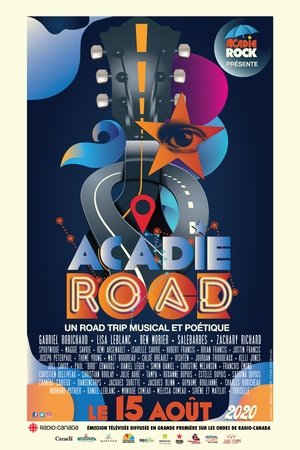
Acadie Road : un road trip musical et poétique
When a Mongolian nomadic family's newest camel colt is rejected by its mother, a musician is needed for a ritual to change her mind.
Violeta leads a normal life in a well-off family, with loving parents, surrounded by everything the heart of an eleven-year-old girl might wish for. But she hasn’t always been the pretty girl she is today; she was born a boy. At age 6, she baffled her parents (the famous adult movie stars Nacho Vidal and Franceska Jaimes) when she told them she wanted to be called and dress as a girl. After the initial shock, they decided to give her all their support on the long and tough road that will lead to her becoming a woman someday. Violeta faces many challenges, medical (such as deciding whether or not to take hormone-blockers to stop the development of masculine features as soon as puberty kicks in) and legal (obtaining an ID card with her new name and gender). Later, she may consider getting a sex reassignment procedure, or the possibility of becoming a mother through adoption.
Wanna learn a little about the music industry? Mr. Bill Boggs answers your questions with Liz Phair, Yo La Tango, and kids just like you!
Oleg lives in a small Belarusian village with his wife, three children, and his in-laws. He has practiced more than one trade: ensign, tractor driver, technician at a local school... Then he decides to leave for Moscow to earn extra money: the life of many people compels them to do this (it is always better here we are not). Yet, what reason has Oleg? A closer acquaintance with the life that remains behind in Belarus provides an unexpected answer to this question.
WishMaster, Clever Lil, New, Skunk, Fox, Foxy, CatÖ this is a group of people who reckon that their invented life is much more important and real than what their birth held in store for them. They practice a sado-masochism, creating around their passions the romantic image of another world visible only to them. From the position of ordinary citizens they are no more than perverts with mental deviations. And still, who are they? How do they survive in a world that they call ìvanillaî? And why do they use these strange nicknames and carefully chosen, ominous attributes: flogging scourges or latex suits? What do they see in their hobby that we do not see ñ and never shall see, if we limit ourselves by a documentary approach?
An in-depth look into the creative and technical processes that brought us the heart-stopping visual effects of the film, with director Stephen Sommers and the crew at Industrial Light & Magic (ILM).
Renowned cinematographer Kazuo Miyagawa collaborated with a number of great Japanese filmmakers, including Akira Kurosawa, Kenji Mizoguchi, Kon Ichikawa, and Yasujiro Ozu. The following excerpts from the Japanese television documentary THE WORLD OF KAZUO MIYAGAWA explore Miyagawa and Kurosawa’s working relationship on RASHOMON.
Frank Capra was one of Hollywood's most popular and respected directors in the 1930s and 1940s. His best-known films include "Isn't Life Beautiful?", "The Bottom Ten Thousand" and "Arsenic and Lace". His career from poor Sicilian immigrant to successful director stands for the American dream and brings him surprisingly close to his characters. But what in his depictions of America and its everyday heroes is reality, and where does the dream begin?
Dealing heavily with perceptions of time, Aeon documents the urban cityscape as Wellington transforms through a zen-influenced eternal cycle of birth, life, death and rebirth within a 24-hour period.
Through thirteen images and an equal number of stories, little Melina-Amalia, the teenager, the woman, the fighter, Blanche, Stella, Ilya, Phaedra, Medea, Clytemnestra, Minister of Culture, the stoic Melina in Memorial Hospital, all aspects of the "last Greek goddess". Shot on the stage of the National Theater Rex - Marika Kotopouli, it captures, balancing between theater and cinema, important historical events that make the myth that surrounds the glamorous protagonist even more powerful and charming.