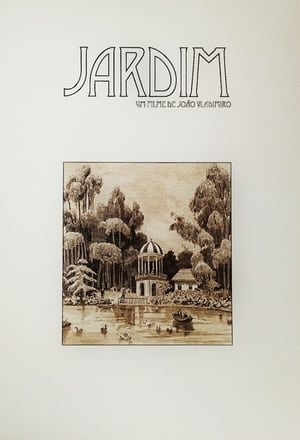
This film is about public space. This film is about the destruction of culture. This film is about fountains that have had enough. In this film, the fountains come to life, they become living beings, each one has its own character and tells a different story. They speak out so that people notice them, perceive them, take care of them. Their rebellion culminates in a protest. What would happen if fountains could speak?
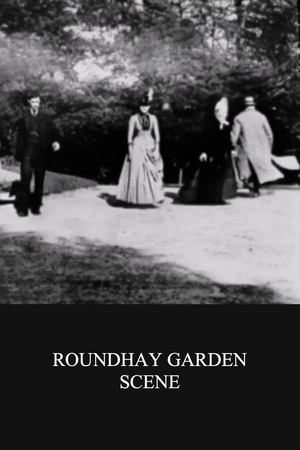
The earliest surviving motion-picture film, and believed to be one of the very first moving images ever created, was shot by Louis Aimé Augustin Le Prince using the LPCCP Type-1 MkII single-lens camera. It was taken on paper-based photographic film in the garden of Oakwood Grange, the Whitley family house in Roundhay, Leeds, West Riding of Yorkshire (UK), on 14 October 1888. The film shows Adolphe Le Prince (Le Prince’s son), Mrs. Sarah Whitley (Le Prince’s mother-in-law), Joseph Whitley, and Miss Harriet Hartley walking around in circles, laughing to themselves, and staying within the area framed by the camera. Roundhay Garden Scene is often associated with a recording speed of around 12 frames per second and runs for about 2 to 3 seconds.
The story of The Beatles' last song featuring exclusive footage and commentary.
Guillermo del Toro, Rian Johnson and other film luminaries look back at LA's historic Egyptian Theatre as it returns to its former movie palace glory.
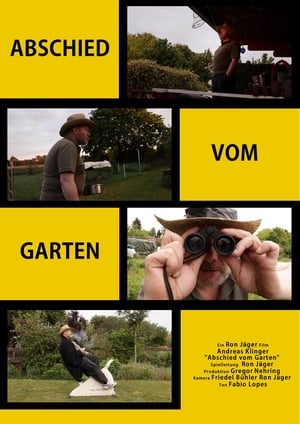
The early retired Gert spends the last summer in his garden, a place that has become a real home for him. The garden will be demolished to create a shopping center on its grounds. The only thing Gert can do is remember memories of happy times he spent with his family in the garden.
Film follows Haide and Toomas, husband and wife in life and in art Piip and Tuut through the hard work of the creation of their new clown show in the Botanical Garden of Tallinn, showing the intensity and poetry behind their craft and focusing on their collaboration on stage and in life.
A behind-the-scenes look at "Viagens", one of the greatest portuguese records of the 1990s, in the year of its 20th anniversary.
The Richardson Olmsted Campus, a former psychiatric center and National Historic Landmark, is seeing new life as it undergoes restoration and adaptation to a modern use.
This is the story of a vegetable garden, from the first seeds to the harvest. But this garden is different, because here the gardener has decided to banish pesticides and other chemicals, and to be helped only by discreet workers, the insects. As we dive into the heart of this plant kingdom, we discover thousands of tiny lives that organize themselves as in a micro-society: decomposing insects, recyclers, pollinators, the workers of the garden work to maintain a fragile balance within the vegetable garden. As the plants grow and begin to produce their first vegetables, the incredible interactions between insects and plants help protect the future harvest. But it is also their personal stories that punctuate the life of the garden. Between parades, mutual aid and attempted putsch, the story of the vegetable garden thus takes the form of a true nature tale.
Chris Packham and a team of wildlife experts follow five suburban gardens over a year, uncovering hidden wildlife dramas, and a vast cast of creatures battling for survival.
When internationally renowned Haida carver Robert Davidson was only 22 years old, he carved the first new totem pole on British Columbia’s Haida Gwaii in almost a century. On the 50th anniversary of the pole’s raising, Haida filmmaker Christopher Auchter steps easily through history to revisit that day in August 1969, when the entire village of Old Massett gathered to celebrate the event that would signal the rebirth of the Haida spirit.
Created over 75 years and three generations, Les Quatre Vents stands as an enchanted place of beauty and surprise, a horticultural masterpiece of the 21st century. See how Frank Cabot gave birth to one of the greatest gardens in the world.
Taking its lead from French artists like Renoir and Monet, the American impressionist movement followed its own path which over a forty-year period reveals as much about America as a nation as it does about its art as a creative power-house. It’s a story closely tied to a love of gardens and a desire to preserve nature in a rapidly urbanizing nation. Travelling to studios, gardens and iconic locations throughout the United States, UK and France, this mesmerising film is a feast for the eyes. The Artist’s Garden: American Impressionism features the sell-out exhibition The Artist’s Garden: American Impressionism and the Garden Movement, 1887–1920 that began at the Pennsylvania Academy of the Fine Arts and ended at the Florence Griswold Museum, Old Lyme, Connecticut.
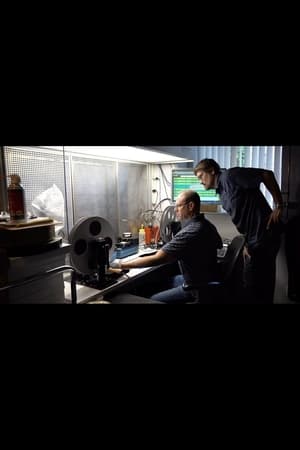
A comprehensive and fascinating behind-the-scenes look at the restoration process of restoring 3-strip Cinerama for the 1962 film "The Wonderful World of the Brothers Grimm".
Scenic route through the Vale of Evesham, Worcester and Great Malvern, with a detour to a lost masterpiece of outsider art.
Wenona does nude yoga in a garden.
Isamu Noguchi was a sculptor, designer, architect, and craftsman. Throughout his life he struggled to see, alter, and recreate his natural surroundings. His gardens and fountains were transformations meant to bring out the beauty their locations had always possessed.
Three friends are playing cards in a beer garden. One of them orders drinks. The waitress comes back with a bottle of wine and three glasses on a tray. The man serves his friends. They clink glasses and drink. Then the man asks for a newspaper. He reads a funny story in it and the three friends burst out laughing while the waitress merely smiles.
“A Song Reborn” reveals the extraordinary 1994 reunion of Paul, George and Ringo, 24 years after The Beatles parted ways. A true collaboration became possible when Yoko Ono handed them an unfinished John Lennon composition. Crafted from never-before-seen studio footage, this short film captures the three Beatles rediscovering their bond as they shape John’s song into the GRAMMY-winning “Free As A Bird.”
A decade after his death, genre-defying filmmaker William Greaves has one last trick up his sleeve with what he considered the most important event he captured on film: a 1972 party he engineered with the living luminaries of the Harlem Renaissance.