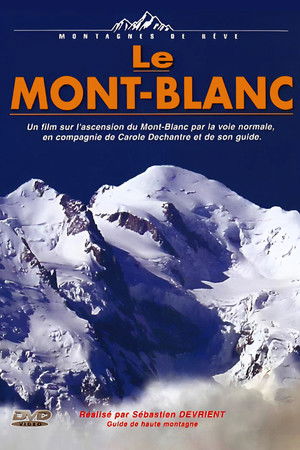
The ascent of Mont Blanc takes two days. First, you have to climb the Aiguille du Goûter, at the summit of which, at 3,817 meters, clings the Goûter refuge, a small metal box where you spend the night. The climb is 1,500 meters long, including some of the most technical sections. 2:00 a.m. The alarm rings, and Carole Dechantre and Jean-Paul Lemercier begin their ascent of the Dôme du Goûter by the light of their headlamps. With the first rays of sunlight, the Arête des Bosses is illuminated. Already, the surrounding mountains seem smaller. One last effort, and they finally reach the summit of Mont Blanc, the roof of the Alps, at 4,810 meters.
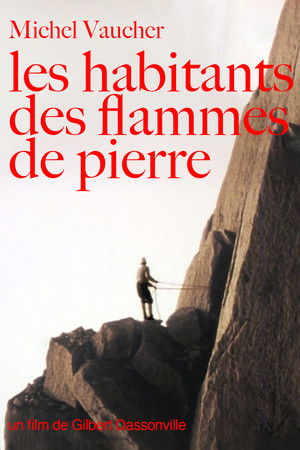
"Les Habitants des Flammes de Pierre" is the making-of documentary for the film "The Pillar of Solitude," which recounts Walter Bonatti's historic 1955 ascent of the southwest pillar of the Drus (the Bonatti Pillar) in the Mont Blanc massif, an 800-meter-high vertical face, climbed solo in six days, despite having only three. In the film, the renowned Swiss mountaineer Michel Vaucher portrays Bonatti. Unlike the film "The Pillar of Solitude," which was shot in black and white, the making-of documentary was filmed in color.
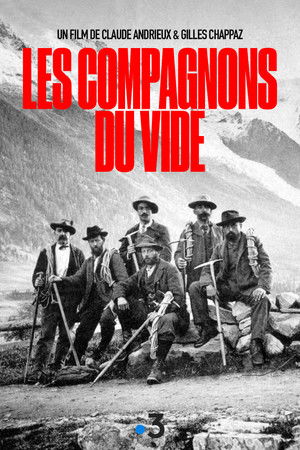
"Les Compagnons Du Vide" (The Companions of the Void) is a documentary made in 1989 by Claude Andrieux and Gilles Chappaz, broadcast in two parts on the FR3 program "Montagne." The film explores the history of the mountain guide profession through portraits of mountain guides, showcasing the diversity of this high-risk occupation. It also delves into the intimate relationship between the climbing team and the client, using the example of prestigious guides. The documentary follows these teams on major climbs around Chamonix, on Mont Blanc, and on La Meije in the Écrins massif.
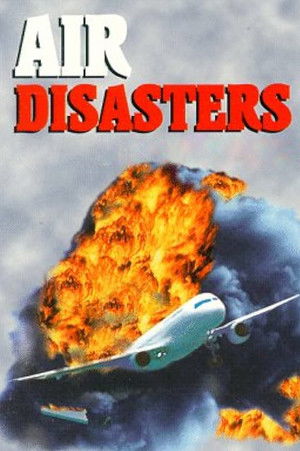
Air Disasters exposes some painful truths behind the world of flight, using actual footage of real incidents to look at why planes crash; in aerodynamic and technical terms and in the way the industry is run.
Omondi lives in the biggest slum in East Africa. Everyday he sees airplanes fly over him. He dreams of becoming an airline pilot and flying far away.
At the time of this writing, Malaysia Airlines Flight 370, transporting 227 passengers and 12 crew members from Kuala Lumpur to Beijing, has been missing for months. An unprecedented international search was unable to locate any bodies or debris. According to the Aviation Society Network, more than 80 aircrafts have been declared "missing" since 1948--"Ghost Planes" that have literally vanished without a trace.
Hardly noticed by the public, the largest aircraft parking lot in Europe has been built in a semi-desert in Spain. Close to the city of Teruel in the east of the country, aircraft from a wide variety of airlines have been mothballed. Their future is uncertain. Since the coronavirus crisis, these include the largest and most expensive aircraft in the world. For example, the Airbus A380 and the jumbo jet, the Boeing 747: two symbols of a decades-long "air war" between Airbus and Boeing. Four-jet airplanes are considered fuel guzzlers and CO2 sinners. Even the modern A380, which is approved for up to 853 passengers, was withdrawn from service by many airlines after just a few years of operation. Never before in the history of aviation has such an expensive series aircraft been taken out of service after such a short time. But its end is far from certain.
Host Jack Perkins (of the A&E "Biography" series) takes to the skies to show us an aerial view of the state of Maine. From rocky coastlines to northern forests and everything in between, this breathtaking documentary presents a truly unique picture of one of the most wild and beautiful regions of the United States.
Explore Mont Blanc
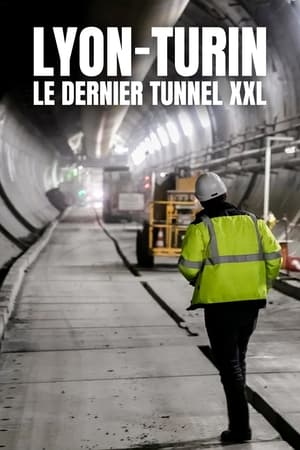
Lyon-Turin : Le Dernier Tunnel XXL
Journeying from the Pyrenees to the Alps, all around the mainland to Corsica, this is the story of the 'wild side' of France.
When the United States entered World War I, its Army Air Service lacked a combat-ready aircraft – a liability that prompted a search to find an aircraft suitable for production at home and combat operations abroad. This documentary from Bowling Green filmmakers tells the story behind the single-engine DH-4 plane dubbed The Liberty Plane.
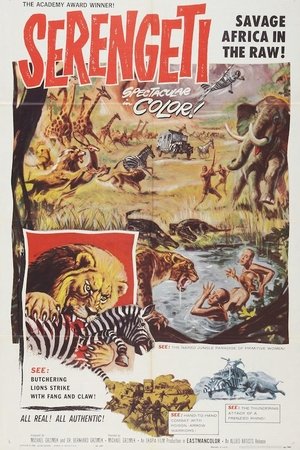
The film tells of the beginnings of the Serengeti National Park in Tanzania. At the end of the 1950s, the Tanzanian National Park Administration wanted to fence in the protected area around the Ngorongoro Crater. Bernhard and Michael Grzimek were invited by the national park administration in 1957 to get a precise picture of the animal migrations and to provide the national park administration with the values they needed for their project. Using a new counting method with two airplanes, the Grzimeks found out that the migration of the herds was different than assumed.
After 10 years of tests and 12 billion Euros invested, the state-of-the-art Airbus jet completed its first commercial flight in January 2015. We will discover how it was conceived and built, and explore its technological innovations every step of the way.
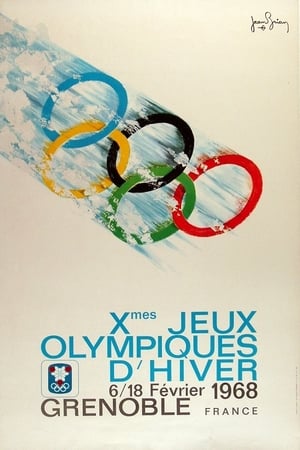
Film about the 10th Olympic Games in Grenoble in 1968. Using a subjective camera, Ertaud and Languepin take the pulse of the Games, cutting out the eyes and slowing down the movement when necessary. The dominant figure at the Grenoble Winter Games is Frenchman Jean-Claude Killy, whose three gold medals matched Toni Sailer's 1956 feat. The filmmakers bet on his winning streak, and include commentary from him as he prepares for each race. Another athlete, Marielle Goitschel, is treated insightfully on screen and wins the women's slalom. Ice dancing fans will appreciate the coverage of winner Oleg Protopopov and his partner Ludmila Belousova. President Charles De Gaulle was present for the spectacular Opening Ceremony.
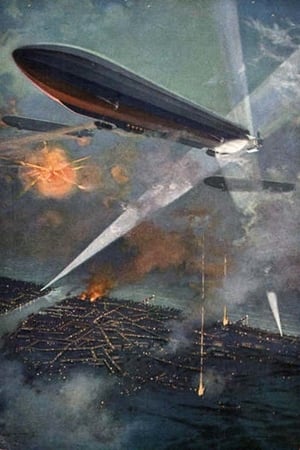
Engineer Dr Hugh Hunt revisits the little-known story of the First World War's Blitz, when the Zeppelin waged an 18-month terror campaign on the people of London.
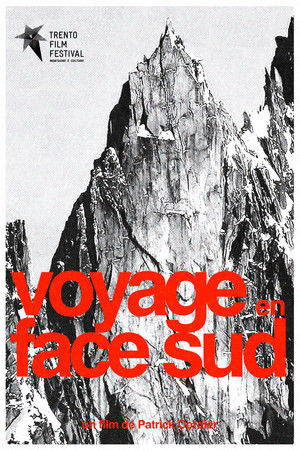
Voyage en face sud (Journey to the South Face) is a mountaineering documentary by Patrick Cordier and Jacques Ramouillet that shows the first solo ascent of the south face of the Aiguille du Fou in 1976 by Patrick Cordier himself. The climb was filmed by Jacques Ramouillet from a nearby ridge. Pierre Torlasco was tasked with belaying Jacques Ramouillet while he filmed. For this filmed ascent, Patrick Cordier opted for the dress code of his time—white clothing, bell-bottom trousers, and a headband—rather than the traditional mountaineering attire. The film was presented at the Trento Film Festival in 1977 and at the Gala de la Montagne (Mountain Gala) at the Salle Pleyel in Paris.
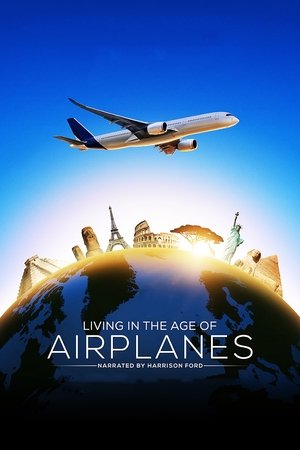
A fresh perspective on a modern-day miracle that many of us take for granted: flying. Narrated by Harrison Ford and featuring an original score from Academy Award® winning composer James Horner, the film takes viewers to 18 countries across all seven continents to illuminate how airplanes have empowered a century of global connectedness our ancestors could never have imagined.
Making of the cinematographic shooting of "Premier de cordée" directed by Louis Daquin in the Mont-Blanc massif. In 1943. Alain Pol films the risky adventure of filming in the high mountains with a team of seventy people. The images of the making-of reveal the technical constraints encountered by the actors and technicians: falling rocks, crossing glaciers and long approach walks at altitude to the filming locations. Six actors and technicians will also be injured and the main role - that of Pierre - will be reassigned to André Le Gall following a bad fall by Roger Pigaut.
In 1910, Arrigo Frusta and the operator Giovanni B. Vitrotti took the camera up to the 4000 meters high of the Mont Blanc chain to make three short mountaineering films for the Società Anonima Ambrosio. They were the first in Italy to realize documentaries in the high mountains. In this first film, a party of three mountaineers, including Arrigo Frusta make a mountaineering traverse in the Mont Blanc Massif. The purpose of the film is not to show a concret ascent, but to show the beauty and spectacularity of the high mountain landscapes and the the fascination of those who venture to conquer the high peaks. The other two films of the series are: 'Da Courmayeur al Colle del Gigante' and 'Sulle dentate scintillanti'.