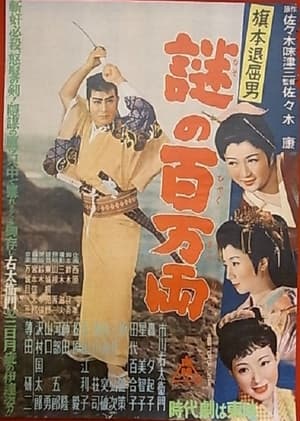
Ryunosuke, a gifted swordsman plying his trade during the turbulent final days of Shogunate rule, has no moral code and kills without remorse. It’s a way of life that leads to madness.
Fewer samurai films are being made, and the Uzumasa studio has fallen on hard times. One day, veteran "kirareyaku" (whose job it is to be felled with a sword by a film's star) actor Kamiyama is tasked with teaching sword action techniques to fledgling actress Satsuki. A few years later, the now-retired Kamiyama is visited by Satsuki, who has become a popular star.
Set at the end of the Sengoku period to early Edo period, "Sanada Ten Braves" follows 10 members of a ninja group who all serve under samurai warrior Yukimura Sanada.
In a poor district of Edo lives a young samurai named Soza. He has been sent by his clan to avenge the death of his father. He isn't an accomplished swordsman however, and he prefers sharing the life of the residents, teaching the kids how to write etc. When he finally finds the man he is looking for, he will have to decide whether he follows the way of the samurai or chooses peace and reconciliation.
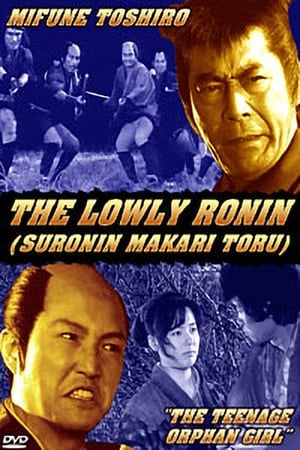
In the Edo period, a nameless ronin accepts an assignment to go to a mountain pass and wait. Near the pass he stops at an inn where a collection of characters gather, including a gang set on stealing shogunate gold that's soon to come over the pass. When the Ronin's assignment becomes clear, to help the gang, he's ordered to kill the inn's residents, including a woman he's rescued from an abusive husband. He's reluctant to murder innocent people; then he learns that the gold shipment is a trap and he's part of a double cross. How he sorts through these divided loyalties tests of his samurai honor, and perhaps of his love for a woman.
Lord Oda Nobunaga plans to control Japan where rival warlords battle by waging war against several clans. His vassal Araki Murashige stages a rebellion and promptly disappears.
A group of ruthless gangsters, an unknown woman and an escaped convict have met, in The Forest of Resurrection, the 444th portal to the other side. Their troubles start when those once killed and buried in the forest come back from the dead.
Miyamoto Musashi is challenged by a series of opponents in this follow up to Miyamoto Musashi's Kongoin Ketto (1942, also called Nitoryu Kaigen) also directed by Ito Daisuke.
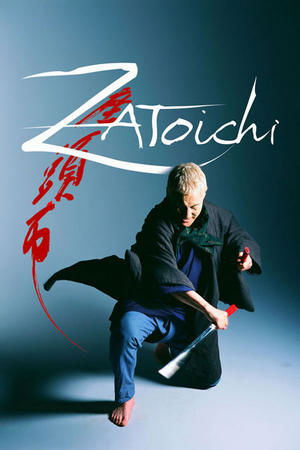
Blind traveler Zatoichi is a master swordsman and a masseur with a fondness for gambling on dice games. When he arrives in a village torn apart by warring gangs, he sets out to protect the townspeople.
In the midst of an industrial revolution, the people of Hinomoto fight hordes of undead creatures, known as Kabane, using powerful armored trains. (Compilation film of the first half of the original TV series.)
In the midst of an industrial revolution, the people of Hinomoto fight hordes of undead creatures, known as Kabane, using powerful armored trains. (Compilation film of the second half of the original TV series.)
A samurai answers a village's request for protection after he falls on hard times. The town needs protection from bandits, so the samurai gathers six others to help him teach the people how to defend themselves, and the villagers provide the soldiers with food.
Lee Cantrell, a young San Francisco attorney by day, at night becomes a samurai warrior, and battles a crazed multi-millionaire who is planning to destroy the city with an earthquake machine.
Upon meeting a young boy named Haruta who makes a living as a pickpocket, Gintoki discovers that he is pickpocketing out of a desire to meet his long-lost mother, Hiwa, Yoshiwara's number one courtesan. Gintoki and his friends venture to Yoshiwara to fulfill Haruta's wish, but standing in their way is Housen, the Night King who rules Yoshiwara.
Frustrated with the bad behavior of his lord, Inaba Yajuro (Otomo) declares that he is leaving the clan and sets off on a journey that leads him into a small town besieged by a violent group of brigands. In a kind of homage to Kurosawa's 7 Samurai, the townspeople have been unable to defend themselves and Inaba sets out to teach them how to stand up for themselves. Meanwhile the vile Lord Yasumasa has sent the 4 finest swordsmen in the clan out to hunt Inaba down and kill him. Led by the magnificent Ichibei (Konoe), a master of weaponry in his own right, everything points to an ultimate showdown between the former friends in a battle to the death.
A warrior-in-training and his bumbling friends go in pursuit of a stolen sword.
In an era where aliens have invaded and taken over feudal Tokyo, a young samurai finds work however he can.
The Black Hooded Man 5
Zatoichi comes upon a dying man who asks him to give a bag of money to "Taichi". Zatoichi has no idea who this is but when he comes upon a small town harassed by gangsters, he finds that "Taichi" was the man's young son. Along his travels he also met a blind monk who makes Zatoichi question his murderous lifestyle. In trying to help the town, Zatoichi kills some gangsters and becomes a hero to the boy. He must make a choice of whether to use non-violence and set a good example, or violence and set the boy on the wrong path in life.
Ryotatsu, the wayward Priest blinded by Shinkai, the Wicked Priest, has his own story in this ultra-violent tale from the era of the Meiji Reconstruction. When a woman leaves her blind son at the Monastery, Ryotatsu is forced to teach the boy how to cope as a blind person in old Japan. When he takes the child with him on the road to find the boy's mother, they run afoul of not only yakuza gangsters, but some corrupt army officers have been trying to sway public opinion against the Satsuma rebels by posing as members of Saigo Takamori's group. It's a bloody mistake for them to underestimate the strength of the Blind Priest, and he'll make them pay with their lives!