The deformed Phantom who haunts the Paris Opera House causes murder and mayhem in an attempt to make the woman he loves a star.
Christmas is now more beautiful and cosy than ever! Experience Christmas in London, together with André Rieu. Decorated Christmas trees everywhere you look, beautifully lit streets, tempting Christmas window displays... Combine the unique London Christmas atmosphere with a magnificent Christmas concert by André Rieu, and you have all the ingredients for a lovely party in the dark December days. Together with fantastic soloists and his always joyful Johann Strauss orchestra, André Rieu provides a fabulous evening with the most beautiful and moving Christmas carols, but also with emotional songs such as Leonard Cohen's Hallelujah, The Holy City and the classic Concierto de Aranjuez. Christmas in London means an evening enjoying lovely music, beautiful costumes and plenty of London cosiness.
A collectively made filmic opera in 35 parts. The Black and predominantly queer art collective, an evolving line up of poets and artists from across the world, abstracts and reimagines opera in any traditional conception. Set to hip-hop, blues, noise, R&B and electronica, the piece uses the voice (chanting, singing, screaming; written by poet and activist Dawn Lundy Martin) as its primary tool, verbalising centuries of alienation, vulnerability and protest in the global African diaspora through its disruptive libretto.
Franco Zeffirelli's magnificient staging of Puccini's final opera - a fairy tale set in a mythical China - is one of the most popular in the Met repertory. In this Live in HD production, Maria Guleghina takes on the title role and Marcello Giordani is Calaf, the unknown prince. Marina Poplavskaya and Samuel Ramey co-star, and Andris Nelsons conducts in his Met debut.
A young woman, married to a wealthy man, but miserably lonely; trapped within a world ruled with an iron fist. Katerina is driven by a lust for life and for love. Her husband, though, is impotent; her father-in-law a tyrant. No wonder, then, that she longs to free herself from this yoke. When Sergei starts work on the family estate, she sees in him a chance for salvation. However, their subsequent affair marks the beginning of a descent into crime.
Prince Abesalom runs into an orphaned Eteri while hunting, falls for her and brings the woman to his palace as his fiancé. The Prince’s aid Murman loses his self-control at Eteri’s beauty and gives her a spelled necklace as a wedding gift. Eteri contracts a mysterious disease that only Murman is capable to heal.
Alone in the woods, a young man is pursued by a horrifying specter and by visions of his deceased sisters. A meditation on the precarious uncertainty of the American Dream and the role that uncontrollable forces play in our lives, The West is a Land of Infinite Beginnings is inspired by a harrowing scene from the opera Proving Up, by composer Missy Mazzoli and librettist Royce Vavrek.
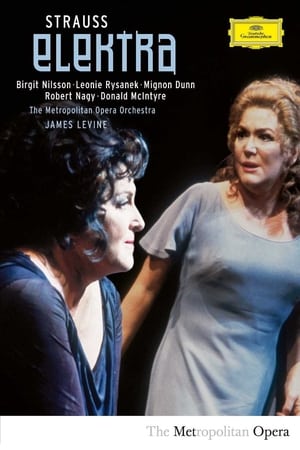
It's hard to imagine confirmed Straussians not wanting this starry Metropolitan Opera performance of Elektra. Strauss and his librettist, Hugo von Hofmannstahl, transformed Sophocles' take on Homer's tale into a harrowing opera noir. Elektra lives for one reason, to kill her mother, Klytämnestra, and her stepfather, Aegisth, the murderers of her father, Agamemnon. In contrast to Elektra's vengeful obsession, her sister Chrysothemis desires to get on with life. When their long-missing brother, Orestes, returns to do the deed, Elektra celebrates with a dance of death and, her sole purpose in life fulfilled, dies. Strauss joined the hermetic plot to music of the utmost opulence, violent and yearning by turns, evoking the cardinal principles of Greek tragedy - pity and terror.
La traviata (Italian: [la traˈviaːta], "The Fallen Woman"[1][2]) is an opera in three acts by Giuseppe Verdi set to an Italian libretto by Francesco Maria Piave. It is based on La dame aux Camélias (1852), a play adapted from the novel by Alexandre Dumas, fils. The opera was originally entitled Violetta, after the main character. It was first performed on 6 March 1853 at the La Fenice opera house in Venice. Piave and Verdi wanted to follow Dumas in giving the opera a contemporary setting, but the authorities at La Fenice insisted that it be set in the past, "c. 1700". It was not until the 1880s that the composer and librettist's original wishes were carried out and "realistic" productions were staged.[3]
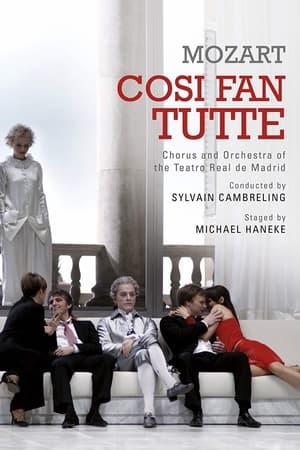
Who loves whom in Così fan tutte, Mozart’s and Da Ponte’s cruelly comic reflection on desire, fidelity and betrayal? Or have the confusions to which the main characters subject one another ensured that in spite of the heartfelt love duets and superficially fleetfooted comedy nothing will work any longer and that a sense of emotional erosion has replaced true feelings? Così fan tutte is a timeless work full of questions that affect us all. The Academy Award-winning director Michael Haneke once said that he was merely being precise and did not want to distort reality. In only his second opera production after Don Giovanni in 2006, he presents what ARTE described as a “disillusioned vision of love in an ice-cold, realistic interpretation”.
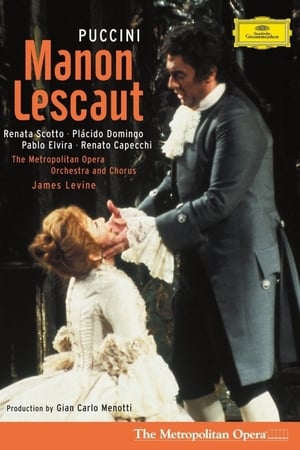
All the throbbing eroticism—and ultimate heartbreak—of Puccini’s youthful score is unleashed by James Levine and his top-flight cast. Plácido Domingo is Des Grieux, the handsome, headstrong young aristocrat who falls head over heels for the enticing, impetuous Manon Lescaut (Renata Scotto). Manon returns his love, but her obsession with luxury ruins them both. Gian Carlo Menotti’s opulent production, with sets and costumes by Desmond Heeley, superbly captures the colorful world of 18th century France.
Having triumphed at the Met in some of the repertory’s fiercest soprano roles, Sondra Radvanovsky stars as the mythic sorceress who will stop at nothing in her quest for vengeance. Joining Radvanovsky in the Met-premiere production of Cherubini’s rarely performed masterpiece is tenor Matthew Polenzani as Medea’s Argonaut husband, Giasone; soprano Janai Brugger as her rival for his love, Glauce; bass Michele Pertusi as Glauce’s father, Creonte, the King of Corinth; and mezzo-soprano Ekaterina Gubanova as Medea’s confidante, Neris. Carlo Rizzi conducts.
Arabella, Op. 79, is a lyric comedy or opera in three acts by Richard Strauss to a German libretto by Hugo von Hofmannsthal, their sixth and last operatic collaboration.
Franz Woyzeck, a lowly soldier stationed in a mid-nineteenth century provincial German town, is the father of an illegitimate child by his mistress Marie.
In Rigoletto, the deformed figure of the hunchbacked jester at the Mantuan court acts as a foil to his cynical and powerful master, an unscrupulous philanderer contrasted with his cruel and unforgiving fool. Rigoletto encourages and welcomes the Duke's conquests, pitilessly mocking his victims until he discovers that the Duke has abducted the one person he genuinely loves, his own daughter. As a result, the character of the court jester is transformed into a tragic figure who, in spite of his evident immorality and malice, allows us to sense the devotion he feels for his daughter and his horror at being destroyed by the same despotic world as that which he himself has helped to create.
The first words uttered by Carmen mark one of the greatest entrances in the history of opera and express all that need be said: “Love is a rebellious bird that no one can tame…” With a devilish sway of the hips and a hint of Andalusian flair, the beautiful cigar-maker sets her sights on a soldier: Don José. Fate will do the rest.
This filmed version of Strauss' shocker features Teresa Stratas as opera's most depraved teenager, and she's as perfect a Salome as one would ever hope to see or hear. Stratas inhabits the role, exploring the character's sensuousness as she vainly woos Jochanaan, her venomous hatred when she's rejected, the crazed look in her eyes when she demands his head--on a silver platter, no less. Such complete identification with a role, especially of a character so malignant helps make this 1974 Salome stand out among the many fine DVDs of the opera.
A lonely mother and her son go to the opera where a performance of Cherubini’s opera Medea is given. It is the mother’s birthday and she wanted to surprise her son by inviting him to the opera. But, the son’s plan were different and he is quite upset about it. His mother tries to break the silent barrier behind which he hides. A semblance of discussion begins, not without humour. Tension is present but, as the performance goes on, both find themselves astounded, captured, alone in the opera house.
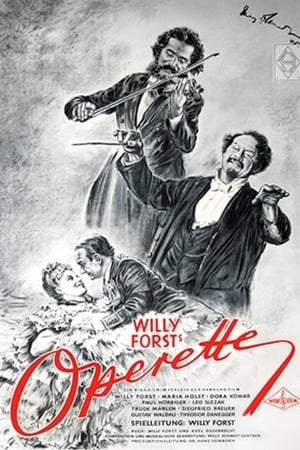
A musician is offered a job in Vienna as stage director, but his disagreements with the aristocratic opera manager end in abrupt firing in spite of a mutual attraction. He's quickly engaged by another theatre and becomes famous for his lavish stage productions and fine acting, which begins their golden age with Suppé and Strauss.
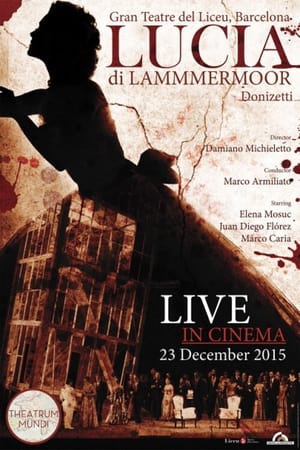
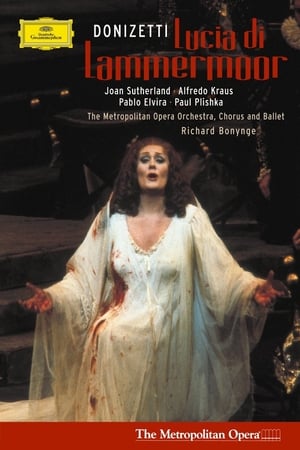
This telecast offers a rare opportunity to see the legendary Joan Sutherland in the role that first catapulted her to international stardom. She drove audiences wild by the way her opulent voice caressed the music’s long phrases and sprinted effortlessly through the fiendish runs, trills, embellishments and stratospheric high notes. One of the glories of the operatic world, her portrayal of Donizetti’s hapless heroine is a multifaceted and moving characterization. The incomparable tenor Alfredo Kraus is Edgardo, the man Lucia loves but cannot have. (Performance taped November 13, 1982. Broadcasted September 28, 1983.)