Journey alongside a young tigress raising her cubs in the fabled forests of India.
The story of life on our planet by the man who has seen more of the natural world than any other. In more than 90 years, Attenborough has visited every continent on the globe, exploring the wild places of our planet and documenting the living world in all its variety and wonder. Addressing the biggest challenges facing life on our planet, the film offers a powerful message of hope for future generations.
"Don't go in the Water." This line bred fear in millions of people around the world. In 1975, Jaws showcased the greatest eating machine, the great white shark, on the big scren and changed the swimming habits of movie-goers everywhere. By far the most feared creature in the sea, this species is responsible for more attacks on human beings that all other sharks combined. Step outside the Hollywood hype and travel to South Australia with an expedition as they attempt to increase understanding and reduce human/shark confrontations. Observe the behavior and lifestyle of the great white shark, and see these miracles of evolution up close in this unforgettable exploration under sea.
Disneynature’s Elephant follows African elephant Shani and her spirited son Jomo as their herd make an epic journey hundreds of miles across the vast Kalahari Desert. Led by their great matriarch, Gaia, the family faces brutal heat, dwindling resources and persistent predators, as they follow in their ancestors’ footsteps on a quest to reach a lush, green paradise.
"Reef Builders" tells the true stories of people involved in the Sheba Hope Grows program, leading major restorations to save the world’s coral reefs in the face of climate change.
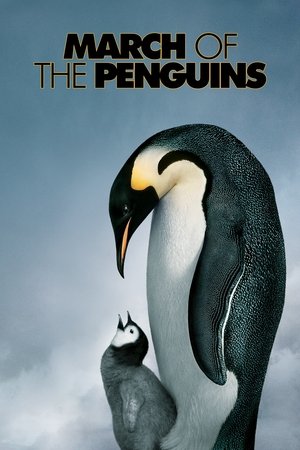
Every year, thousands of Antarctica's emperor penguins make an astonishing journey to breed their young. They walk, marching day and night in single file 70 miles into the darkest, driest and coldest continent on Earth. This amazing, true-life tale is touched with humour and alive with thrills. Breathtaking photography captures the transcendent beauty and staggering drama of devoted parent penguins who, in the fierce polar winter, take turns guarding their egg and trekking to the ocean in search of food. Predators hunt them, storms lash them. But the safety of their adorable chicks makes it all worthwhile. So follow the leader... to adventure!!
From early domestication to mass extermination, the wolf's fate has long been tied to ours, sparking strong emotions and debates even today. It is within this complex dynamic of coexistence that the team behind The Last Survivor explores the reasons that have led us to this point. Traveling to the Ethiopian highlands in search of the Ethiopian wolf, the most endangered canid in the world. Through an honest and authentic narrative, blending immersive adventure and on-the-ground investigation, the film portrays the critical plight of this iconic animal. Supported by concrete facts and scientific testimonies, it invites viewers to reflect on the fragile, yet essential, proximity between humans and wildlife, key to maintaining the balance of our shared ecosystems.
Documentary about chimps in Gombe.
This fascinating film tells the story of one man's struggle to protect a small population of gorillas on the slopes of Mount Kahuzi in Zaire and of his incredible relationship with Kasimir, the great silver-backed male, and his family.
A film crew follows two leopard cubs as they make the fascinating journey from infancy into adulthood in this up-close-and-personal nature documentary.
This documentary focuses on the Green Gabon program in the Congo Basin and explores rainforest conservation efforts as a way to stem climate change.
Documentary about documentary filmmaker Stig Wesslén.
Liz Bonnin introduces a cast of charismatic animals to reveal the remarkable strategies they use to survive, and even thrive, through the winter.
The underwater cinematographer, Rick Rosenthal follows the threatened Bluefin Tuna in their search for a safe refuge along the Atlantic.
Unveil the untamed beauty and captivating stories of Pennsylvania's Elk in a cinematic journey through the state's wild heart.
In DIARY OF A BEE we follow the adventurous journey of a single bee from its birth (or hatching) to the founding of a new colony. Three years of shooting with the latest macro camera technology and special post-processing enable a unique visual language that allows completely new insights into the world of bees - without becoming unscientific. This story is told by Anna Thalbach as the "winter bee" and her daughter Nellie Thalbach, who takes on the role of the "summer bee". Welcome to the big drama of the little pollen collectors!
We call them o-rang-u-tans, which literally means "forest persons" in the Malay and Indonesian languages. They are the only great apes native to Asia. Of all the apes, they are the closest to man in genetic makeup. And they face extinction. Two years in the making, the film is an intimate portrayal of the world of orangutans, the threats to their survival and the people committed to help them thrive. The film focuses on a recent discovery that orangutans do not rely on animal instinct for survival, but instead have a culture that they have preserved from generation to generation.
Early Errol Morris documentary intersplices random chatter he captured on film of the genuinely eccentric residents of Vernon, Florida. A few examples? The preacher giving a sermon on the definition of the word "Therefore," and the obsessive turkey hunter who speaks reverentially of the "gobblers" he likes to track down and kill.
They have no roots, no seeds, no flowers, but mosses show immense survival capacities and can suspend their biological activity for long periods. Today, researchers are exploring the exceptional resistance of these archaic organisms. British ecologists have even resurrected a "zombie" moss that has been trapped in the permafrost for 1,500 years. Associated with decay and disliked in Europe, mosses are deified in Japan. With 25,000 species worldwide, bryophytes - their scientific name - are the seat of real ecosystems, and can develop in inhospitable landscapes, through an extravagant reproduction cycle.
In Canada and Alaska, the consequences of global warming are being keenly felt by brown bears - but in different ways by different populations. Their survival depends mainly on the quantity of wild salmon available in the region, as it is the fruit of their catch that enables the bears to accumulate fat reserves for the winter. While salmon populations off Canada's Pacific coast continue to decline year after year, in the immense Bristol Bay in western Alaska, as well as on Kodiak Island, they are increasing considerably. The water temperature in the North Pacific is now ideal for salmon development. From Canada to Alaska, the documentary follows different bear populations over a two-year period.