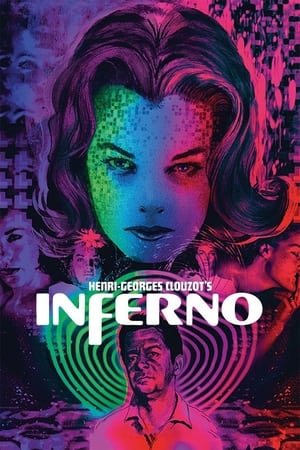
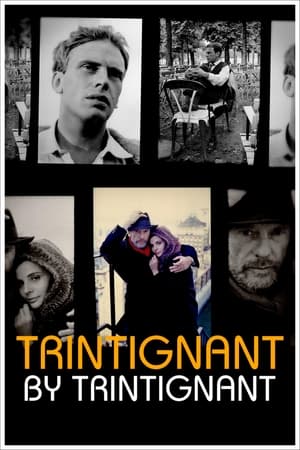
Federico Fellini died on October 31st, 1993. Thirty years later, he is still considered as one of the most irreverant moviemaker in the history of cinema. Through a long-previously-unseen interview, directed by Jean-Christophe Rosé in 1981, through extracts of his films and through behind-the-scenes, this documentary draws an intimate portrait of Fellini by himself.
The mysterious Count Orlok summons a happily married real estate agent to his castle, located up in the Transylvanian mountains, to finalise a terrifying deal.
Documentary illustrating the birth of sound cinema.
Documentary charting the experiences of projectionists who work or worked in cinemas in London, exploring the skills and dedication required for this unique role, set against changes in technology, society, and entertainment.
The glorious and tragic story of American athlete and actor Johnny Weissmuller (1904-84), Olympic swimmer, water polo player and the only true Tarzan, an archetypal character and myth of cinema, that of the original Hollywood blockbusters (1932-48).
The Wolf Man tries to warn a dimwitted porter that Dracula wants his brain for Frankenstein monster's body.
Deranged scientist, Gustav Niemann, escapes from prison and overtakes the director of a traveling chamber of horrors, soon reviving the infamous Count Dracula, the frozen Frankenstein Monster, and the Wolf Man.
Judith Fontaine is looking for her sister Joanie, who has disappeared into the hippie community of Venice, California. It turns out that Joanie has become fallen victim to Groton, an axe-wielding homicidal maniac under the employ of Dr. Durea, the last living descendant of the Frankenstein family and is now both running a house of horrors on the beach's boardwalk and performing experiments on Groton's victims in his basement laboratory.
The history of Frankenstein's journey from novel to stage to screen to icon.
Young couple Scott and Mary are on their way to a Halloween party when their car breaks down, and they encounter a creepy castle where Dr. Frankenstein seeks to put Scott's brain in his monstrous creation. As for Mary, Count Dracula wants her for his mistress.
To be in Venice and see the architecture of New York, to perceive in a painting by Tintoretto the birth of animated images, to look at the burlesque Cretinetti as the ancestor of montage - so many shifts, displacements, and striking telescopings that Philippe-Alain Michaud proposes in this film dedicated to him. To follow this art historian, curator of the cinema collections at the Centre Pompidou, is to go from the oriental carpet to the film, or from the first fireworks to the cinema. And everywhere the animation of the images - projections of Antony McCall, or of Paul Sharits, Column without end of Brancusi, Pasolini's Accatone - everything moves! Under the tutelage of Aby Warburg, the great art historian of the early twentieth century, precursor of iconology and image comparison, to whom Philippe-Alain Michaud was the first in France to devote an important essay, eleven images are placed on the table to describe the singular journey of this art historian.
A fragmented collection of independent closed cinemas, in London during lockdown, captured on Super 8mm film.
In one of those wonderful coincidences of history, lumière, the French word for “light,” was also the last name of brothers Auguste and Louis, whose brilliant invention, the cinematograph, helped to inaugurate the most beloved art form of the last 130 years. Institute Lumière director Thierry Frémaux uses Lumière, Le Cinema! to guide the viewer through over a hundred shorts—some famous, some forgotten, some never before seen—directed by Lumière and company. In the process, Frémaux illuminates how the brothers employed the camera as a creative instrument as they (and their operators) mastered framing, staging, and subject selection for quotidian and exotic microdocumentaries as well as the first ever fictional motion pictures. The result is not only a glorious re(telling) of the genesis of cinema but a profound meditation on the beautiful world captured—and the mysterious world imagined—by the Lumières.
Robert Altman's life and career contained multitudes. This father of American independent cinema left an indelible mark, not merely on the evolution of his art form, but also on the western zeitgeist. With its use of rare interviews, representative film clips, archival images, and musings from his family and most recognizable collaborators, Altman is a dynamic and heartfelt mediation on an artist whose expression, passion and appetite knew few bounds.
Figli del Set
A retrospective documentary about the groundbreaking horror series, Friday the 13th, featuring interviews with cast and crew from the twelve films spanning 3 decades.
Celebrating the splendor and grandeur of the great cinemas of the United States, built when movies were the acme of entertainment and the stories were larger than life, as were the venues designed to show them. The film also tracks the eventual decline of the palaces, through to today’s current preservation efforts. A tribute to America’s great art form and the great monuments created for audiences to enjoy them in.
The Captains' Summit documents the first time in Star Trek history that four stars who at some point have played Captains in Star Trek (William Shatner, Patrick Stewart, Leonard Nimoy, Jonathan Frakes) have been brought together for a 70-minute rare and unprecedented round table event. Whoopi Goldberg, star of Star Trek: The Next Generation, hosts the event.
Le phénomène Godlywood : quand l'Église fait son cinéma !
Dr. Abraham Van Helsing is granted immortality by the Catholic Church until he can hunt down the last vampire prince.