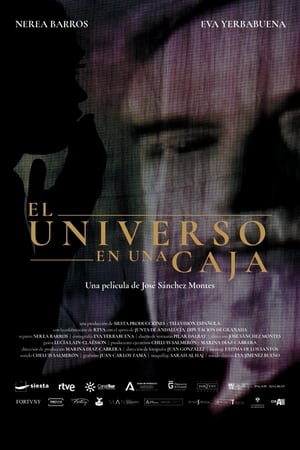
X-ray images were invented in 1895, the same year in which the Lumière brothers presented their respective invention in what today is considered to be the first cinema screening. Thus, both cinema and radiography fall within the scopic regime inaugurated by modernity. The use of X-rays on two sculptures from the Bilbao Fine Arts Museum generates images that reveal certain elements of them that would otherwise be invisible to our eyes. These images, despite being generally created for technical or scientific purposes, seem to produce a certain form of 'photogénie': they lend the radiographed objects a new appearance that lies somewhere between the material and the ethereal, endowing them with a vaporous and spectral quality. It is not by chance that physics and phantasmagoria share the term 'spectrum' in their vocabulary.
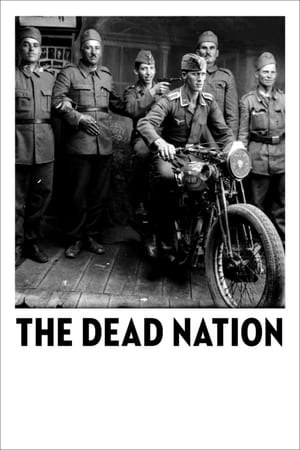
A documentary-essay which shows Costică Axinte's stunning collection of pictures depicting a Romanian small town in the thirties and forties. The narration, composed mostly from excerpts taken from the diary of a Jewish doctor from the same era, tells the rising of the antisemitism and eventually a harrowing depiction of the Romanian Holocaust.
Documentary examines the different paths taken by brothers Edward & Asahel Curtis in their photographs of Northwest Indians and Yukon explorers, as well as their influence on Seattle & Washington state
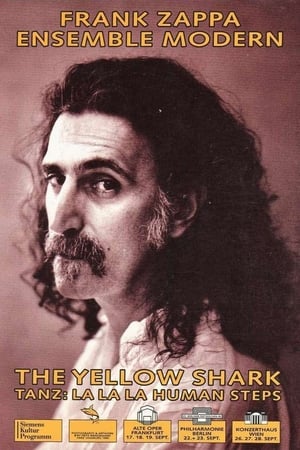
This live recording was culled from seven September 1992 concerts given in Vienna, Berlin, and Frankfurt by the Ensemble Modern, a Frankfurt-based chamber orchestra that performs only contemporary music. Composed and conducted by Frank Zappa.
An average nobody explores the struggle of self-recognition through the lens of a photographer who has spent his life documenting everything.
A shy Greenwich Village book clerk is discovered by a fashion photographer and whisked off to Paris where she becomes a reluctant model.
Man Ray, the master of experimental and fashion photography was also a painter, a filmmaker, a poet, an essayist, a philosopher, and a leader of American modernism. Known for documenting the cultural elite living in France, Man Ray spent much of his time fighting the formal constraints of the visual arts. Ray’s life and art were always provocative, engaging, and challenging.
Ashes and Snow, a film by Gregory Colbert, uses both still and movie cameras to explore extraordinary interactions between humans and animals. The 60-minute feature is a poetic narrative rather than a documentary. It aims to lift the natural and artificial barriers between humans and other species, dissolving the distance that exists between them.
Andrzej Różycki's film is not only a portrait of Zofia Rydet, a female artist, and her working methods, but also a capture of maturity and great passion. Rydet lets the viewer into her world, allowing them to observe her and peek in without restrictions. With great calm, she talks about the anxieties that accompany old age, the inevitable processes associated with it, which, however, are unable to stop her enormous desire to capture moments that pass irretrievably. Rydet's mission is endless, just as the roads she photographed are endless. The artist's skills were a way of life for her; thanks to them, she created, got to know people, saw beauty, shared it, loved, observed the changing landscape, and communicated everything that words cannot express.
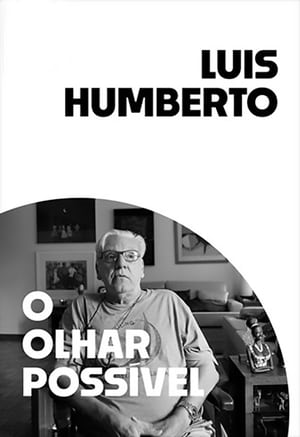
A poetic and intimate look at the life and work of photographer Luis Humberto.
Lucky Jackson arrives in town with his car literally in tow ready for the first Las Vegas Grand Prix - once he has the money to buy an engine. He gets the cash easily enough but mislays it when the pretty swimming pool manageress takes his mind off things. It seems he will lose both race and girl, problems made more difficult by rivalry from Elmo Mancini, fellow racer and womaniser.
Family problems, if not resolved, repeat themselves. This leads Misha, a young photographer, to question his own family's history only to understand that memory has multiple facades.
A film about Josef Sudek.
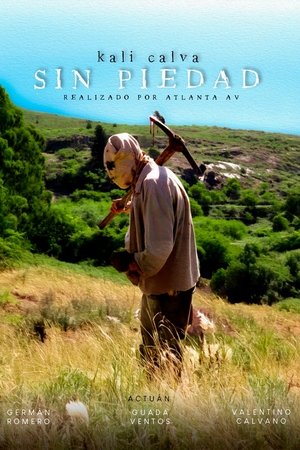
Under the relentless sun, a killer stalks through the mountains, where the innocence of a young couple becomes prey. With no shadows to hide their fate, the hunt is a macabre game in broad daylight, where fear is not hidden in the darkness, but burns with the rawness of the unperturbed noon.
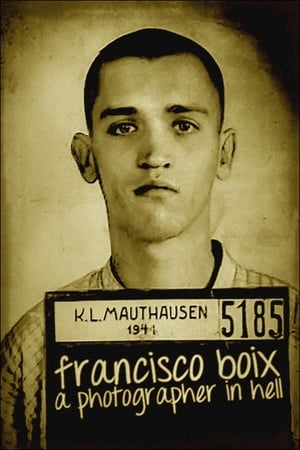
In 1939, just finished the Spanish Civil War, Spanish republican photographer Francesc Boix escapes from Spain; but is captured by the Nazis in 1940 and imprisoned in the Mauthausen concentration camp, in Austria, a year later. There, he works as a prisoner in the SS Photographic Service, hiding, between 1943 and 1945, around 20,000 negatives that later will be presented as evidence during several trials conducted against Nazi war criminals after World War II.
An account of the life and work of the multidisciplinary Spanish artist Mariano Fortuny Madrazo (1871-1949), textile and fashion designer, set designer, photographer, painter and engraver, known as the Leonardo Da Vinci of the 20th century.
Tom Waits 1985 performance of "16 Shells From A 30.6" and “In the Neighborhood” from the album 'Swordfish Trombones' and "Cemetery Polka" and “Walking Spanish” from the album 'Rain Dogs' Live On The Tube.
Lotte (18) and Roos (16) are sisters and both have Usher syndrome. That means they will soon become deaf and blind. It is not known how fast that will go, but they already see and hear a lot worse than their peers. How do these two high-spirited girls deal with their development into adulthood, while the time bomb of deafness and blindness ticks inexorably? They are not deterred from getting the most out of life: Lotte is studying to become a photographer and Roos is passing her final exams. At the same time, they also want to do a few things before it is too late, such as seeing the Northern Lights with their own eyes. Director Kim Smeekes followed Lotte and Roos for the film for two years.
Satirical artist and art director, Suzanne Heintz, adopted her fake family more than 15 years ago to challenge persisting stereotypes about women's lives.
Who gets the idea to write “Nine unfinished symphonies” - one of them perhaps the shortest Symphony in music history? Or "1001 sonatas’ - each lasting about a minute but in total being one of the longest pieces ever written? Like a postmodern Erik Satie the Belgium composer Boudewijn Buckinx is using music history as a playing field. The classical music audience is irritated, the avant-gardist wrinkles his nose... "Daisies in a Meadow" - that's how Buckinx described his "1001 Sonatas” for violin and piano, They play a leading role in our film, in the supporting roles the Spanish sun and the Belgian rain. The latter, however, did not show up at the set - just as you always have to be prepared for surprises with Boudewijn Buckinx. "Why is my music so simple? - Why is my music so complex?" With a wink, Buckinx gives various answers to these recurring questions. The portrait of an immensely productive artist who is radically taking his own path.