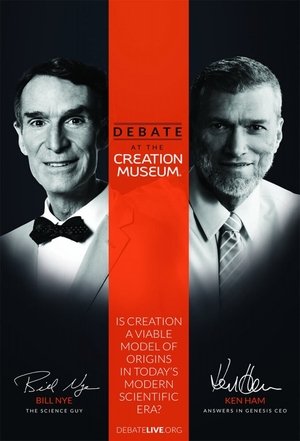
Bill Nye and Ken Ham debate whether creation is a viable model of origins in today's modern scientific era.
A documentary on Al Gore's campaign to make the issue of global warming a recognized problem worldwide.
A documentary film that takes us on a scientific and spiritual journey where we discover that by changing one's perceptions, the human body can heal itself from any disease.
Dr. Helen Caldicott is the most prominent anti-nuclear activist in the world. She's been featured on CNN, 60 Minutes, CBC and Democracy Now. In the 80s, Helen Caldicott campaigned against nuclear weapons testing in the pacific (still responsible today for the majority of tritium we're exposed to), and against the notion of a winnable nuclear war. She was nominated for a Nobel Peace Prize for her efforts. She has always made inaccurate statements regarding civilian nuclear power. But, since the Fukushima-Diachii radiation release has caused (and is projected to cause) zero fatalities... http://www.unis.unvienna.org/unis/en/... ...her tone has changed when speaking to supporters. This has not been acknowledged by prime-time media, as they continue to use her as a source. Any person or media outlet should check Caldicott's history of statements (on any subject) against a domain expert before using her as a source.
BP documentary film exploring the natural beauty of oil under the microscope, and through a variety of other techniques.
William Shatner sits down with scientists, innovators and celebrities to discuss how the optimism of 'Star Trek' influenced multiple generations.
Principles of Curiosity presents a general introduction to the foundations of scientific skepticism and critical thinking, focusing on a simple process we call the three Cs.
The use of embryonic stem cells has ignited fierce debate across the spiritual and political spectrum. But what if we could create manmade stem cells - or find super cells in adults that could forever replace embryonic cells and remove the controversy? Today, we are on the brink of a new era - an age where we may be able to cure our bodies of any illness. Stephen HAWKING has spent his life exploring the mysteries of the cosmos, now there is another universe that fascinates him - the one hidden inside our bodies - our own personal galaxies of cells.
Woolly Mammoth: Secrets from the Ice is a documentary presented by English anatomist Dr. Alice Roberts that reveals some of the secrets of one of the most widely known extinct animals ever. Humans have been transfixed by the Wolly Mammoth since the end of the last ice age when there were still herds of them roaming the continents of Asia and Europe. Despite many people knowing about the great Woolly Mammoth until recently very little was known about them despite ancient humans living along side them for so long; few documented accounts exist.
Join critically-acclaimed author and evolutionary biologist Richard Dawkins and world-renowned theoretical physicist and author Lawrence Krauss as they discuss biology, cosmology, religion, and a host of other topics.
In The Womb is a 2005 National Geographic Channel documentary that focus on studying and showing the development of the embryo in the uterus. The show makes extensive use of Computer-generated imagery to recreate the real stages of the process.
Most people fully accept paranormal and pseudoscientific claims without critique as they are promoted by the mass media. Here Be Dragons offers a toolbox for recognizing and understanding the dangers of pseudoscience, and appreciation for the reality-based benefits offered by real science.
A documentary series from Channel 4, hosted by professor Richard Dawkins, well-known darwinist. The series mixes segments on the life and discoveries of Charles Darwin, the theory of natural selection and evolution, and Dawkins' attempts at convincing a group of school children that evolution explains the world around us better than any religion.
Stones from the sky - tangible pieces of other worlds. After millions of years of wandering in the darkness and the cold expanses of space, meteorites find shelter in the windows of museums. By studying meteorites, scientists know their origins, how they get to the Earth, and from which substances they are comprised. This film also explores the attitude towards this phenomenon in different nations through different times in history.
A documentary about Rosalind Franklin, the scientist who first photographed and discovered the shape of DNA.
Follow three rocket and satellite companies – Astra Space, Rocket Lab, and Planet Labs – and the quests of their idiosyncratic founders to conquer the burgeoning space industry.
Every km of ocean now contains an average of 74,000 pieces of plastic. A 'plastic soup' of waste, killing hundreds of thousands of animals every year and leaching chemicals slowly up the food chain. In Holland, scientists found plastic in the stomachs of 95% of all fulmar birds. In Germany, plastic has been found to affect the reproductive systems of animals, while in the US, conservationists are seeing increasing numbers of dolphins die in agony, their guts blocked with rubbish. What will be the long term impact of this 'plastic pollution'? Can anything be done to clean up our oceans?
In a search for clues about size, the documentary shows why the sun and planets are so large, why insects have shrunk in the course of evolution and how tall trees can actually grow. Fantastic thought experiments are visualized: animals grow many times their normal size and a man is shrunk to the size of an insect. The results of the unnatural reversal of size ratios have incredible consequences. What are the advantages and disadvantages? "Size matters" is a scientific documentary narrated with fictional scenes. Parallel worlds are created in which size appears in a completely new light, often in a different way than previously known. Modern, astonishing CGI sequences support internationally recognized scientists on a journey to both ends of the size scale and help to understand the world in its dimensions.
Dr. Heinz Haber, a noted scientist in the field of atomic energy, hosts this look at the possibility of an exciting new power source. He starts by comparing atomic energy to a genie in a bottle, both of which capable of doing both good and evil, and it is up to humankind to develop safe controls over this largely unexplored science.
Darwin's great insight – that life has evolved over millions of years by natural selection – has been the cornerstone of all David Attenborough’s natural history series. In this documentary, he takes us on a deeply personal journey which reflects his own life and the way he came to understand Darwin’s theory.