"In Pursuit of Excellence" is the story of the oldest and most well know automobile company in the world. Tracing the extensive history of Mercedes Benz from its first car, the three-wheeler, built before 1900 through the Indy winning race cars of the 1990s. Our cameras take you on a journey to meet the men and machines behind this legendary brand. In Pursuit of Excellence also includes exclusive interviews with senior company management and access to the Mercedes Benz company archives (one of the largest corporate archives in the world). We take you inside "The Hidden Garages" to see what can best be described as the Holy Grail for Mercedes Benz enthusiasts, as well as extensive footage from the Mercedes Benz Classic Car Restoration center in Fellbach, Germany, and material shot at the official Mercedes Benz Museum in Germany.
In this daring follow-up to The History of White People in America, comedian Martin Mull takes us on an in-depth look at such topics as White Religion, White Stress, White Politics, and White Crime.
A look at the Brazilian black movement between 1977 and 1988, going by the relationship between Brazil and Africa.
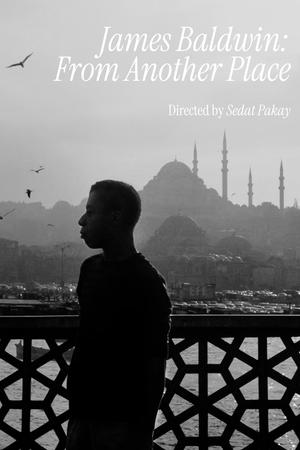
In Istanbul, American writer James Baldwin muses about race, the American fascination with sexuality, insights into his interrupted writing decade in the country, the generosity of the Turks, and how being in another country, in another place, forces one to re-examine well-established attitudes about modern society.
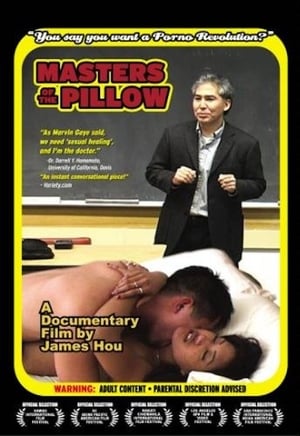
Traces the making of UC-Davis professor Darrell Hamamoto's first-ever Asian American porn movie ("Skin on Skin") from planning to production. Hou interviews filmmakers Justin Lin ("Better Luck Tomorrow") and Eric Byler ("Charlotte Sometimes"), professor Elaine Kim and playwright David Henry Hwang to get at whether Asian America truly needs its own "porno practices" as a way of decolonizing the community's collective sexual imaginations and confronting how sexuality and masculinity are treated in the Asian American community.
Lacey Schwartz grew up in a typical upper-middle-class Jewish household in Woodstock, NY, with loving parents and a strong sense of her Jewish identity - despite the open questions from those around her about how a white girl could have such dark skin. She believes her family's explanation that her looks were inherited from her dark-skinned Sicilian grandfather. But when her parents abruptly split, her gut starts to tell her something different. At age of 18, she finally confronts her mother and learns the truth: her biological father was not the man who raised her, but a black man named Rodney with whom her mother had had an affair.
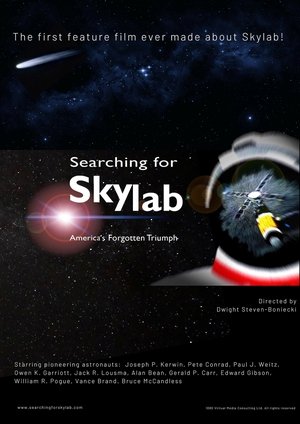
The first American space station Skylab is found in pieces scattered in Western Australia. Putting these pieces back together and re-tracing the Skylab program back to its very conception reveals the cornerstone of human space exploration.
Preschool to Prison is a compelling examination of how the United States public school system is built and operated like prisons. Zero-tolerance policies are used to justify suspension and arrests that set up a pathway to send children of color and children with special needs from school to prison. Children are being suspended, restrained, dragged, physically manhandled, and subsequently arrested for minor offenses such as throwing candy on a school bus. These personal accounts from people affected by the school-to-prison pipeline give riveting tales about the generational impact on society.
Documentary covering the trailblazing career and tragically short life of Laurie Cunningham, the English football star of the '70s and '80s.
Destroyed in a dramatic and highly-publicized implosion, the Pruitt-Igoe public housing complex has become a widespread symbol of failure amongst architects, politicians and policy makers. The Pruitt-Igoe Myth explores the social, economic and legislative issues that led to the decline of conventional public housing in America, and the city centers in which they resided, while tracing the personal and poignant narratives of several of the project's residents. In the post-War years, the American city changed in ways that made it unrecognizable from a generation earlier, privileging some and leaving others in its wake. The next time the city changes, remember Pruitt-Igoe.
This documentary records the extraordinary determination of Jungle Jim Hunter to be the best ski racer in the world. We witness his grueling exercise routines, pre-race tensions, trials and deep religious faith of this dedicated athlete.
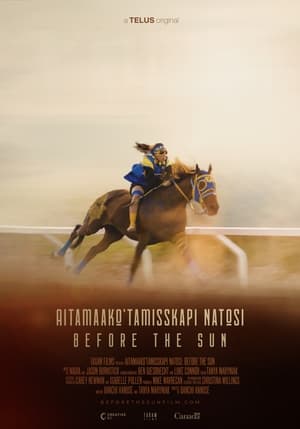
An intimate and thrilling portrait of a young Siksika woman and the deep bonds between her father and family in the golden plains of Blackfoot Territory as she prepares for one of the most dangerous horse races in the world… bareback.
Focusing on the sport of chuckwagon racing at the Calgary Stampede, captured through a mix of aerial, POV, and ringside footage, the film is ahead of its time in the way it captures adrenaline-pumping action. This short documentary offers a ringside view of the chuckwagon race, star attraction of the world-famous Calgary Stampede. Once ponderous Percheron and Clydesdale draught thundered around the course. Now they are racers, and it takes a firm hand to guide such horsepower.
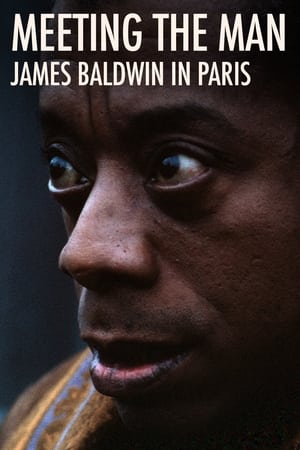
In 1970, a British film crew set out to make a straightforward literary portrait of James Baldwin set in Paris, insisting on setting aside his political activism. Baldwin bristled at their questions, and the result is a fascinating, confrontational, often uncomfortable butting of heads between the filmmakers and their subject, in which the author visits the Bastille and other Parisian landmarks and reflects on revolution, colonialism, and what it means to be a Black expatriate in Europe.
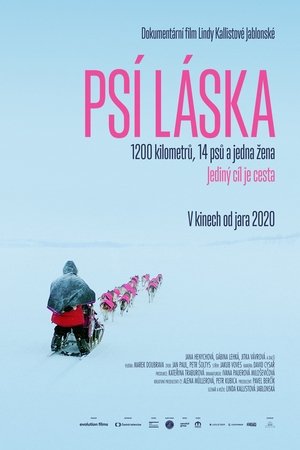
1,200 kilometres of snowy landscape to be covered in 12 days. These are the conditions for the Finnmarksløpet sled dog race and Czech husky breeder Jana Henychová is set to participate again.
When a black teenager is shot and killed attending a bonfire party in Jay, Florida, the town's racist past becomes its present and leads to the uncovering of a shockingly similar murder in 1922 that changed the community forever.
The sun sends us light and energy, enabling life and growth. But it also causes scientists great concern: gigantic, unpredictable solar storms are increasingly threatening our power supply and networks. The US space agency NASA has built a space probe to investigate the causes of these mysterious storm phenomena.
Madeline Anderson’s documentary brings viewers to the front lines of the civil rights movement during the 1969 Charleston hospital workers’ strike, when 400 poorly paid Black women went on strike to demand union recognition and a wage increase, only to find themselves in confrontation with the National Guard and the state government. Anderson personally participated in the strike, along with such notable figures as Coretta Scott King, Ralph Abernathy and Andrew Young, all affiliated with Martin Luther King’s Southern Christian Leadership Conference. Anderson’s film shows the courage and resiliency of the strikers and the support they received from the local black community. It is an essential filmed record of this important moment in the history of civil and women’s rights. The film is also notable as arguably the first televised documentary on civil rights directed by a woman of color, solidifying its place in American film history.
A one hour documentary on the aftermath of the 2013 Alberta Floods in the town of High River.
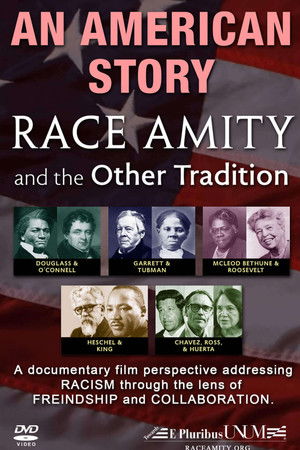
In contrast to the lens that focuses exclusively on the racist traditions that are rooted in America’s social history, the moral counterweight of close, loving, friendship and collaboration, which have always been present in our history, represents “the other tradition.” This “other tradition” is a source of inspiration and presents models of behavior that are instructional and include unknown and uncelebrated legacies to be absorbed and emulated across generations of present day Americans. The documentary discusses the “better in us” a needed collective perspective in the current climate of national disunity across racial, religious, and political lines. This has significant implications for addressing public issues from immigration to health care and the myriad of governmental, educational, business, and religious challenges that we must successfully meet to weave the fabric of unity which is indispensable to survival as a nation.