The documentary follows The Iroquois Nationals Lacrosse Team on the road as they compete in the 2015 World Box Lacrosse Championships. For the first time ever, the Championship Games were held on an Indian Reservation, in Onondaga in upstate New York, the Capitol of the Iroquois Confederacy.
Two brothers from the Onondaga Nation pursue their dreams of playing lacrosse for national powerhouse Syracuse University. The obstacles in their way are frequent and daunting, but their love for the game, each other, and their family’s unyielding determination, propels these youth towards their dream.
A cinematic feature documentary drawn from the original series, following the NDHS lacrosse team through the highs and lows of their preseason, in-season, and postseason, capturing the grit, passion, and brotherhood that defined their journey.
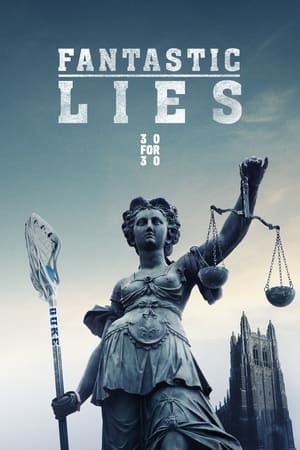
One night in Durham, North Carolina, a rape accusation set fire to the reputations of three college athletes and their elite university. As the Duke lacrosse players grappled with their transition from model student to the criminally accused, several wars were launched on different fronts.
After enduring eleven years as one of the most dominant and controversial players in a professional lacrosse league that was anything but professional, Paul Rabil decides to take the game into his own hands. Partnering with his brother Mike Rabil, the Rabil brothers attempt to raise the capital, poach the top players, fight off lawsuits, and persevere through a global pandemic to change the trajectory of professional sports by launching the Premier Lacrosse League. To complicate matters, Paul must navigate the politics of playing in the league that he also runs.
Sixteen-year-old Poppy has everything her unlimited credit cards can buy, and a spoiled attitude to match. After a final thoughtless prank, her exasperated father ships her off to boarding school in England. There, Poppy meets her match in a stern headmistress and a class full of girls who will not tolerate her selfishness.
After joining the Skulls, Ryan Sommers (Robin Dunne) is warned not to betray any secrets about the organization or its high-powered members. However, when Ryan witnesses a murder within the Skulls' private chambers, he finds that the closer he gets to revealing the truth - the more dangerous life becomes.
A Shaolin-trainer young woman returns to Japan to resuscitate her grandfather's defunct martial arts school.
Sports documentary about an Edmonton lacrosse team from the 1960s
In a small Arctic town struggling with the highest suicide rate in North America, a group of Inuit students' lives are transformed when they are introduced to the sport of lacrosse.
Unable to cope with his military father's sudden death in combat, quick-tempered teen, Conor, starts getting into serious trouble. During an intense lacrosse camp, his father's old friend challenges Conor to get his life on track and become a man.
A high-school English teacher becomes dangerously obsessed with a star athlete who needs academic help.
A native-American lacrosse team makes its way through a prep school league tournament.
When trans lacrosse hotshot Nico Ramirez transfers to a wealthy high school to save his Ivy League scholarship, he’s forced to navigate privilege, peer pressure, and conflicting feelings about his new access to the toxic boy’s club. Will he fight for what he believes and jeopardize his future, or fall in with the crowd and risk losing himself?
When a devastating lacrosse hit turns Solomon White's world upside down, he's challenged to find a new perspective on life in more ways than one. Inspiration arrives in the form of Wren, a blind girl with a strong faith in God who captures his heart.
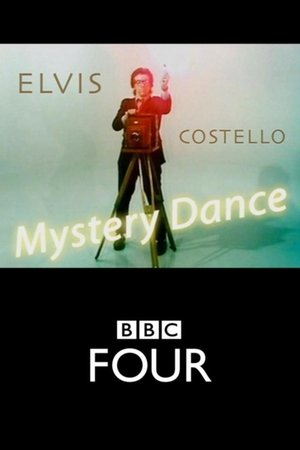
Elvis Costello: Mystery Dance, the first-ever documentary portrait of one of the greatest musicians and songwriters of our time. Assured of Costello’s full collaboration, exclusive access to his extensive archive and with the full participation of his record company, the film is a definitive portrait of a major music icon.
The tours and detours of a husband and wife as they create and release the critically acclaimed album, O' Be Joyful. From working for tips to becoming "Emerging Artist of the Year," the two-man family band uses ingenuity and hard work to create something out of nothing.
Lady Be Good reveals the lost stories of female jazz musicians from the early 1920s to the 1970s. Narrated by musician-composer Patrice Rushen, the film charts the influence of female players from the struggles and successes of early innovators (Sweet Emma Barrett, Lil Hardin-Armstrong), through the rise of the all-woman big bands (Ina Ray Hutton & Her Melodears, the Hollywood Redheads), to the female musicians that were instrumental players (Dorothy Donegan, Mary Osborne) and arrangers (Mary Lou Williams, Melba Liston) for more famous male band leaders, including Benny Goodman and Quincy Jones. Unfolding over nine parts, director Kay D. Ray's debut film weaves provocative and often humorous interviews with female musicians, big band leaders, jazz authors, and historians throughout a film stuffed end-to-end with archival photos, recordings, and performance footage to create a documentary that restores an essential part of our musical history.
This soulful documentary illuminates the hell-and- back life of the late, great L.A. alto sax legend Frank Morgan. A prodigy who was acclaimed as the natural heir to his bebop mentor, Charlie Parker, Morgan derailed his career with heroin, which led him into a life of crime. After decades in prison, he made an astonishing comeback, leaving behind recordings of deep, melancholy beauty. Framed by a tribute concert held in San Quentin, where Morgan’s 19-year-old Asian-American protégé, Grace Kelly, performs a heart-stopping version of “Over the Rainbow,” N.C. Heikin’s film is filled with revealing interviews with the colleagues, lovers, family and wives who accompanied Morgan on his long and rocky journey to redemption.
In Rio de Janeiro, close to the mythical Maracana stadium, venue for the grand final of the World Cup 2014, we find an ordinary football field in the Sampaio neighborhood. There, football happens as a genuine expression of Brazilian culture. With the games on Sundays, the annual slum football league has 14 teams. Each represents the colors and rituals of their community. Geração x Juventude contest the final.