Holocaust Denial vs. Freedom of Speech
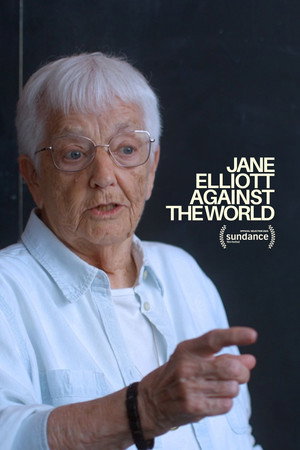
Down the road from Woodstock in the early 1970s, a revolution blossomed in a ramshackle summer camp for disabled teenagers, transforming their young lives and igniting a landmark movement.
Exploring the fallout of MIT Media Lab researcher Joy Buolamwini's startling discovery that facial recognition does not see dark-skinned faces accurately, and her journey to push for the first-ever legislation in the U.S. to govern against bias in the algorithms that impact us all.
Narrated by actress Alfre Woodard, this trenchant, eye-opening doc traces the radical civil rights leader’s life from his tumultuous childhood, through his rise in the ranks of the Nation of Islam, to his 1965 assassination.
Three intrepid women battle for Indigenous women's treaty rights.
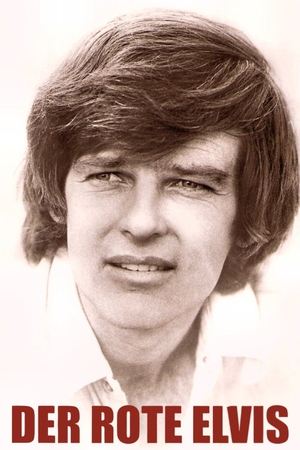
A documentary on the late American entertainer Dean Reed, who became a huge star in East Germany after settling there in 1973.
French documentary campaigning for the liberalization of abortion and contraception, directed by Charles Belmont and Marielle Issartel in 1973.
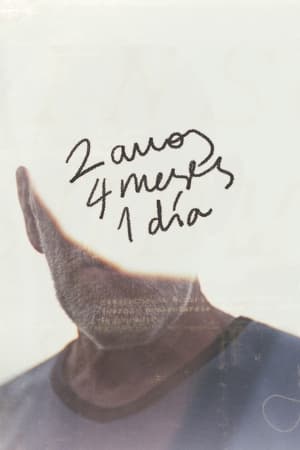
With no choice, César faced leaving his family behind, quitting his job and joining the Army. In an unprecedented chain of events he became the first conscientious objector in Galicia (Spain) to be put in prison. Now, nearly thirty years later, Two Years, Four Months, A Day takes a look at what made him do it.
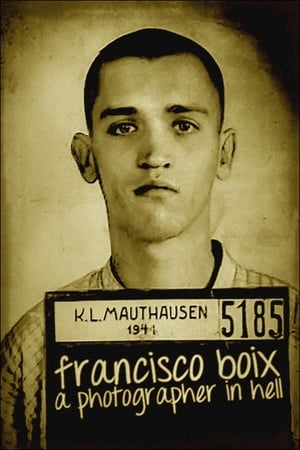
In 1939, just finished the Spanish Civil War, Spanish republican photographer Francesc Boix escapes from Spain; but is captured by the Nazis in 1940 and imprisoned in the Mauthausen concentration camp, in Austria, a year later. There, he works as a prisoner in the SS Photographic Service, hiding, between 1943 and 1945, around 20,000 negatives that later will be presented as evidence during several trials conducted against Nazi war criminals after World War II.
Guy Hircefeld, a veteran who served in the Israeli military at the start of its occupation of Palestine in the 1980s, now fights against the Israeli occupation. His only weapon is a camera.
Combining footage unseen since WWI with original scores from the era, this film tells the story of Noble Sissle's incredible journey that spans "The Harlem Hellfighters" of World War I, Broadway Theatre, the Civil Rights movement, and decades of Black cultural development.
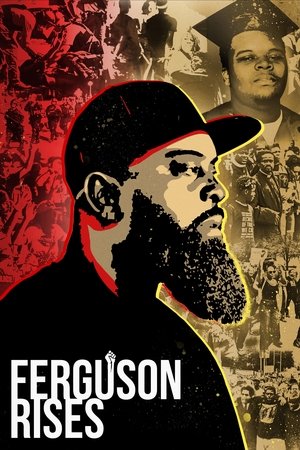
Before George Floyd, before Breonna Taylor, before America knew about Black Lives Matter, there was Michael Brown, Jr. On August 9th, 2014, in Ferguson, Missouri, a white police officer fatally shot an unarmed Brown. The community reacted in protest, anger, frustration, and fear. Six years later, a new story emerges - one filled with hope, love, and beauty.
The black power salute by Tommie Smith and John Carlos at the 1968 Mexico Olympics was an iconic moment in the US civil rights struggle. Far less known is the part in that episode in history played by Peter Norman, the white Australian on the podium who had run second — and the price paid afterward by all three athletes.
Harvey Milk was an outspoken human rights activist and one of the first openly gay U.S. politicians elected to public office; even after his assassination in 1978, he continues to inspire disenfranchised people around the world.
Gloria Allred overcame trauma and personal setbacks to become one of the nation’s most famous women’s rights attorneys. Now the feminist firebrand takes on two of the biggest adversaries of her career, Bill Cosby and Donald Trump, as sexual violence allegations grip the nation and keep her in the spotlight.
Using government documents, archive footage and direct interviews with activists and former FBI/CIA officers, All Power to the People documents the history of race relations and the Civil Rights Movement in the United States during the 1960s and 70s. Covering the history of slavery, civil-rights activists, political assassinations and exploring the methods used to divide and destroy key figures of movements by government forces, the film then contrasts into Reagan-Era events, privacy threats from new technologies and the failure of the “War on Drugs”, forming a comprehensive view of the goals, aspirations and ultimate demise of the Civil Rights Movement…
Stories and music of Black artists who relied on an underground travel guide to navigate the injustices of racial segregation while on the road. The Negro Travelers’ Green Book was a directory of lodgings, restaurants, and entertainment venues where African Americans were welcomed. Features performances and interviews with vocalists, musicians, activists, historians, and others.
A multimedia performance including film, live narration and dance, How Can You Stay in the House All Day and Not Go Anywhere? explores loss and transcendence experienced in human partnerships. Reflecting on his relationship with 102-year-old former sharecropper, carpenter and gardener Walter Carter as well as Andrei Tarkovsky’s science fiction classic, Solaris, Lemon and 6 dancers create a performance which arcs from turbulent physicality to restorative grace.
In 2008 French filmmaker Julie Gali traveled to the US to film the election of Barack Obama. In spite of this victory for civil rights, it soon became apparent that the rights of another minority were under threat. In California the passing of Proposition 8 marked the only time in U.S. history that a civil right was actually taken away after it had been granted. Upon seeing this, Ms. Gali decided to immerse herself in the growing grassroots struggle of the gay community, which culminated in the October 11, 2009 March for Equality in Washington DC.
Investigates the reasons North Carolina, long seen as the most progressive state in the South, became home to the largest Klan organization in the country, with more members than all the other Southern states combined, during the 1960s.