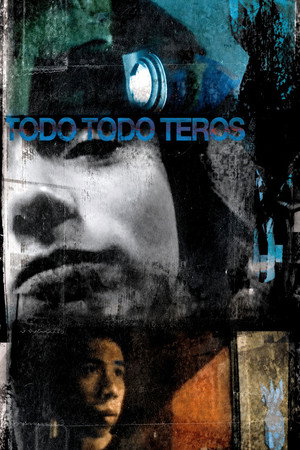
This highly stylized, critically acclaimed film from the 70's mixes silent film cards, a soundscape, color, opera music and atmosphere to explore the Freudian truths about men's fear of women that Wedekind powerfully exposed. A kinetic melodrama of the rise of a femme-fatale and her fate at the hands of Jack-the-Ripper. Rethinking Pabst's silent film and Alban Berg's opera.
Lacking a formal narrative, Warhol's mammoth film follows various residents of the Chelsea Hotel in 1966 New York City. The film was intended to be screened via dual projector set-up.
Avant-garde homage to pre-revolution Russian silent movies, and to the poet Aleksandr Blok.
In Vigo, Spain, during Christmas, Ángel, a Spanish filmmaker, walks through the crowded streets while thinking about a possible movie made of…
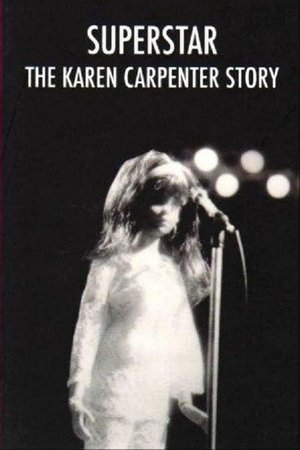
The final 17 years of American singer and musician Karen Carpenter, performed almost entirely by modified Barbie dolls.
Rosso Fiorentino's painting "The Deposition of the Cross" comes to life. The Christ is gradually removed from his cross by the biblical characters who surround him.
Italian immigrant kidnaps a wealthy British woman, and they fall in love.
Return to 'burn' only to find out you're already in that urn.
(Some of us) Still run down the same [mental&emotional] streets we revered/reproached/replaced as children.
Exploring the duality between friendship and loneliness, this intimate narrative short tells the story of David, a bright young boy struggling with a broken home life, as he tries to reconnect with his childhood best friends as they search for something to do in their small suburban town.
Yo creo que...
The Kuwaiti short film العاصفة (The Storm) explores Kuwait's social and economic shifts before and after the discovery of oil. Through the perspectives of an older father and his modernized son, it delves into the challenges of tradition versus rapid modernization.
Five teenage girls gather for a party. Tensions mount as the guests exchange makeovers and hurl accusations. Tears in the bathroom lead to a ghostly kiss. In a circle around the Ouija board, they invoke a spirit. Their faces float in blackness. Five pairs of painted nails caress the planchette as it moves, swirling pale arms behind it. Our host becomes possessed. The characters overlap. Which of these women is not herself? Uzi's Party is a short experimental narrative written, directed and edited by Lyra Hill. All five characters are played by her sister Johanna Hill. Uzi's Party was filmed entirely in-camera on 16mm film, by means of intricately plotted multiple exposures and a cast of thirteen body doubles.
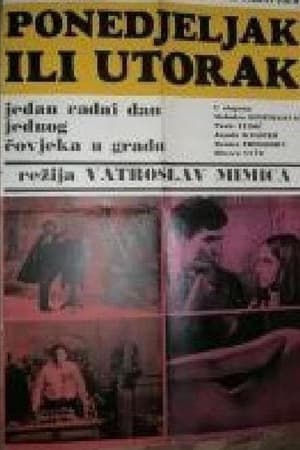
Experimental short film from Yugoslavia. A woman and a man are making out on a bed, when suddenly an odd fellow with a chandelier enters the room. Suspense grows as they have a drink together...
Eleven young film-makers got together to collaborate in this atypical project. Atypical not only because of its technical specs, but because of its narrative structure. There are several scenes with only the city in common, and more as a conceptual presence at that than as a precise geography. None of those scenes contains a single "story": Each one of them is part of a larger situation that we cannot see, as though the beginning and end of each "story" had to be filled in by the audience.
A Japanese salaryman finds his body transforming into a weapon through sheer rage after his son is kidnapped by a gang of violent thugs.
A short film recounting the travels of a lonely astronaut confronted by the unknown. Unfolding as a mystery, it becomes a carefully subtle, autobiographical examination of the feeling of loneliness and the existential issue of not understanding life on earth and ones place among it.
An average working man who is alone in a world of deception finds himself in a marriage of convenience.
The interface of contrary realities is torn. Passion and fear of unbelievable strength are connecting and scattering the siblings. What remains: the search for love - the getaway into another reality?
Hermitage, defined by Bene as "a rehearsal for lenses", beyond any literal rendition - its narrative trace comes from one of his anti-novels, Credito Italiano V.E.R.D.I - displays his immediate attitude to thinking a cinematic language completely based on actor's movements and actions, and more specifically, on his presence and his schemes. Camouflaged or naked, still or moving, his body seems to play and be played at the same time, shifted by objective and subjective tensions, both metaphorically and visually speaking.