Told through letters and enigmatic glimpses of images, Miryam Charles’ film depicts a woman’s travels to Haiti to meet the lover of her partner.
Two brothers move silently through the mundane world, carrying an unseen offering of light. As they journey from place to place, dancing and observing, subtle traces of change begin to appear, revealing how quiet presence can shift everything.
Experimental short film by Barbara Sykes
Early 1960s Haiti during 'Papa Doc' Duvalier's dictatorship seen through the eyes of a young girl whose family has suffered heavily.
With Voice Windows (1986), Steina renews her efforts to generate a complex sound-image interface
Concerns a young boy's mystical experiences during his Confirmation. As the ceremony unfolds, figures from religion and mythology appear and impress on him the need to become a soldier of Christ.
A successful German overseas merchant with a plantation in Haiti is looking for a suitable wife in Hamburg and comes across a barmaid from the Reeperbahn with an illegitimate child. He wants to marry her, but she does not follow him out of nobility. In search of her, he finds her in Mexico as the secretary of his former lover, a writer.
In Recife, a group of young researchers specializing in paranormal phenomena is hired by an enigmatic businessman to find the legendary treasure of Branca Dias. As they delve into the city's rich history in search of clues about the mysterious artifact, they find themselves entangled in a web of frightening secrets hidden in the capital of Pernambuco, putting their lives at risk as they try to unravel the hauntings that surround them.
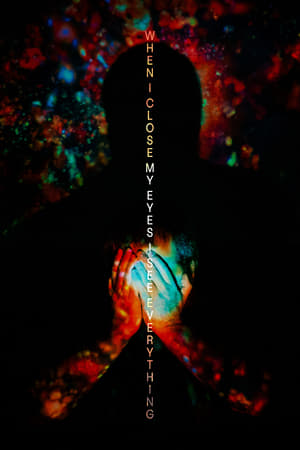
An experimental short film that traces the emotional landscape of life after heartbreak. Through intimate narration and cinematography, the film reflects on time, healing, and the rediscovery of self. A quiet yet cinematic portrait of learning to love the stranger within, and rediscovering the beauty of simply being alive.
The film contains the despair of an artist’s desire for creation on ruthless censorship, rebel, and anxiety in the mid-70s when it was politically and socially depressed.
Trash is an experimental short film about a man walking alone, suffering from the garbage he encounters along his path, offering a discomforting visual experience that mirrors the overwhelming information overload of the contemporary world.
Digital Smoke is an experimental meditation on light, memory, and distortion. Shot at twilight in Minneapolis’s Loring Park, the film captures the moment just after sunset, when street lamps flicker on and reflect across the lake. As Devereaux moves the camera backward and forward, fading light introduces digital noise. Rather than correct it, he amplifies the imperfection, layering light trails until the noise becomes ethereal white clouds—“digital smoke”—that dissolve the boundary between image and abstraction. Frames evoke the hazy textures of J.M.W. Turner and the pixelated aesthetic of early video games, blending painterly romanticism with digital fragmentation.
Belle is processing her toxic relationship and coming to terms with the need to end it. The closer she gets to closure, the more the world around Belle starts to break down - literally and abstractly. Can she come out the other side?
The first embodiment of (a) concept of structural activity in cinema comes in Kren's Bäume im Herbst, where the camera as a subjective observer is constrained within a systematic or structural procedure, incidentally the precursors of the most structuralist aspect of Michael Snow's later work. In this film, perception of material relationships in the world is seen to be no more than a product of the structural activity in the work. Art forms experience.
An absurd, surreal look at the lives of two people and the way their lives turn out after meeting each other.
On a limbo train between life and death, Emelina and Ismael begin to understand their past earthly purpose in order to spiritually transmute helped by the train guard, who will lead them once again to life.
A contrast between two kinds of attitudes to gay liberation in Adelaide.
A young man named Phillip finds himself in a purgatory reality that's littered with clues of his past life. From the discovery of his own corpse to the mysterious connection with a woman scheduled for an abortion, Phillip slowly reveals this doomed fate by his own hands.
In an open letter to the most influential modern Indian political leader, the Late Mohandas Karamchand Gandhi, the filmmaker sequentially narrates the stories of three distinct individuals - that of a confused filmmaker who flows with time, a dedicated social reformer who guides the stratified masses into social upliftment and a divisive and regressive politician. The juxtaposition of their disfigured trajectories provokes a pertinent question: Did Gandhi ever foresee the dehumanized shape that his legacy has now dangerously morphed into?
Short experimental animation by Jules Engel