Napalm is the story of the breathtaking and brief encounter, in 1958, between a French member of the first Western European delegation officially invited to North Korea after the devastating Korean war and a nurse working for the Korean Red Cross hospital, in Pyongyang, capital of the Democratic People’s Republic of Korea.
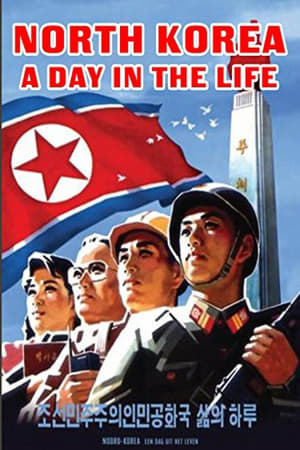
If the cityscapes and patriotic anthems of this film seem a far cry from the bleak landscape of Seoul Train, that's no accident. Dutch filmmaker Pieter Fleury, with the full permission and cooperation of the North Korean government, created this propaganda film that gives us a glimpse of a day in the life of one of the world's most enigmatic societies. A Day in the Life, largely dictated by the North Korean film bureau, follows a typical North Korean family through their daily duties, largely dedicated to the pride in the North Korean nation of comrades and the glory of General Kim Jong Il. The film is meant to extol the success of modern North Korea. But does it? With straight footage and a total absence of narration, viewers may interpret Fleury's film in a slightly different manner than intended
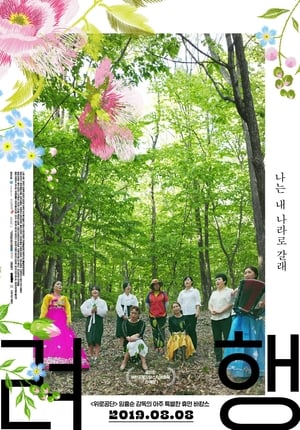
A group of women climbs a summer mountain situated in South Korea. They are refugees who have settled into South Korean society after fleeing from North Korea. For them, climbing the mountains has been an unavoidable journey for survival - a matter of life and death.
"Getting into North Korea was one of the hardest and weirdest processes VBS has ever dealt with. They finally said, “OK, OK, you can come. But only as tourists.” At the airport, the North Korean consulate brought us to a restaurant and these women came out and started singing North Korean nationalist songs. We were thinking, “Look, we were just on a plane for 20 hours. Can we just go to bed?” but this guy with our group who was from the LA Times told us, “Everyone in here besides us is secret police. If you don’t act excited then you’re not going to get your visa. So we got drunk and jumped up onstage and sang songs with the girls. The next day we got our visas. A lot of people we had gone with didn’t get theirs. That was our first hint at just what a freaky, freaky trip we were embarking on…" -VICE Founder Shane Smith
In Maija Blåfield’s documentary, eight former North Koreans talk about what it was like to watch illegal films in a closed society. In addition to the 'waste videos', South Korean films were also smuggled into the country via China.
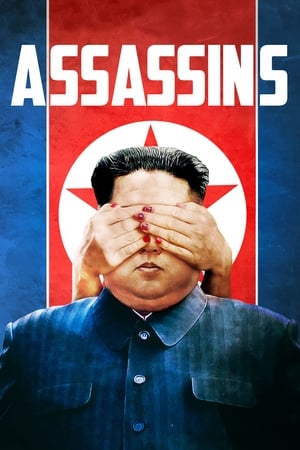
True crime meets global spy thriller in this gripping account of the assassination of Kim Jong-nam, the half brother of the North Korean leader. The film follows the trial of the two female assassins, probing the question: were the women trained killers or innocent pawns of North Korea?
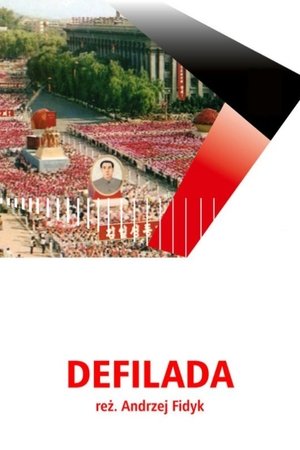
Defilada was made on the occasion of the 40th anniversary celebrations of state's founding in North Korea, which the regime intended to use to eclipse the 1988 Summer Olympics taking place that year in Seoul, South Korea. The North Korean regime invited filmmakers from countries then considered friendly (read: Communist), including People's Republic of Poland, which sent a team under Andrzej Fidyk. The documentary is primarily composed of declarative statements, as well as texts of North Korean newspapers and books. There was no author's commentary. Fidyk commented that he and his team were likely “the most disciplined” foreign team of filmmakers in North Korea, as they did not trouble the regime by looking under the surface - they were content with what they were given and asked to do. (Wikipedia)
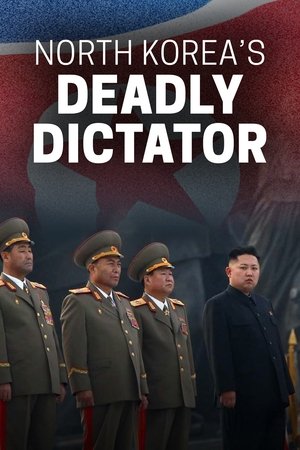
This two-hour special reveals the complicated history, extreme politic, and rigid societal standards that have created a legacy of internal oppression and external aggression. As the North Korean people suffered famine, labor camp and public executions, the Kim regime spent three generations relentlessly pursuing nuclear ambitions. They operate as a criminal syndicate, using counterfeit money, drugs and cyber espionage to fund their war machine. Now, with weapons rivaling the world’s superpowers, their aggressive rhetoric has pushed the world to a crisis point.
Dear Pyongyang is a documentary film by Zainichi Korean director Yang Yong-hi (Korean: 양영희, Hanja: 梁英姬) about her own family. It was shot in Osaka Japan (Yang's hometown) and Pyongyang, North Korea, In the 1970s, Yang's father, an ardent communist and leader of the pro-North movement in Japan, sent his three sons from Japan to North Korea under a repatriation campaign sponsored by ethnic activist organisation and de facto North Korean embassy Chongryon; as the only daughter, Yang herself remained in Japan. However, as the economic situation in the North deteriorated, the brothers became increasingly dependent for survival on the care packages sent by their parents. The film shows Yang's visits to her brothers in Pyongyang, as well as conversations with her father about his ideological faith and his regrets over breaking up his family.
Interpreting an event of ROKS Cheonan corvette, torpedoed and sunken by North Korea, this documentary rebuilds the event with a different insight. No one can tell if the investigation of Cheonan has reached compelling conclusion. But the film tells and reveals how unreasonable Korean society is.
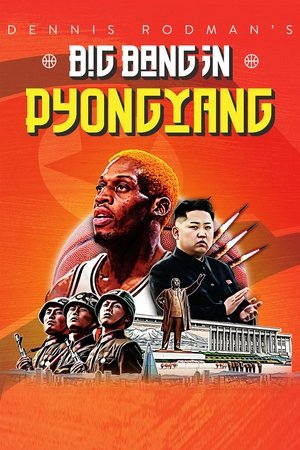
Dennis Rodman is on a mission. After forging an unlikely friendship with North Korean leader Kim Jong-un, he wants to improve relations between North Korea and the US by staging a historic basketball game between the two countries. But the North Korean team isn't the only opposition he'll face... Condemned by the NBA and The Whitehouse, and hounded every step of the way by the press, can Dennis keep it together and make the game happen? Or will it go up in a mushroom cloud of smoke? For the first time, discover the true story of what happened when Dennis Rodman took a team of former-NBA players to North Korea and staged the most controversial game of basketball the world has never seen.
In 1992, political prisoners from North Korea settled in the South Korean town where filmmaker Dong-won Kim lived. Sent to South Korea as spies during the war, they spent 30 years in jail. How did they endure the many years of torture? What will become of them now that they have been released? Twelve years in the making, Repatriation is a very personal view of a country divided by an ongoing cold war.
Maneuvers in the Dark is the story of how three young Swedish entrepreneurs manage to sneak through the backdoor of North Korea in an attempt to produce jeans in the country, and of the spiraling repercussions that follow as they begin to trade with the worlds most sealed dictatorship.
North Korea. The last communist country in the world. Unknown, hermetic and fascinating. Formerly known as “The Hermit Kingdom” for its attempts to remain isolated, North Korea is one of the largest sources of instability as regards world peace. It also has the most militarized border in the world, and the flow of impartial information, both going in and out, is practically non-existent. As the recent Sony-leaks has shown, it is the perfect setting for a propaganda war.
Tracing the footsteps of North Korean orphans who went to Poland during the Korean War, two women, one from the North and the other from the South, bond through the solidarity of wound and forge together a path toward healing.
North Korea has nuclear weapons. How did it manage to get them quietly? Donald Trump is under the impression that as US president he could convince Kim Jong-un, the North Korean leader, to disarm his nuclear weapons and make peace with South Korea. But how was it possible that one of the poorest countries in the world could acquire the knowledge to produce nuclear-tipped rockets?
Dragon smuggles North Korean defectors across borders for a living, and his latest undercover trip with Sook-Ja and Yong-hee takes an unexpected turn when they are left stranded in China. This is just the start of an extraordinary 5,000 km journey.
Portrait of Mrs. B., a tough charismatic North Korean woman who smuggles between North Korea, China and South Korea. With the money she gets, she plans to reunite with her two North Korean sons after years of separation.
Operating under a pseudonym which means 'no boundaries' - North Korean defector Sun Mu creates political pop art based on his life, homeland, and hope for a future united Korea. His hidden identity is nearly compromised when a massive historical exhibit in Beijing is shuttered by Chinese and North Korean authorities.
Over the course of one year, this film follows the life of an ordinary Pyongyang family whose daughter was chosen to take part in Day of the Shining Star (Kim Jong-il's birthday) celebration. While North Korean government wanted a propaganda film, the director kept on filming between the scripted scenes. The ritualized explosions of color and joy contrast sharply with pale everyday reality, which is not particularly terrible, but rather quite surreal.