In 'Queen of Vikretamandi, we follow the stories of three female street vendors in Mumbai. Each woman faces her own challenges but also enjoys her victories. The documentary shows their strength and hard work. It creates a close and powerful picture of how they survive and thrive in a busy city that is always awake.
Family memories and personal art movingly portray author and motivational speaker Aisha Chaudhary's journey with an immune disorder and terminal illness.
A turbulent newsroom drama that intimately chronicles the working days of broadcast journalist Ravish Kumar as he navigates a spiraling world of truth and disinformation.
“Special,” “Gifted,” “Different,”… Despite the vast inventory of words to describe children who are on the Autism Spectrum, we still understand so little about their worlds outside of the medical lens. In Our World follows 3 children in their day-to-day lives – swimming classes, horse-riding, music lessons, special moments with their parents and therapists – and so much more, converging into a narrative that spells hope. The documentary aims to reveal the intricacies of their world and perhaps pave the way for OUR world, and for both to coexist with empathy and kindness.
Kota, a city in North-West India famous for its coaching institutions, attracts more than 200,000 teenagers from all across the country to prepare for the undergraduate competitive exams. These students reside in cubicle sized hostel rooms and study for more than 15 hours a day for two consecutive years to crack the entrance exams for prestigious colleges that has acceptance rate of less than one percent. These students face intense insurmountable pressure from coaching institutes, peers and their families which not everyone is equipped to cope with, resulting in some students taking the extreme step of suicide.
Tree planting in Rajasthan, India, has become a symbol of freedom in the middle of the desert. Families in this community have abandoned the belief that the birth of a girl is a curse.
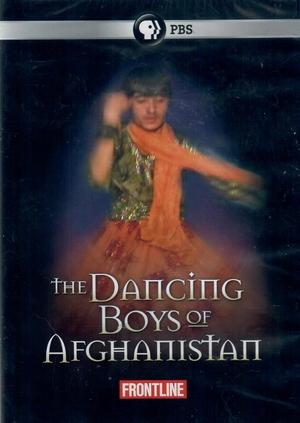
In Afghanistan many hundreds of boys, often as young as ten, are being lured off the streets on the promise of a new life.
Based on the poetry of R. Raj Rao, Bomgay is a collection of six vignettes that depict the underground and complex nature of the gay identity in urban India. Part Genet, part Bollywood, this film combines acidic verse and insightful imagery to reveal the emerging gay community in the post-liberalized India of the 1990s.
Filmmaker Anand Patwardhan looks to history and psychology as he delves into the possible reasons behind the demolition of the Babri Mosque.
An exploration of the 'respectable' and 'immoral' stereotypes of women in Indian society told from the point of view of two striptease dancers in a Bombay cabaret.
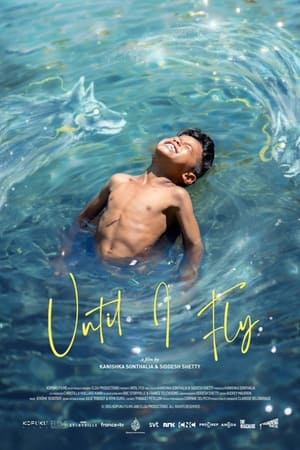
A charismatic Indian-Nepali boy, lives a bohemian life in a remote Himalayan village. As he transitions from childhood to teenagehood, his poetic journey of perseverance echoes issues that span across ages and communities.
Dancing is a passion of the rich, believes Manish Chauhan , the 21-year-old son of a taxi driver in suburban Mumbai. Yet he, like his friend, 15-year-old Amiruddin Shah daydream of becoming principal ballet dancers in big American companies.
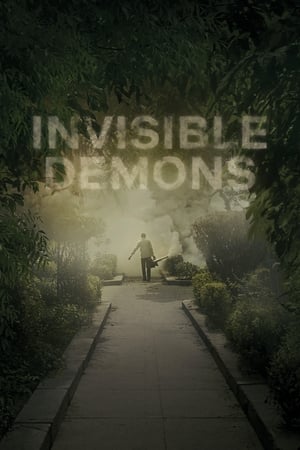
A prismatic meditation on pollution in the capital of the World’s biggest free-market democracy and the most polluted and populated city, Delhi – a film about the pollution inside of the human mind.
A young woman, Srishti Bakshi embarks on a monumental journey, walking almost 4000km over 240 days, from Kanyakumari in the south, to Kashmir, in the North, along the way meeting and learning first hand about the experiences of many women from all corners of India. WOMB is a poignant and heart warming documentary exploring the social and political issues faced by women of today’s India. It is a unique testament to seemingly insurmountable challenges in these unprecedented times and the everyday sheroes who are battling to overcome.
Conversations with 92 year old Kamlabai Gokhale, a pioneering actress of the Marathi stage and the first lady of Indian film. The documentary gives an impression of the history and growth of Indian film and theatre as it was experienced by a woman who struggled against the social structures of her times.
A documentary made by Ghatak for the Government of Bihar observing the life of the Adivasis.
An ethnographic exploration of women’s collectives in the village of Shiv Nath in Himachal Pradesh that has empowered local women since the 1980s, showcasing their journey towards social and economic empowerment and resilience through the narratives of its women.
Amidst the urban transformation driven by progress, bulldozers dismantle 'illegal' settlements, leaving countless lives shattered. In the aftermath of such upheaval, one basti, sacrificed to conceal poverty during the G20 summit, and another basti, abandoned by authorities without alternative housing, illustrate the stark realities of displacement. The film delves into the daily struggles of individuals who persist in the rubble of their former homes.
The film starts with the earliest form of cinema and how Shama Zaidi became an integral part of the evolution of Indian Cinema.
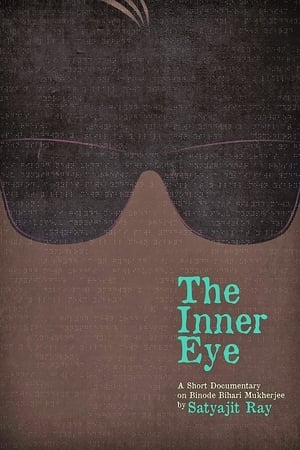
At the age of 54, Binode Bihari Mukherjee, an accomplished painter, lost his sight following an unsuccessful cataract operation. He continued to create art despite his loss of sight. The documentary explores Binode Bihari’s inner eye that guides his fingers to create art.