A documentary on the famous World War II battle, using only on-ground footage from Marines and interviews with veterans.
Julie Mendez was a 17 year old teenager when she saw the "be all that you can be" Army recruiting messaging and decided to enlist. Her life would change forever when she was deployed to serve in the Iraq War. Her experiences changed her and she returned home to face feelings of isolation and depression. Always a creative person, Julie turned to art to help her process her experiences and begin to heal her PTSD.
Joel Hunt served as a combat engineer from 1998-2007, with multiple tours in Iraq. While there, he endured more than 15 roadside bombs, and experienced a traumatic brain injury (TBI). Today, with the help of his dog, Barrett, he uses sports to push through the challenges of having a TBI.
Scott Castle served in the U.S. Marine Corps for four years. While assigned to 1st Battalion, 5th Marines, 1st Marine Division he served three combat tours in Iraq, including the First and Second Battles of Fallujah.
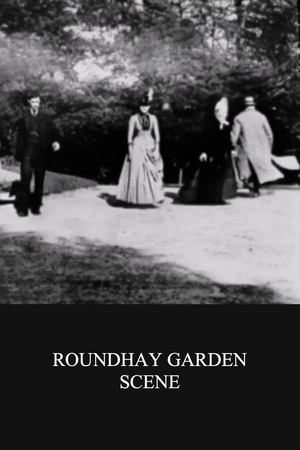
The earliest surviving motion-picture film, and believed to be one of the very first moving images ever created, was shot by Louis Aimé Augustin Le Prince using the LPCCP Type-1 MkII single-lens camera. It was taken on paper-based photographic film in the garden of Oakwood Grange, the Whitley family house in Roundhay, Leeds, West Riding of Yorkshire (UK), on 14 October 1888. The film shows Adolphe Le Prince (Le Prince’s son), Mrs. Sarah Whitley (Le Prince’s mother-in-law), Joseph Whitley, and Miss Harriet Hartley walking around in circles, laughing to themselves, and staying within the area framed by the camera. Roundhay Garden Scene is often associated with a recording speed of around 12 frames per second and runs for about 2 to 3 seconds.
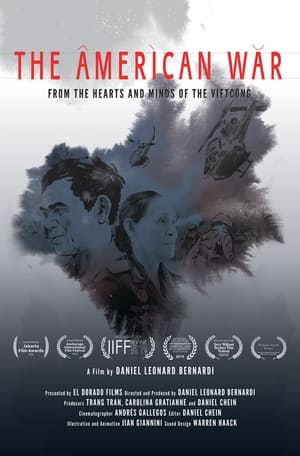
A group of American and Vietnamese fighter pilots gather almost fifty years after the end of the Vietnam War in 1975. Despite their training, aerial combat encounters, and being shot down, these veteran pilots talk as friends with mutual respect.
Mexican American Rodolfo P. Hernandez faced death along the 38th parallel, earning a Congressional Medal of Honor for valor during the Korean War. A story of heroism, perseverance and service, Hernandez proved that even in the most dire circumstances a wounded soldier can accomplish his mission and go on to greater service as a veteran.
Following the tradition of military service in her family, Alene Duerk enlisted as a Navy nurse in 1943. During her eventful 32 year career, she served in WWII on a hospital ship in the Sea of Japan, and trained others in the Korean War. She became the Director of the Navy Nursing Corps during the Vietnam War before finally attaining the rank of Admiral in the U.S. Navy. Despite having no other women as mentors (or peers), Admiral Duerk always looked for challenging opportunities that women had not previously held. Her consistently high level of performance led to her ultimate rise to become the first woman Admiral.
Performed by Constance Smith, Pauline Cushman-Fryer tells us how she became a Union Spy, was almost hanged, was granted the rank of Major by Abraham Lincoln, and died lonely in San Francisco from an overdose of opium.
Tiffany McKinley dismisses the stereotype of a single female personality in the military. For Tiffany, her interest in the Navy was activated by the spread of patriotism after 9/11. In the Navy, she manned the control centers of deployed ships.
In the haunting stillness of post-Soviet suburbia, a lone man walks with purpose — toward the river. With each heavy step across the gray, lifeless field, he carries not only his own weight, but the burdens of an entire generation. He does not speak. He does not turn back. We do not know his name. But we know where he’s going. The River awaits. A meditation on isolation, purpose, and the absurdity of existence, "Идущий к реке" captures the Slavic soul in a single low-res frame. What started as a simple clip from a local Russian TV segment became a viral icon of stoicism, despair, and meme-worthy introspection.
John Baumhackl recalls the early days of the Vietnam War when more and more troops were being sent into combat every month. In 1968, John's number came up and he was drafted into the conflict. Buying a camera at his company store before shipping off, he captured many battles while in a helicopter. John was near the front lines when President Nixon made the controversial decision to push into Cambodia. In John's view, this saved American lives.
Jack "Fingers" Ensch served in the Navy for 30 years. Recounting his experience of getting shot down and held as a POW in the infamous Hanoi Hilton, Jack explains how he was able to move forward from the experience and enjoy a full life.
Raymond Carlson remembers his older brother, a medic killed in action in the Vietnam War when Raymond was only seven years old. The impact of that loss lingers today more than fifty years later.
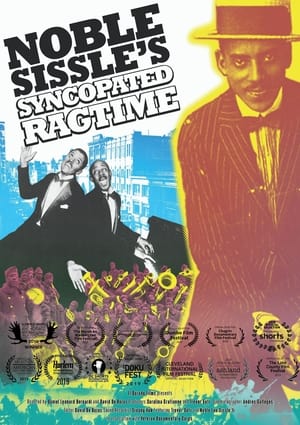
The story of Noble Sissle Jr., a production company owner, community development expert, and veteran of the Vietnam War. Combining archival footage with interviews and family portraits, the film explores Sissle Jr.’s life, and the way he carries on the legacy of his father, Noble Sissle – the famous WWI Harlem Hell Fighter and leader of the Harlem Renaissance. Includes original music and footage of Noble Sissle.
The story of Vietnam War veteran Tim Kochis, who earned a Purple Heart after being wounded in action. Kochis is a world-renowned wealth manager living in San Francisco, California. He provides some key lessons which led to his success and expresses his appreciation for the Veteran's Administration and their support.
Jack Lyon used his experience as a Vietnam Veteran to help found the Veterans Village of San Diego. With a mission of offering peer support and spiritual guidance, Jack immerses himself in a life of helping young U.S. veterans.
Kintaro Walks Japan is a documentary film produced and directed by Tyler MacNiven. It is an account of MacNiven's journey walking and backpacking the entire length of Japan from Kyūshū to Hokkaidō, more than 2000 miles in 145 days.
“The Singer: A Montford Point Marine” tells the story of Henry Charles Johnson, one of the first African Americans in the U.S. Marine Corps and a professional crooner. Lured by the dignified Marine uniform and the allure of the G.I. Bill, he's abruptly thrown into the bare, segregated world of Camp Montford Point, a far cry from the lush expansiveness of Camp Lejeune he'd imagined. The harsh realities of Southern segregation strike a jarring contrast to his accustomed diversity of Manhattan, escalating further with hostility from drill instructors. Undeterred, his resolve is galvanized by the dream of donning the Marine uniform and the prospects following discharge. Post-discharge, Johnson immerses himself in New York's music scene, enchanting audiences with his soulful, Sinatra-esque timbre. This riveting narrative portrays the unmatched fortitude of the Montford Point Marines, representing a crucial African-American, American, and globally relevant human experience.
Despite his horrible experience as a prisoner of war during WWII, Frank Maselskis stays in the military and goes on to fight in Korea, where he participates in the brutal battle of the Chosin Reservoir. Upon returning home, Frank struggles to live a normal life while raising his daughters.