In 1946, Isaac Woodard, a Black army sergeant on his way home to South Carolina after serving in WWII, was pulled from a bus for arguing with the driver. The local chief of police savagely beat him, leaving him unconscious and permanently blind. The shocking incident made national headlines and, when the police chief was acquitted by an all-white jury, the blatant injustice would change the course of American history. Based on Richard Gergel’s book Unexampled Courage, the film details how the crime led to the racial awakening of President Harry Truman, who desegregated federal offices and the military two years later. The event also ultimately set the stage for the Supreme Court’s landmark 1954 Brown v. Board of Education decision, which finally outlawed segregation in public schools and jumpstarted the modern civil rights movement.
A coming-of-age story set in the Dominican Republic, where a group of young aspiring bachata musicians seek answers to love and life through their music. Filmed at the Academia de Bachata, the world's first bachata music school. Featuring maestro Martires de Leon, guitarist and arranger for Romeo Santos.
On 19 March 1966, a photo exhibition about the police intervention during the wedding of Beatrix and Claus opened in Amsterdam. After the opening, filmmaker Louis van Gasteren filmed how, in the distance, policemen began beating up a young man, seemingly without any provocation. This footage was shown that same evening on television. Van Gasteren interviewed the victim, a 22-year-old student, who declared that he was walking in that direction because his ‘bicycle was there’. That became the title of this short film, in which Van Gasteren used slow motion to analyse the objectionable actions taken by the police.
A documentary about the Dallas punk scene from late 1970s to early 2000s.
Food is a unifying force across our communities. In this short film, we share the stories of three Latinos - each from a different country but now living in the same American city - who come together to share flavors of their homeland, all of which include one central ingredient.
This film is an introductory exploration of Dallas, Texas, narrated by Walter Miller. It highlights various aspects of the city, including its location in north-central Texas, 250 miles from the Gulf of Mexico. Dallas is portrayed as a bustling metropolis, nicknamed "Big D," known for its towering buildings, extensive new construction, thriving industries, and comprehensive city services. The film emphasizes the city's rich transportation infrastructure and abundance of recreational opportunities, with special mention of attractions like Six Flags Over Texas. Accompanied by lively music and visuals, the film paints Dallas as a vibrant and dynamic urban hub.
A groundbreaking documentary created by the community of Watts, California — including rival gang members, police officers, victims of violence, and kids just trying to survive.
The only people charged over the brutal police murder of Elijah McClain are community activists who organized mass peaceful demonstrations calling for justice. They are facing up to 48 years in prison - among the highest charges for peaceful political protest in recent history.
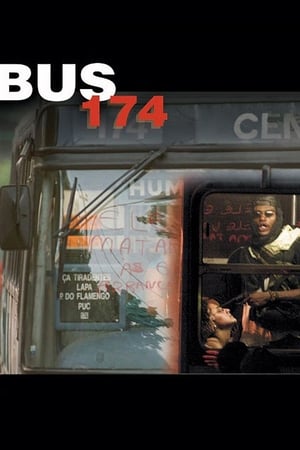
On 12 June 2000, in Rio de Janeiro, Ônibus 174 was taken by an armed young man, threatening to kill all the passengers. Transmitted live on all national networks, this shocking and tragic event became one of violence's most shocking portraits, and one of the most terrifying examples of police incompetence and abuse in recent years.
An in-depth and provocative look at the 1992 Los Angeles riots exploring the roots of civil unrest in California and the relationship between African Americans and LAPD.
United States, September 1st, 2016. American football player Colin Kaepernick kneels during the national anthem, protesting police brutality against black people. Part of the population regards the gesture as an unacceptable affront to the flag. Later, he loses his place on his team. Today, however, he is considered by many as a true hero.
Fault Lines investigates how the Albuquerque police force has become one of the most violent and deadliest police departments in the US and asks if any of the officers will face any accountability.
On April 26, 2014 Douglas Pereira, a dancer, was killed by the police. The film documents the protests following his death.
Alex Jones exposes the growing militarization of American law enforcement and the growing relationship between the military and police. Witness US training with foreign troops and learning how to control and contain civilian populations. You will see Special Forces helicopter attacks on South Texas towns, concentration camps, broad unconstitutional police actions, search and seizure and more.
Alex Jones exposes the problem-reaction-solution paradigm being used to terrorize the American people into accepting a highly controlled and oppressive society. From children in public schools being trained to turn in their peers and parents, to the Army and National Guard patrolling our nation's highways, Police State: The Takeover reveals the most threatening developments of Police State control
1989, New York City's Alphabet City and East Village. A year after the Tompkins Square Park Riot, squatters and their community allies try to stop the demolition of their building after an arson. Police forces occupy the neighborhood while the demolition continues. A portrait of an East Village that is no more. An homage to the voices and sounds of a neighborhood before its gentrification.
A documentary about a case of police brutality in the 80's NYC, the killing of graffiti artist Michael Stewart
February 1980, young Abdelkader Lareiche was shot in the head by a building guard in a housing estate in Vitry. In a context marked by several racist crimes and a policy of security repression, his friends are mobilizing around the “Rock Against Police” movement. Forty years after the events, Philomène sets out to meet the activists and actors of this movement. “Memory is not commemoration, it is the living part of History” confides Mounsi about the massacre of October 17, 1961. This is the heart of Nabil Djedouani’s project, to restore a moment in a living way. of the militant history of the suburbs, registered here in the Rock Against Police movement, but which cannot be restricted to it. A thread stretched from the 1980s to today, which continues to “analyze the collective and murderous unconscious of the French State” and the ways of resisting and revolting.
This raw, gutsy portrait of New York's Chinatown captures the early days of an emerging consciousness in the community. We see a Chinatown rarely depicted, a vibrant community whose young and old join forces to protest police brutality and hostile real estate developers. With bold strokes, it paints an overview of the community and its history, from the early laborers driving spikes into the transcontinental railroad to the garment workers of today.
Ricardo was once Sara, a homeless HIV positive transvestite, living in the underbelly of Manhattan. Today he is a churchgoing, married man, "saved" by a Dallas ministry. He has renounced his homosexuality, but is his conversion complete? Susana Aiken and Carlos Aparicio offer an intimate look at Ricardo's transformation.