Bamzooki is a mixed reality television gameshow on the BBC which features a toolkit developed by Gameware Development. The first series aired in March 2004 on CBBC. The show was presented by Jake Humphrey. It has occasionally featured specials with Sophie McDonnell. In July 2008, it was announced on CBBC on BBC One that Bamzooki was returning. A new thirteen part series began in November 2009 and was now hosted by Barney Harwood and Gemma Hunt.
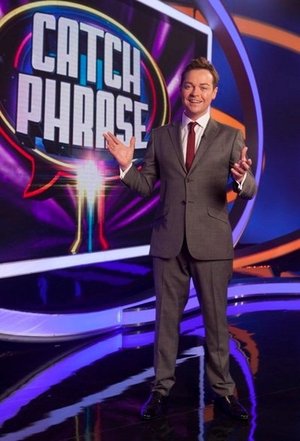
Catchphrase is a British game show based on the short-lived U.S. game show of the same name. It originally aired on ITV in the United Kingdom between 12 January 1986 and 19 December 2002. It was presented by Northern Irish comedian Roy Walker from 1986–1999; followed by Nick Weir from 2000–2002, and Mark Curry in 2002. In the original series, two contestants, one male and one female would have to identify the familiar phrase represented by a piece of animation accompanied by background music. The show's mascot, a golden robot called "Mr. Chips", appears in many of the animations. In the revived version of the show, the same format remains, but there are three contestants. In August 2012, it was announced that Stephen Mulhern would host a revived version of the show beginning on 7 April 2013. On 21 August 2013, it was confirmed that Catchphrase has been re-commissioned for a second series, following the success of the first.
Three people claim to have different talents and skills and a celebrity panel will find out who is fake and who is real.
Croron Mein Khel is a Pakistani gameshow aired on BOL Entertainment.[1][2] Its first host was Nadia Khan.[3][4] It is one of the most famous gameshows in Pakistan. It is also known as CMK. Its slogan is "Kyunke yeh khel hai croron ka" (English: Because This Game is of Millions). It is now hosted by Maria Wasti.
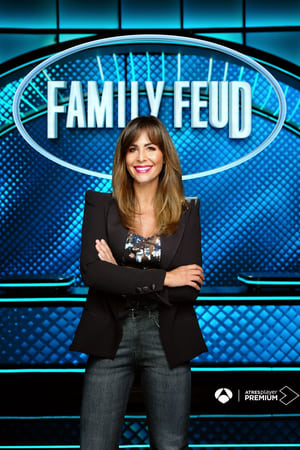
In this family-friendly game show, two teams face off to guess Americans' responses to questions covering a variety of topics.
Bad Influence! is an early to mid-1990s British factual television programme broadcast on CITV between 1992 and 1996, and was produced in Leeds by Yorkshire Television. It looked at video games and computer technology, and was described as a "kid’s Tomorrow's World". It was shown on Thursday afternoons and had a run of four series of between 13 and 15 shows, each of 20 minutes duration. For three of the four series, it had the highest ratings of any CITV programme at the time. Its working title was Deep Techies, a colloquial term derived from 'techies' basically meaning technology-obsessed individuals.
Hollywood Squares is an American panel game show, in which two contestants play tic-tac-toe to win cash and prizes. The "board" for the game is a 3 × 3 vertical stack of open-faced cubes, each occupied by a celebrity seated at a desk and facing the contestants. The stars are asked questions by the host, or "Square-Master", and the contestants judge the veracity of their answers in order to win the game. Although Hollywood Squares was a legitimate game show, the game largely acted as the background for the show's comedy in the form of joke answers, often given by the stars prior to their "real" answer. The show's writers usually supplied the jokes. In addition, the stars were given question subjects and plausible incorrect answers prior to the show. The show was scripted in this sense, but the gameplay was not. In any case, as host Peter Marshall, the best-known "Square-Master" and the man in whose honor the show's first announcer, Kenny Williams, actually "coined" the term, would explain at the beginning of the Secret Square game, the celebrities were briefed prior to show to help them with bluff answers, but they otherwise heard the actual questions for the first time as they were asked on air.
A game show based on the Carmen Sandiego computer game series created by Brøderbund Software.
Masked Singer Suomi
A Swedish quiz show with general knowledge questions, ranging from popular culture to biology and sports. Every week eight contestants compete for 10 000 kr and a place in the final rounds held in spring.
The second version of the American television game show.
In a Temple filled with lost treasures and protected by mysterious Mayan temple guards, six teams of two children compete to retrieve one of the historical artifacts in the Temple by performing physical stunts and answering questions based on history, mythology, and geography. After three elimination rounds, only one team remains, who then earns the right to go through the Temple to retrieve the artifact within three minutes and win a grand prize.
Popquiz
The hit game show where adults have to answer grade-school level questions to win big is back! And this time, the kids play a bigger role as they help contestants prove that they're smarter than a 5th grader.
A professional wrestling television program produced by the World Wrestling Federation banner on NBC airing in place of Saturday Night Live. The series was made up entirely of star vs. star bouts in a time when weekly programming consisted primarily of established stars dominating enhancement talent.
Duellen
Sveriges dummaste
German version of the reality singing competition where celebrities battle it out with one major twist: each singer is shrouded from head to toe in an elaborate costume, concealing their identity from the audience and the viewers at home.
Footage from the popular game show, Takeshi's Castle has been re-edited, re-written and re-voiced into a hilarious, intentionally over-produced, modern "action/X-treme" sports show.
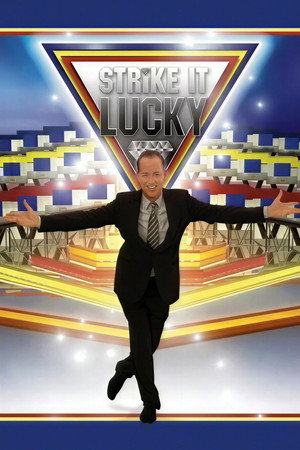
Strike it Lucky was a popular British television game show from 29 October 1986 to 23 August 1999, originally produced by Thames Television for ITV, and presented by the British comedian Michael Barrymore. It was based on the American show of the same name that aired in 1986. In its formative years, it became well known for the outlandish and often highly eccentric contestants it featured - Barrymore would often spend over 5 minutes talking to them. The introductory footage of the prizes on offer were also noteworthy, often filmed in black-and-white with a slapstick style. In 1987, it was the fifth most watched programme on UK television. The Thames Television version of the show was recorded at Teddington Studios, and later Pinewood Studios. From 1996, the new version aired under the title Strike it Rich!; this being the title of the short-lived American game show Strike it Rich! on which it was based, and it moved to The London Studios. The reason for the name change was that the show was now being co-produced by LWT with Fremantle, so despite now being owned by the same company as Fremantle, Thames were unwilling to allow LWT use of the original title. There is also the factor that when the show was first exported to the UK, the Independent Broadcasting Authority's prize limits were still in place, and "Rich" was probably dropped from the title because of the relatively low value of prizes on offer; by the time it returned as Strike it Rich! the limits had been lifted and it was giving away a substantially higher value of prizes.