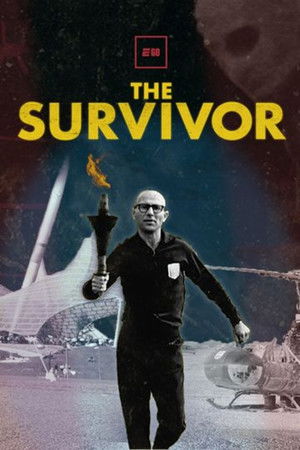
As a 10-year-old “Mengele Twin,” Eva Kor suffered some of the worst of the Holocaust. At 50, she launched the biggest manhunt in history. Now in her 80s, she circles the globe to promote the lesson her journey has taught: Healing through forgiveness.
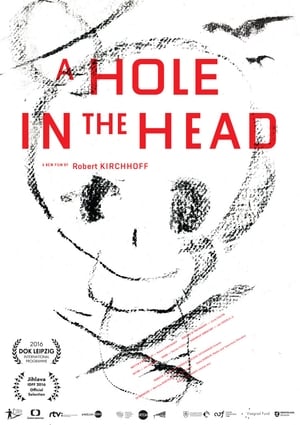
A pig farm in Lety, South Bohemia would make an ideal monument to collaboration and indifference, says writer and journalist Markus Pape. Most of those appearing in this documentary filmed in Slovakia, the Czech Republic, Poland, France, Germany and Croatia have personal experience of the indifference to the genocide of the Roma. Many of them experienced the Holocaust as children, and their distorted memories have earned them distrust and ridicule. Continuing racism and anti-Roma sentiment is illustrated among other matters by how contemporary society looks after the locations where the murders occurred. However, this documentary film essay focuses mainly on the survivors, who share with viewers their indelible traumas, their "hole in the head".
In 1944, two prisoners miraculously escaped from Auschwitz. They told the world of the horror of the Holocaust and raised one of the greatest moral questions of the 20th century.
The documentary tells the life story of Margot Friedländer, a 101-year-old Berlin native who survived the Holocaust and was awarded the Federal Cross of Merit, First Class, in January of this year.
A documentary film that tells the fascinating and incredible story of 13 Jewish survivors of the Holocaust in former Czechoslovakia, during the II World War. These men and women, that back then were children, found a legendary Jewish-German character named Fredy Hirsch, who changed their lives forever. The work describes the terrible living conditions in Terezin Ghetto and; on the other hand, the approach to culture and art behind the walls of the concentration camp. Up to this moment, everything develops as a known story, but by the end of 1943 there is an unexpected turn when these children are deported together with their families to the extermination camp in Auschwitz-Birkenau. And there, in the middle of hell, they lived in.
The secret Nazi death camp at Sobibor was created solely for the mass extermination of Jews. But on the 14th October 1943, in one of the biggest and most successful prison revolts of WWII, the inmates fought back.
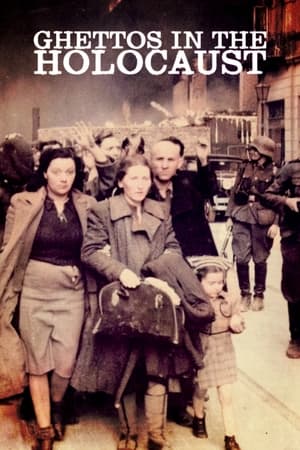
The history of the Warsaw Ghetto (1940-43) as seen from both sides of the wall, its legacy and its memory: new light on a tragic era of division, destruction and mass murder thanks to the testimony of survivors and the discovery of a ten-minute film shot by Polish amateur filmmaker Alfons Ziółkowski in 1941.
An exceptional documentary film that chronicles the liberation of Auschwitz, commencing on the day of liberation and backtracking in time to narrate the tragedy of the Holocaust from four distinct perspectives: the prisoners, the liberators, the perpetrators, and the local residents.
The true story of German-Czech businessman Oskar Schindler (1908-74) as told by some of the Jews — more than a thousand people — whose lives he saved from extermination during World War II.
The life and work of German political philosopher of Jewish descent Hannah Arendt (1906-75), who caused a stir when she coined a subversive concept, the banality of evil, in her 1963 book on the trial of Nazi war criminal Adolph Eichmann (1906-62), held in Israel in 1961, which she covered for the New Yorker magazine.
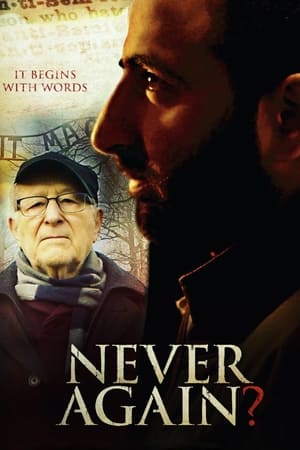
"Never Again?" seeks to educate others on the horrors and consequences of anti-Semitism. The film follows the journey of a Holocaust Survivor and former radical Islamist as they seek to leave behind a legacy of love over hate.
For six female Holocaust survivors, liberation from the camps marked the beginning of a lifelong struggle.
Recalls the day when Holocaust survivors took their first steps into freedom, unaware of their future. Every Face Has a Name puts a name on those nameless faces and lets them recount their feelings of that day, the 28th of April, 1945.
Exodus 1947 is a one hour PBS documentary narrated by Morley Safer with a score by Ilan Rechtman. The Exodus 1947 voyage acted as a catalyst in forming the new State of Israel. The documentary focuses on clandestine and "illegal" American efforts to finance and crew the most infamous of ten American ships that attempted to bring Jewish refugees to Palestine.
Ever Again examines the sweeping resurgence of antisemitism in 21st century Europe and its connection to global terrorism.
He is considered to be one of the most significant links in the history of comedy, admired by such people as Eric Bogosian and Woody Allen. His television appearances have spanned from Merv Griffin to Dick Cavett to David Letterman. His long-running Off-Broadway show was hailed as "diabolical genius". He is Brother Theodore. A former millionaire playboy in the late1930's of Germany, Theodore endured the sobering loss of his entire family, his fortune, and his own identity, as a survivor of Dachau concentration camp. Shipped to America humiliated and stunned, Theodore yearned to reclaim his high-status and wealth. Continually haunted by his loss, and hindered as a displaced foreigner, he tapped "the power of despair" to re-invent himself, capitalizing on his dark, existential humor - to become one of America's most respected humorists and monologists.
70 years after a body is found floating in a Sydney river, middle aged Jewish doctor Jack learns his father, a Holocaust survivor, is responsible for the unsolved murder of an alleged Nazi and sets out on a quest to find the truth.
A documentary portrait chronicling the incredible life of Dr. Ruth Westheimer, a Holocaust survivor who became the United States' most famous sex therapist. As her 90th birthday approaches, Dr. Ruth revisits her painful past and her career at the forefront of the sexual revolution.
The Holocaust began with the indiscriminate mass shootings by the Einsatzgruppen in the bloodlands of Eastern Europe and was perfected in the gas chambers at Auschwitz. “Bullets And Blueberries” explores the motives, methods and madness of the perpetrators, using never-before-seen images captured by the killers themselves — images that fully capture the banality of evil.
In March 1943, twenty-year-old Ovadia Baruch was deported together with his family from Greece to Auschwitz-Birkenau. Upon arrival, his extended family was sent to the gas chambers. Ovadia struggled to survive until his liberation from the Mauthausen concentration camp in May 1945. While in Auschwitz, Ovadia met Aliza Tzarfati, a young Jewish woman from his hometown, and the two developed a loving relationship despite inhuman conditions. This film depicts their remarkable, touching story of love and survival in Auschwitz, a miraculous meeting after the Holocaust and the home they built together in Israel. This film is part of the "Witnesses and Education" project, a joint production of the International School for Holocaust Studies and the Multimedia Center of the Hebrew University of Jerusalem. In this series, survivors recount their life stores - before, during and after the Holocaust. Each title is filmed on location, where the events originally transpired.