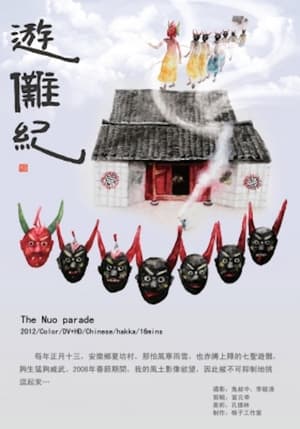
Hakka, a special and little-known ethnic group in Hainan, is a branch of the Chinese Hakka system that has been neglected. They are far from the mainland, and they are rarely mentioned. The relatively closed environment has allowed the Central Plains culture to be completely preserved. After that, it has formed a special change with the ethnic minorities such as Li Miao. However, this unique traditional culture is now fading away in the erosion of modern civilization.
The story took place in 2008. Henan Guo Hui, who was a harvester, went to the provinces to harvest wheat for him. He and his father then invited a driver and set off. I went to Shanxi, Shaanxi, and also included Henan. They met other mairs to talk about the earthquake in Sichuan and talk about the difficulties of collecting wheat. Bargaining with the farmers, thinking of the law less to give the leader a little commission, sometimes to think of the way to get money, sometimes to think of ways to escape the control of the leader. The driver complained that the car owner was too bad, and the owner complained that the driver had eaten too much. In the middle of the road, I also encountered the need to collect the toll, and finally met the young and confused.
Yuguo, from Mongolia, lost his father when he was very young. His mother Liuxia was not able to raise him as a heavy drinker. With social support, she sent Yuguo to Wuxi for free education. Liuxia is depressed all day long, and she finds sustenance of missing Yuguo in reindeer and wine. One winter holiday after many years, Yuguo returns to his hometown, the Evenki settlement deep in the Greater Khingan mountains. At that time, he is no longer the boy who just left home, but a thirteen-year-old teenager. Facing alcoholic mother, poetic uncle, pure people from the tribe, familiar yet strange forest, Yuguo, who grew up in the city, doesn’t know what to do. In the snow-laden mountains of Aoluguya, northeast of Inner Mongolia, the film chronicles their brief time together. Yuguo and His Mother is the second documentary of Gu Tao’s Evenki trilogy.
Xilin Gol grassland in Inner-Mongolia is one of few natural grasslands with high-quality pasture in China. When a rich coalfield is discovered under the ground of this beautifully natural scene, the nomadic herdsmen reluctantly migrate into the cities and wave farewell to their grassland. The water levels lower, plants die, and only sandstorms remain on the prairie.
Unusually popular religions and extreme secular beliefs, unconstrained power and no authoritarian society, people work hard on the land and live thrifty but do not believe in the meaning of life at all. This is Longwang Village, an empty old farming society, the most essential reality of an ordinary western village. The film does not have a perpetual plot. The images are presented with the changing of the four seasons. There is no great joy or great sadness. Everything is recorded, and no results are produced. Strictly speaking, this is actually just a rural video file, a running account of ordinary western villages without all rhetoric.
Only a few days before the Spring Festival of 2008, several truck drivers set off from Nantong, Jiangsu Province, to Guizhou province to deliver goods. But what they didn't expect was that they ran into a big snowstorm not long after their departure. What would these drivers do after they got caught up in a snowstorm and coudn't do nothing about it but wait? How would they react to this unexpected halt? And what would happen to this convoy?
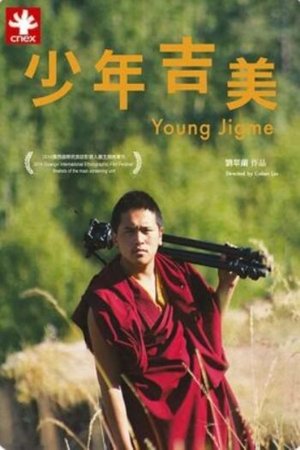
There are two roads in the woods. You can only take one of them, and wonder about the other for the rest of your life. Longwu is a temple of no more than 20 monks. When 17-year-old Jime became a junior monk there, he had no idea whether it's better to renounce or to join the secular world. The temple quietly sits in the depths of a mountain.This year, with only 11 monks left, there are not enough junior monks to officially receive the precepts during summer recluse. The temple seniors decide to have three young monks to do this. Jime is fully aware what this means to him. He patiently waits for an answer to dawn on him. On a dark night, Jime takes out the long roll of sutra that he reads every day, and cleans it carefully by a lamp. This summer, someone has come to the crossroad of life. Of the two roads out there, he can only choose one.
Strange boy was a child picked up by guangbin when he was young. He was raised, but one day his biological parents found him and took him away. At that time, guangbin was not at home, and there was no address left, only a phone number left. Guangbin has since made a phone call to guangbin every few days, and there is only answering the phone, never replying. One day, he was reminded by the landlord that he met a strange poet who was also a doctor in the villagers' mind. The doctor told him many things he had never heard. He had more questions and seemed to be the answer. After the strange boy returned to the original family, the original family had been broken, and everyone gradually became more and more unfamiliar with him from the joy of his return, until they found the secret of their father, the emergence of the mysterious girl, and the chance encounter with the poet, with a sudden "eclipse Festival" breaking all plans.
“If there is any chance, I will let him live well No matter where he is.” The old lady cried and said that when I was visited her and her husband one year ago. Her heartfelt wishes are my motivation, I know that I am going to create this documentary work - the son.
A bunch of indie filmmakers came to the grassland,everybody stayed in a tent, just open their mind and be sincere. They made conversations, which were about their confusion for life and be puzzle for artistic creation. Multifaceted sentiments were created. The goats were not vegetarian animal anymore,and the interlocutors were eating goats. An old man wanted to possess a young girl, the so-called artists were actually a tribe of infantile children. The goats were naked and waiting to be sparked…
Li is over 70 years old, he sits in front of his window in the afternoon every day and smokes the cigarette to pass the time. The sound of water drops in the kitchen, two pigeons are roosting on roof of the opposite building, and the sunshine comes into the room, which make Li feel alive. His emotions usually could be fluctuated with the plot of the TV programmes, because he even could find out his own fitful memories from it. One was is the whole family, another one also is the whole family. During worshipping of the ancestors, he listened to his mother's arrangements and felt sincere concern from his brother. However, happy time was so short. After he returned to his rental place, the only thing that he can do is to look at the dream which was outlined in the New Year's Gala, and which gradually away from his dream. Everything just was the same as the past in this new year, he was still feel so lonely.
Southside Chicago. Crime reports. A Chinese woman. An investigation.The filmmaker, as a newcomer, explored southside Chicago through the filming of a search for a Chinese woman.
The short film recorded a group of children living status in a brick factory.Their parents work here to earn money.Because of the language barrier, living habits and economic conditions, they didn't go to school. But they are living in a wonderful time and they have extraordinary ability to survive......
Aoluguya, Aoluguya is the first film in Gu Tao’s Ewenki Trilogy. A tale that unfolds in the Aoluguya forest, featuring such unique characters as a mother who dulls her sadness over the absence of her son, Yuguo, with alcohol; her brother; and Maria, the tribal chieftain who watches over them.
A small rural township called Red White was seriously devastated by the May 12th Earthquake in China 2008. A 62-year-old Taoist survived even though his temple was largely torn by the disaster. This documentary tells the story of how the Taoist practices the widely believed Chinese traditional religion and the local people’s daily life during the township’s post-quake reconstruction.
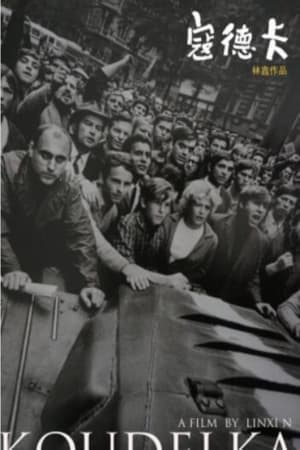
Veteran's Letters to Home
Hyacinthine Scar condenses the undigested emotions in me while traveling from Hong Kong to my brother’s wedding in Guam. Presences and gazes of all sorts, to look and to be looked at, repetitive camera work of the hired videographers, the vow that is rehearsed over and over again by the priest, all the uncontrollable clickings of the shutter from all us (including myself), and the endless sightings of different sides of the fragmented Western Pacific. The many spots I visited appear as though they belong to passersby. They are as real as they are dreamy.
In the Chinese New Year of 2017, Solar and I went together to visit David Zhang who was practicing kung fu on Wudang Mountain. As the three of us interacted, we observed and looked after each other. We also filmed each other to document and reconstruct this experience of listening to each other and growing up.
A silent film by Vietnamese director Truong Minh Quy in collaboration with Belgian director Nicolas Graux, was shot on the set of a film by Graux. We Sit in Silence at the Memorial Table is inspired by Educational Objectives, a poem written by Aleksey Garipov and translated to English by Nicolas Graux.
In the summer of 2007, Gan Xiaoer led an independent film projection team, using projectors and self-made screens, to tour villages in Henan province to show his feature film "Raised from dust" for 8 times, and recorded the process. The 81-minute version of Church Cinema records only one stop, the Qiliying Church, where "Raised from dust" was shot.