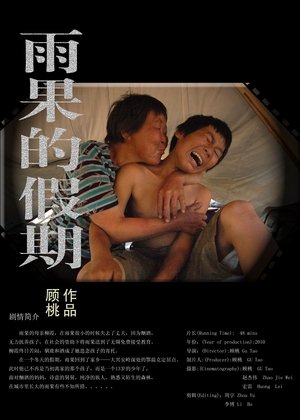
Yuguo, from Mongolia, lost his father when he was very young. His mother Liuxia was not able to raise him as a heavy drinker. With social support, she sent Yuguo to Wuxi for free education. Liuxia is depressed all day long, and she finds sustenance of missing Yuguo in reindeer and wine. One winter holiday after many years, Yuguo returns to his hometown, the Evenki settlement deep in the Greater Khingan mountains. At that time, he is no longer the boy who just left home, but a thirteen-year-old teenager. Facing alcoholic mother, poetic uncle, pure people from the tribe, familiar yet strange forest, Yuguo, who grew up in the city, doesn’t know what to do. In the snow-laden mountains of Aoluguya, northeast of Inner Mongolia, the film chronicles their brief time together. Yuguo and His Mother is the second documentary of Gu Tao’s Evenki trilogy.
Two families' oral history of the Cultural Revolution and their current life.
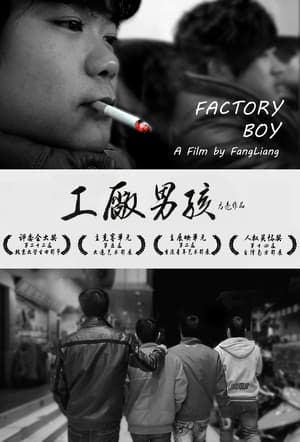
In 1978 Deng Xiaoping set up Shenzhen as a Special Economic Zone in China, and this decision led to the rapid development of Guangdong economy. Numerous factories have been established, millions of people are attracted because of gold rush. Over 30 years later, young people who were away from their home have already stepped in the midlife. Guangdong has become a representative of job hunting and has been drawing a newly young generation who has faith and uncertainty to the future. This video revolves around three working-class boys who are the 90s generation.
It is recommended to watch "Catch the Ghost" first, then watch the film. On the third day of the first lunar month, in Dongchenlou Village, Yuncheng County, family and nephews gathered. Hengxin concealed his parents and started a drinking contest with his brother.
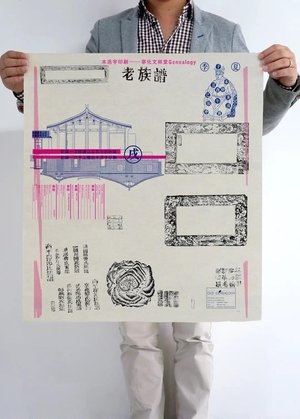
Record the entangled experience for changing the genealogy. Record the experience for engraving movable type, hand-printed.
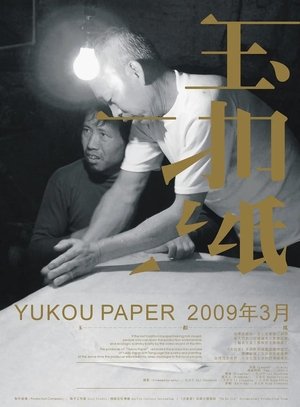
As a kind of traditional handmade paper in the area of Ninghua in western Fujian Province, Yukou paper is named after its soft and delicate quality as well as white and jade-like color. It is the best of handmade papers and needs to go through several complicated and elaborate processes. In a small village deep in the Wuyi Mountains, Xikeng, there were once more than five hundred paper mills, but now only one remains, still struggling to survive. The film crew focused their camera on the paper maker Hu Lanshan's family, quietly recording the process of making Yukou paper, the joys and sorrows of the paper maker’s family, and the changes of the whole era...
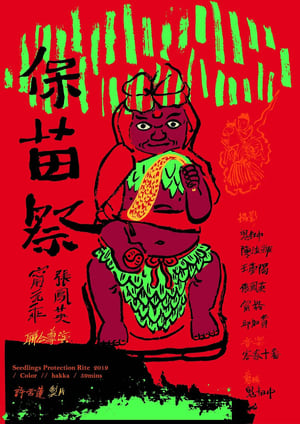
Seedlings protection rite (also called the parade of big rice dumplings) is a spring agricultural festival of Hakka people in Western Fujian, China. People worship the God of Grains (Shennong) in the rite. People collect thousands of fresh bamboo leaves, sew them together and make a pair of big dumplings filled with 120 kilograms of rice each. They also make tens of thousands of finger-sized rice dumplings for believers to take home. On the 15th day of the 2nd lunar month, villagers carry out the statues of the God of grains and big dumplings. Followed by flowers cars, eight sheds carry children chosen from every clan name in the village who are dressed up as ancient heroes, as people parade around the village. After the rite, villagers believe that farmland is awakened and that disasters are averted. A new agricultural cycle begins.
Don't forget to have poetry when making a living. This is romance. Even if you live in a sheepfold, you have a holy smile like a baby. This is romance. Listening to folk songs from the workers' hometown at the construction site in Shenzhen is touching. Once the song stops, you become eager for it. This singing series is also called "Sharing Hometown" and “Lingering Songs". You see, the eyes of the singing workers are shining, because we are all close to the Buddha.
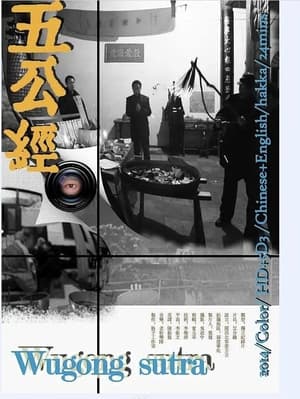
The "Wugong sutra" is also known as "Transfer to the Sky". A prophecy written by the people since the Five Dynasties Northern Song Dynasty is said to be the proverb of the Tiangongshan Zhigong, Huagong, Yigong, Tanggong and Baogong Wugong Bodhisattvas. The salvation people were robbed at the end, often used by rural secret social organizations, and also banned by the imperial court rulers. The belief in the "Five Annals" in the rural society of northwestern Yunnan has abandoned the function of politics, and only pays attention to the practical effect of the Wugong sutra curse on treating and saving people and protecting one side. This film is a field survey of the Wugong sutra as a folk belief in rural society in northwestern Yunnan.
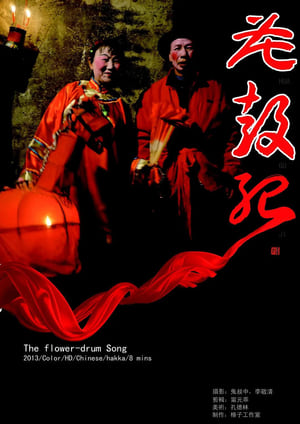
The arrogant Hua Pozi, the first-time brother who is full of joy. Even the seemingly greasy, exaggerated, and gaudy drum art seems to be unrelenting in the villages and villages.
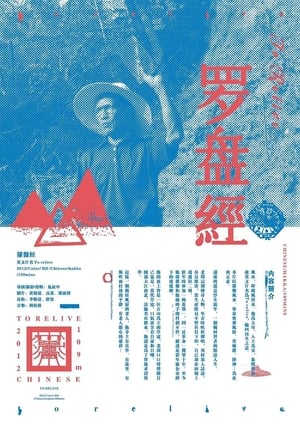
Geomancy is to say hinding winds to gain water. The earth is mother , burial brings peace to the deceased, symbolizing reincarnation. So the name of this story in English is “Revive”, which means getting into the cycle of reincarnation. The documentary is going to tell a story contains several elements such as Geomancy of compass, Hakka funeral and interment culture, General om teach, Seance. Moreover, it also porse deeply on the floating life with fleeting time- the sanguine life of a wise man in countryside. This is an old man whose life is full of hardships, he possesses real learning and stories, owns peace after overcoming severe difficulties, and has the special graciousness as being in such an age…
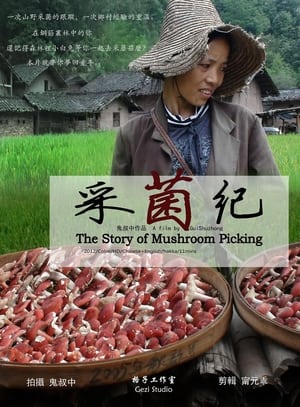
In the mountains of western Fujian, mushrooms emerge in large numbers after rain. Hakka people pick mushrooms up the mountain with baskets at three or four o 'clock in the morning. The process of picking mushrooms is also the process of harvest.
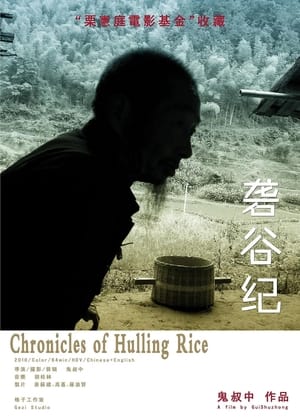
In the sound of rice huller, the rice falls to the jar; and in the booming sound of thunder, the rain drops falldown on the ground. Witha shovel on shoulder, we're farming under the sky. -- This is a children's folk rhymes used to be very popular among the Hakka people lived in the westernpart of Fujian Province, China. While farming is not an easy work, rice hulling is an even more laborious work. Rice-huller is a tool used by the peasants in southern China to hull the rice for thousands of years in theirfarming history. This documentary films the making of probably the last rice-huller ever made by mankind.
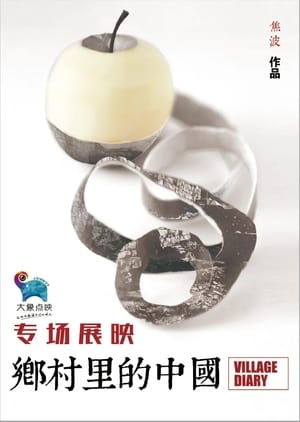
Village Diary
What are we doing after the war?
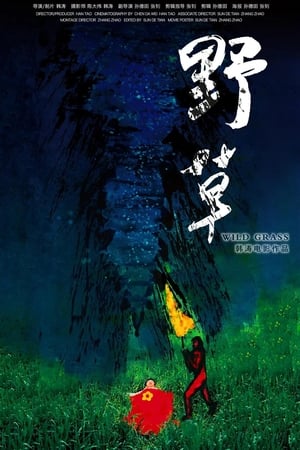
WILD GRASS
The story of a girl attempted suicide for love and finally returned to religion.
This story is about the group's marvellous life without money.The film tell this story from six points of view: the screenwriter, the recording, the photography, the art, the performer and the director.
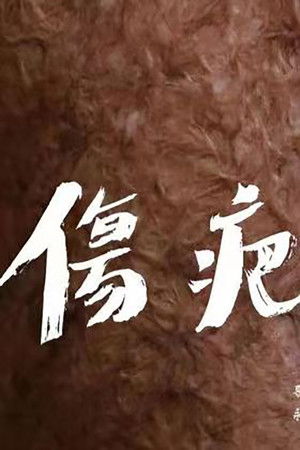
Scars, which are unfortunate or unexpected results, are also signs of healing. This new connective tissue replaces the process of injured tissues, and at the same time it becomes a metaphor for the pain and frustration of life: the sadness of the body, the union of pain... In short, scars have become a proof, a proof of existence, a proof of alive, a proof of pain, and a proof of a certain age. Beginning in 1949, in this vast land, these various scars, these healing marks, patterns, sad shapes, bring personal memories, collective pains, the marks of history, and come together Gaze, the meaning of the record. This film is the first part of the "Scar" project, the story of 110 Chinese scars.
The baby is a temporary floating population. He works diligently, from a small restaurant owner to a tea shop manager to a bar manager. This film records the survival state of children centered and gay comrades: trivial, messy, boring, and entertaining themselves. The camera calmly captures every bit of their daily life for more than two years, and as time goes by, the changes the baby presents are more ordinary. The film calmly explains the relationship between "comrades" and "society", and the various small details interpenetrated in the film also metaphorically reflect the changes of today's society