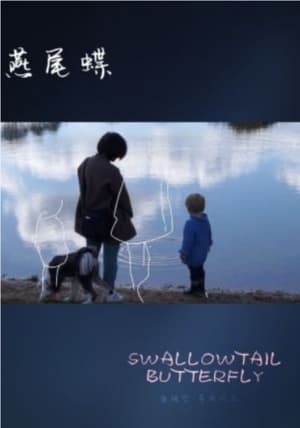
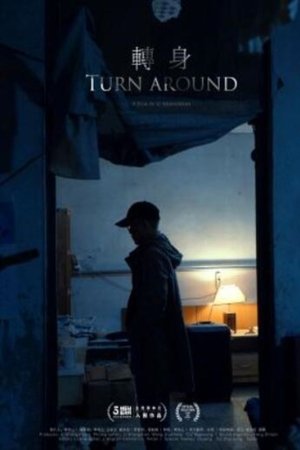
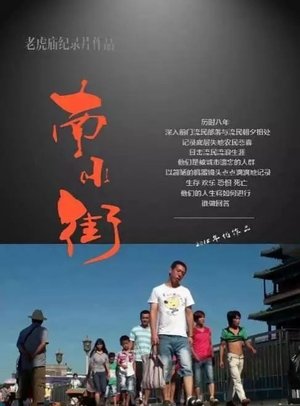
Her, not only her, they are all the only children in the family, Typical underachiever, they often escape away from their broken family r ,Humbling every day with others young people like her in Internet cafes . when she finally plans to go home, she only to find that her family had moved away… ….She became one of them.
Hyacinthine Scar condenses the undigested emotions in me while traveling from Hong Kong to my brother’s wedding in Guam. Presences and gazes of all sorts, to look and to be looked at, repetitive camera work of the hired videographers, the vow that is rehearsed over and over again by the priest, all the uncontrollable clickings of the shutter from all us (including myself), and the endless sightings of different sides of the fragmented Western Pacific. The many spots I visited appear as though they belong to passersby. They are as real as they are dreamy.
China marks the beginning of the extensive Asian theme in Ottinger’s filmography and is her first travelogue. Her observant eye is interested in anything from Sichuan opera and the Beijing Film Studio to the production of candy and sounds of bicycle bells.
The artist works around the different individual experiences which consolidates the different changes in the body while examines intimate relationships under the structure of the disease, all by making her experience visible and public. Within the realms of Ruijing’s discussions, she hopes for the work to push the boundaries of the marginality of the body, for the work to allow oneself to look at their and others’ body in an objective manner that escapes the ontological. She further wished for the experience of living and the reflection on the mass would help the discovery of the self and its connection with society, while reflecting on life itself by doing so.
After the outbreak of the war in Ukraine, I reached out for a Ukrainian who studies in Beijing. Born in Russia, his father was Russian and his mother is Ukrainian. As the war escalates, his hometown was also bombarded, and his family breaks apart while his mom seeks for asylum in Bulgaria and his stepdad staying at home. He is about to leave China, feeling lost about his next destination. Gradually Mark and I have more resonance. And the pain caused by war started to strike me too.
Seedlings protection rite (also called the parade of big rice dumplings) is a spring agricultural festival of Hakka people in Western Fujian, China. People worship the God of Grains (Shennong) in the rite. People collect thousands of fresh bamboo leaves, sew them together and make a pair of big dumplings filled with 120 kilograms of rice each. They also make tens of thousands of finger-sized rice dumplings for believers to take home. On the 15th day of the 2nd lunar month, villagers carry out the statues of the God of grains and big dumplings. Followed by flowers cars, eight sheds carry children chosen from every clan name in the village who are dressed up as ancient heroes, as people parade around the village. After the rite, villagers believe that farmland is awakened and that disasters are averted. A new agricultural cycle begins.
The "Wugong sutra" is also known as "Transfer to the Sky". A prophecy written by the people since the Five Dynasties Northern Song Dynasty is said to be the proverb of the Tiangongshan Zhigong, Huagong, Yigong, Tanggong and Baogong Wugong Bodhisattvas. The salvation people were robbed at the end, often used by rural secret social organizations, and also banned by the imperial court rulers. The belief in the "Five Annals" in the rural society of northwestern Yunnan has abandoned the function of politics, and only pays attention to the practical effect of the Wugong sutra curse on treating and saving people and protecting one side. This film is a field survey of the Wugong sutra as a folk belief in rural society in northwestern Yunnan.
In the sound of rice huller, the rice falls to the jar; and in the booming sound of thunder, the rain drops falldown on the ground. Witha shovel on shoulder, we're farming under the sky. -- This is a children's folk rhymes used to be very popular among the Hakka people lived in the westernpart of Fujian Province, China. While farming is not an easy work, rice hulling is an even more laborious work. Rice-huller is a tool used by the peasants in southern China to hull the rice for thousands of years in theirfarming history. This documentary films the making of probably the last rice-huller ever made by mankind.
An exploration of the Cultural Revolution that depicts both its chaotic later years – through the story of a squad of Red Army guards running amok in the countryside – and its continuing legacy in today’s China.
A Yangtze Landscape utilizes a non-narrative style, setting off from the Yangtze's marine port Shanghai, filming all the way to the Yangtze River's source, Qinghai/Tibet - filming a total distance of thousands of kilometers. Experimental music and noise recorded live on scene are used in post-production, painstakingly paired with relatively independent visuals, creating a magically realistic atmosphere contrasted with people seeming to be 'decorative figures' right out of traditional Chinese landscape scrolls.
A silent film by Vietnamese director Truong Minh Quy in collaboration with Belgian director Nicolas Graux, was shot on the set of a film by Graux. We Sit in Silence at the Memorial Table is inspired by Educational Objectives, a poem written by Aleksey Garipov and translated to English by Nicolas Graux.
Hypothesis Voyager is a road trip film that weaves social theory with a trip to the west of the United States.The video opening with a gallery social scene through the viewfinder, point out the first-person view that associated with the spectator. Then the story turns into discovering the history of the first human shelter that held the social events. Through the shift of the way we see art, the narrator travels us to the gallery and the loop we all faced. To escape, the time froze, the artist takes a deep look into the story of volcano mt. Vesuvius and sees the crater from a historical and mythology perspective of how it formed. The artists' camera becomes the vehicle voyage the viewer through time and space. The narrator travels the audience with her emotions that served as the passages connect each chamber by making the tour and detours.
Liang Yan is a freelance writer living in Beijing. He went to a house church to experience the atmosphere of fellowship. A girl accidentally unmasked his behavior, and he became more and more interested in this girl. At the same time, he participated in a book launch for the poetess named Ma Yan. Ma Yan's poem reminded him of a former friend named ChunTian. The contact with ChunTian made Liang Yan immersed in the memories of the past. When he emerged from the surface of reality, he found that all these things were just a few words in the poem.
A young Chinese couple struggles to adapt to their new home and grows increasingly estranged from one another and from their surroundings.
The core of the work is to explore and experiment the viewing mechanism of the image. Try to recreate the third space with the characteristic of "halo" through images. The halo points to ambiguity and a sense of distance, while the third space is the difference space constructed by reality and consciousness. The work uses fragments of daily life and poetic non-linear narrative as two narrative means, interspersing and advancing the narrative, which corresponds to the two viewing states of the audience, namely reverie and trance, and hopes to connect the audience with the image in the form of flowing water.
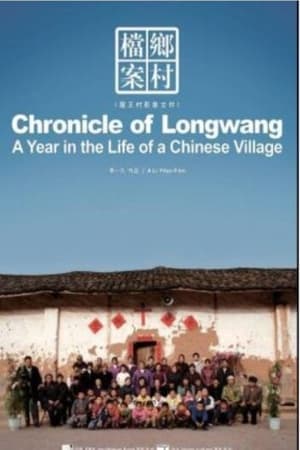
Unusually popular religions and extreme secular beliefs, unconstrained power and no authoritarian society, people work hard on the land and live thrifty but do not believe in the meaning of life at all. This is Longwang Village, an empty old farming society, the most essential reality of an ordinary western village. The film does not have a perpetual plot. The images are presented with the changing of the four seasons. There is no great joy or great sadness. Everything is recorded, and no results are produced. Strictly speaking, this is actually just a rural video file, a running account of ordinary western villages without all rhetoric.
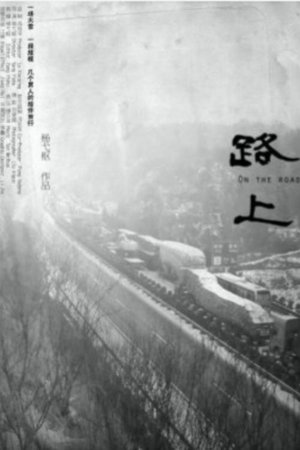
Only a few days before the Spring Festival of 2008, several truck drivers set off from Nantong, Jiangsu Province, to Guizhou province to deliver goods. But what they didn't expect was that they ran into a big snowstorm not long after their departure. What would these drivers do after they got caught up in a snowstorm and coudn't do nothing about it but wait? How would they react to this unexpected halt? And what would happen to this convoy?
Cheng Sanhe, the first "Kanu" who successfully filed for bankruptcy in Taiwan, went from being inexplicably indebted at the beginning to realizing that he had already owed millions of debts. The bank's collection and the finance company used threats and intimidation to collect debts. Sanhe has since fallen into the hell of "using cards to raise cards". Taiwan’s first "card god" Yang Huiru, who successfully profited from banks with bonus points, used the loopholes in bank bonuses to successfully connect relatives and friends to purchase tickets or shopping station goods by swiping cards, and then use online auctions to earn the difference. Earning millions in the bank, the bank stopped using credit cards. Yang Huiru, who has also experienced personal pain, persuaded the card slaves to face reality: "Hurry up and cut off the card! Because the interest is too heavy, don’t think about borrowing another cash card to pay off the card debt. It’s getting deeper and deeper."
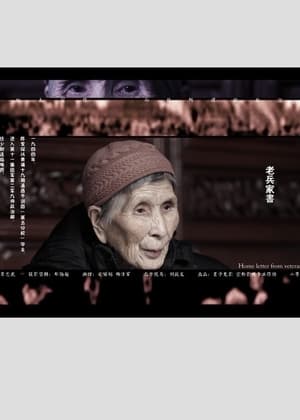
Interview with three victims of the Chongqing bombing.
Village Diary