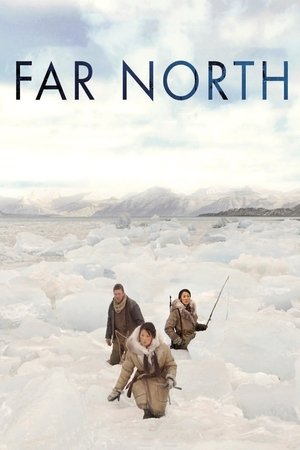
In the arctic, as Saiva is being born, a shaman declares that she is evil and will bring harm to all who become involved with her. Saiva is cast out of her tribe of herders and grows up to live a nomadic existence with Anja, a young woman she adopts as an infant. Then Loki, an injured and starving soldier, stumbles into their isolated lives. The women nurse him back to health, but treachery, violence and doom await them all.
A bush pilot in nothern Canada who with the aid of modernity thinks he can handle it all & knows it all. After reluctantly agreeing to transport a local indian girl to a medical facility his light plane crashes & they have to survive whilst finding their way back to civilization. Along the journey the man finds a new respect for the native ways as they battle to survive the elements.
An expedition goes in search of a party lost in the Arctic a year earlier. (The English-language version of S.O.S. Eisberg.)
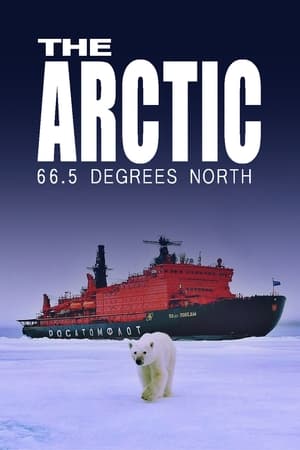
The beauty of the Arctic is breathtaking. For as long as we can remember, the Arctic has been associated with inhospitable cold. But the climate is changing, and with it the northern polar region, which begins beyond latitude 66.5 degrees north. Climate change is now happening four times faster north of the Arctic Circle than on the rest of the planet, making the future outlook dire. At the moment it is still possible for polar bears to raise their cubs, but hunting is becoming increasingly difficult on the drastically shrinking pack ice. The disappearance of the ice also affects the marine fauna. The wintry ice bridge between Canada and Greenland is threatened with collapse. The unstoppable melting of the permafrost, which has held the tundra together for thousands of years, is worrying. But the Arctic is still one of the wildest and loveliest regions on earth. A documentary visit to the Arctic - as long as it still exists.
Set in a small town near the North Pole where roads lead to nowhere, the story follows Roman and Lucy, two burning souls who come together to make a leap for life and inner peace.
A pair head to the frozen wastes with an expedition in search of radium deposits. Certain members of the group succumb to greed, plotting to bump off the others and claim the radium for themselves.
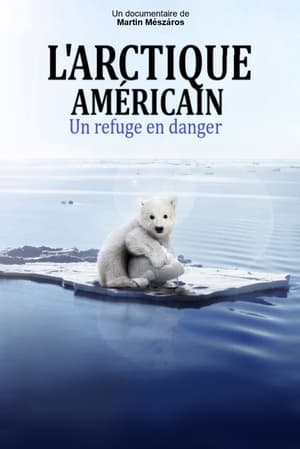
This film shows the splendor, enormous scope and indescribable beauty of this untouched land far to the north of Alaska, one of the last havens for caribou herds and polar bears. Shot over a period of four years, this film offers a unique insight in the lives of the most charismatic arctic animals.
The wildlife of the tundra on Alaska's north coast is particularly threatened by climate change.
The epic saga continues as Luke Skywalker, in hopes of defeating the evil Galactic Empire, learns the ways of the Jedi from aging master Yoda. But Darth Vader is more determined than ever to capture Luke. Meanwhile, rebel leader Princess Leia, cocky Han Solo, Chewbacca, and droids C-3PO and R2-D2 are thrown into various stages of capture, betrayal and despair.
In 1905, on a rescue mission to the North Pole to retrieve an old friend and his lost expedition crew, Captain Mortimer gets more than he bargained for when his ship is frozen into the ice sheet and set upon by bloodthirsty fish-creatures. Mortimer and his surviving crew flee the ship, beginning a treacherous journey to find safety in a frozen desolate wilderness. Suffering from starvation, frostbite and a slow madness, they find shelter inside a snowy mountain, but are they as safe as they think, or have they entered the heart of the creatures lair?
“We, the Gwit’chin are an ancient and united people. We live in a very cold place. We know how to survive. We don’t make money, we live from the land. Until now”. Over 18 days photographers Marta Bretó and Tato Rosés explore the world of the Gwit’chin, also called the Arctic National Wildlife Refuge (Alaska), one of the most pristine and wild areas on Earth. Their purpose is to experience what nature was like before the invasion of human beings. 80,000 km² of tundra, mountains and rivers, without a single road to the coastal plain, next to the Arctic Ocean.
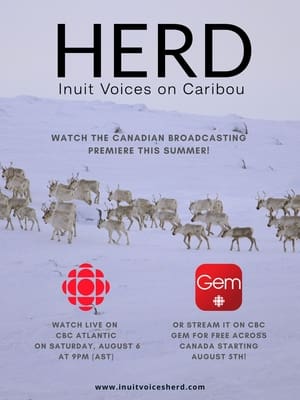
Through Inuit voices, HERD: Inuit Voices on Caribou tells the story of the social, emotional, and cultural disruptions from ecological change by putting an essential human face to the caribou declines - including a 99% decline of the once-massive George River Caribou Herd. The film was developed over four years of collaboration between filmmakers and 11 Inuit communities across Labrador. It cinematically explores an array of lived experiences, from youth to Elders and hunters to cooks, to ensure that the stories of those living on the frontlines of this ecological crisis are HERD. It is a portrait of the deep connections that exist between humans and non-humans, a glimpse of heartbreaking loss felt by entire communities, and a lasting testament of cultural resilience in the context of ecological uncertainty.
The Arctic is accessible to man only because of ice dogs. As hunters, haulers, and guardians, they have been our vital link to nature for thousands of years. Dogs led the Sarqaq people out of Siberia and, a millennium later, led explorers to the North Pole. As the light returns to Greenland, we arrive in Scoresbysund with a troop of the only companions worth having in this harsh environment.
A wealthy father tries to discourage his daughter's taste for stories of the Mounted; her imagination conjures up the ideal lover as one who wears that red coat and whose slogan is "get your man." She arrives at her father's camp in the frozen North the victim of a frameup: her father had planned that his employees must discourage her in every manner possible. The idea is if she sees him she will be disillusioned. A few hunters spying the "wolves" shoot with intent to kill, and a real bear enters the hut and scatters the plotters. The scheme works well, even with all these inconveniences, until a genuine Mountie appears on the scene and administers punishment to the arch-villain and his dwarf-like henchman. As a result the girl's romantic imagination vindicates her beau ideal. The two lovers are last seen standing chest-deep in the snow.
It's March at Lake Baikal. A small convoy carefully makes its way across the frozen lake, through a bizarre landscape of ice and snow. Just two days ago, a truck with its entire load broke through the ice, even though it's a meter thick at this time of year. Expedition leader Igor Khanayev, a biologist at the Limnological Institute of the Russian Academy of Sciences, wants to examine the health of the Baikal omul, a native whitefish species. According to current studies, the estimated 1.5 million omules in Lake Baikal are not endangered. They live at great depths, and the lake's self-purifying capacity, thanks to coral-like sponges found only here, guarantees their survival. Fishermen around the lake catch the omul for their own consumption; this fish can only be bought in the region's markets—a hidden gem for visitors from all over Russia. The fish doesn't make the people of Lake Baikal rich, but they can't imagine life without "their" Lake Baikal and "their" omul.
The Chukchi reindeer breeders are peculiar people. They are nomads. Reindeers are their welfare, the purport of life. The mother-reindeer is the main divine being; it protects the Chukchi from misfortune and troubles. Nature is not friendly towards people here. Only Chukchi can survive in Tundra. A rush period for the Chukchi reindeer breeders comes in winter, when the temperature rises up to 50 degrees Celsius at night and in the sunlight of the day it doesn't exceed 40 degrees Celsius in tundra: they should separate young deers from the rest of the herd, the weak from the strong. And this, considering that the herds of the Chukchi reindeer breeders number some thousand heads...
Two parallel stories are gradually unfolding the everyday life of two very different persons - that of 86-year-old Sara and 7-year-old Mihka - both residing in Guovdageaidnu - Kautokeino, in the middle of the Norwegian arctic tundra, through the drastic change of the arctic seasons and the passage from the long winter’s darkness to the never-ending light of the summer season.
In the Arctic Circle, Jason Fox and an elite team of military veterans open up to each other about men’s mental health while taking on one of the world’s toughest ultramarathons.
From the territories of the Arctic to the farthest reaches of the universe, Worlds of Ice shows us the astonishing omnipresence of ice.
Polar bear Norm and his three Arctic lemming buddies are forced out into the world once their icy home begins melting and breaking apart. Landing in New York, Norm begins life anew as a performing corporate mascot, only to discover that his new employers are directly responsible for the destruction of his polar home.