Based on powerful archival material documenting the most daring moments in the struggle for liberation in the Third World, this documentary is accompanied by classic text from The Wretched of the Earth by Frantz Fanon.
Based on a poem by a Zimbabwean LGBT activist written in response to the gay hate speech that is being perpetuated president Robert Mugabe. The film was shot in South East London UK with a cast of six women from several African countries playing multiple roles in this portrayal of being a lesbian in homophobic Zimbabwe. Five of the actors and the producer are refugees who fled their countries in fear of persecution for their sexuality.
Disparitions autour du Kanga Pan
Exiled, yet internationally celebrated Zimbabwean artist Kudzanai Chiurai's demons come to life as he tries to flee South Africa following increasingly fractious experiences on the Johannesburg art scene. His greatest demon “Black Guilt” is one he can never shake off, this burden of having to speak for his people. But Is this responsibility really a burden at all, or is it actually a superpower? Either way, will Kudzi ever be President of His Own State of Being?
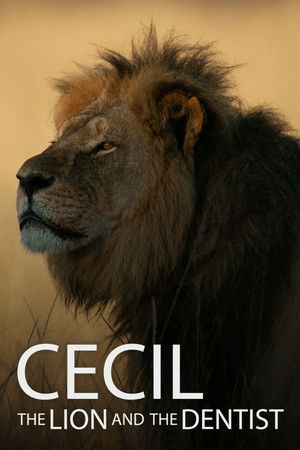
In 2015 a lion in Zimbabwe named Cecil was killed by Walter Palmer, an American dentist, provoking a global outcry. The story of Cecil’s death turns the gaze back on to us and our behaviour. The simplicity of the outrage is a stark contrast to the complexity of the reality.
Ariel Phenomenon explores an African extraterrestrial encounter witnessed by over sixty schoolchildren in 1994. As a Harvard professor, a BBC war reporter, and past students investigate, they struggle to answer the question: "What happens when you experience something so extraordinary that nobody believes you?"
The lives of three extraordinary African women from different social levels and origins determined to bring about radical transformations in their day to day realities: Kenyan attorney and reputed lawyer Njoki Ndung'u, Puthi Ragophala the committed school principal of a remote South African village and Zimbabwean housewife-entrepreneur, Amai Rosie.
At the beginning of the 1960s, in Salisbury (now Harare), in Southern Rhodesia (now Zimbabwe), the government of Ian Smith hanged three black revolutionaries who had nevertheless been pardoned by the Queen of England. René Vautier, with ZAPU (Zimbabwe African Party for Unity), denounces this killing. Expelled by the Rhodesian police (informed by the French secret services), the filmmaker shoots a film in Algeria in the form of an indictment against colonial savagery. The film was first banned in France, then authorized in 1965.
Machanic Manyeruke is the founder of gospel music in Zimbabwe—though, his influence reaches far beyond the borders of his African country. Filmmaker James Ault places Manyeruke in his contexts and explores his influence on gospel music worldwide.
A glimpse of life as seen through young people at a Zimbabwean children's home.
Where previously an unbroken white self-confidence did not even allow the question as to the existence and function of the "other", the black African, to arise, nowadays an enlightened generation is attempting to cover up the difference in the assumption that the habit of ignoring race will be understood as a tactful, even generous liberal gesture. The outline of one's own soul, a "white negro". The film is an attempt to admit more identity, a feeling and searching for validity.
Every climbing reward comes at the cost of a potential risk, but when you are a climbing pioneer, driven by the unknown and unexpected, you are willing to risk whatever it takes for the chance to find the perfect first ascent line. This is a story of exploration and discovery, a journey of friendship and solitude, a quest to fuel an obsessive passion. Starring Paul Robinson, Jimmy Webb, Daniel Woods, Chris Sharma and Niky Ceria.
Once touted as Zimbabwe's saviour, Robert Mugabe has become synonymous with bad government and misrule. But where did it all go wrong?
Documents the history of the independence movement in Zimbabwe through art prints, vintage documents and photographs, posters, and archival film footage. Shows the continuing disparity between Black farmers, who barely make a living on their inferior land, and affluent whites, who employ modern agricultural techniques on their lush acres.
The life of Shona mbira player Gwanzura Gwenzi coexists in both the traditional and modern worlds: he works in the city for a large western corporation; at his rural homestead, he is the family head who hosts all-night spirit ceremonies, called bira. His sister Francisca is the family medium for the spirit of Kaodza, their great-grandfather. The highlight and centerpiece of the film is a bira, perhaps the only one ever completely captured on film. We see the various stages and liturgical components of the ceremony, culminating in the arrival of the spirits late at night. Francisca’s daughter, now-famous mbira player Stella Chiweshe becomes possessed by a snake spirit. Kaodza arrives through Francisca, and the family confers with the spirit in an extraordinary scene that shows how ancestors interact with the living. (Description credit: Villon Films)
Robert (not his real name), is a gay Zimbabwean man who fled to South Africa in the hopes of making this his home. What he found instead was abuse at the hands of other gay men, homophobia from Department of Home Affairs officials as well as the difficulties of navigating the Covid-19 pandemic as a sex worker living in a foreign country. In this short film, Robert speaks with candour about fleeing his homeland, his life in South Africa and his hopes for the future.
A tragic account of the poverty and desperation in the once-prosperous nation of Zimbabwe.
Maggie is an ordinary Canadian girl with the best of intentions who has signed on to work in a Catholic mission in Zimbabwe. With an ample supply of enthusiasm and ignorance, she consistently demonstrates her lack of understanding of the local culture. When she is robbed, she fights for the release of the man convicted of the crime and belatedly makes some attempt to understand her environment.
A young African man must try every trick in the book in this attempts to win the heart of the most beautiful girl in his village.
Amidst failed harvests and the threat of AIDS, Zimbabweans look for work, preferably in South Africa. But their illegal status and xenophobic whites do not make life any easier in the neighbouring state.