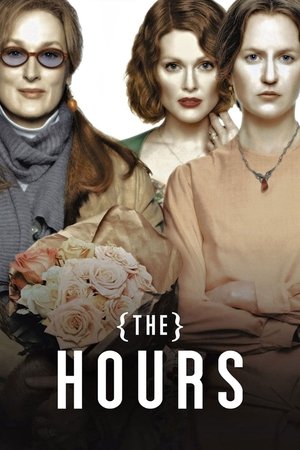
The story of three women searching for more potent, meaningful lives. Each is alive at a different time and place, all are linked by their yearnings and their fears. Their stories intertwine, and finally come together in a surprising, transcendent moment of shared recognition.
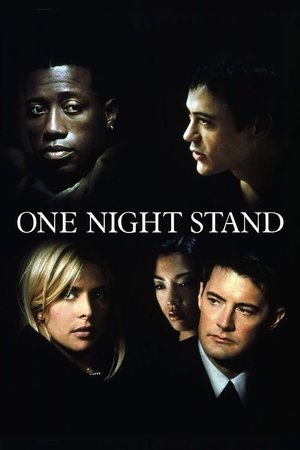
A father-daughter relationship evolves through an era of bohemian decadence in 1970s San Francisco to the sober and heartbreaking era of the AIDS crisis in the 1980s.
Directed by Solveig Hoogesteijn, Macu, the Policeman's Woman (1987) is a Venezuelan crime drama based on a true story. The film follows Macu, a young woman living in a Venezuelan shantytown, who becomes romantically involved with a local policeman named Ismael. As their relationship develops, Ismael's jealousy intensifies, leading to tragic consequences. The narrative delves into themes of power, control, and the dynamics of abusive relationships within marginalized communities. The film is notable for its exploration of gender roles and societal issues in Latin America.
The life of internationally renowned artist and activist Nan Goldin is told through her slideshows, intimate interviews, ground-breaking photography, and rare footage of her personal fight to hold the Sackler family accountable for the overdose crisis.
After breaking up with her girlfriend, a nightclub singer, Jane, answers a personal ad from Robin, a real estate agent with AIDS, seeking a cross-country travel partner. On their journey from New York City to Los Angeles, the two stop by Pittsburgh to pick up Jane's friend Holly, who is trying to escape an abusive relationship. With three distinct personalities, the women must overcome their differences to help one another.
Electofrenia (1978), Neri's third political film, requires a critical distance in order to consider the reasons why Venezuelans choose their presidential candidate in the 1978 election. Electofrenia, signifying the chaos of the elections, proposes that many Venezuelans select the candidate who benefits them personally rather than the one who is good for the country at large. Not without irony, the film brings up Venezuela's two decades of peaceful democratic government. If people choose what is good for them, can we call it a democracy?
The Living Room of the Nation is a documentary film that portrays a number of Finnish living rooms. The film is a story of changes, the inevitable passing of time, and the human desire to be needed, visible.
A married workaholic, Michael Newman doesn't have time for his wife and children, not if he's to impress his ungrateful boss and earn a well-deserved promotion. So when he meets Morty, a loopy sales clerk, he gets the answer to his prayers: a magical remote that allows him to bypass life's little distractions with increasingly hysterical results.
Two competing lawyers join forces to sue a prestigious law firm for AIDS discrimination. As their unlikely friendship develops, their courage overcomes the prejudice and corruption of their powerful adversaries.
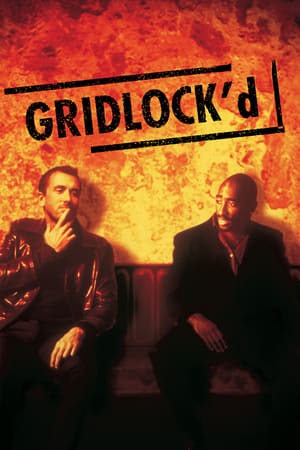
Zed is an American vault-cracker who travels to Paris to meet up with his old friend Eric. Eric and his gang have planned to raid the only bank in the city which is open on Bastille day. After offering his services, Zed soon finds himself trapped in a situation beyond his control when heroin abuse, poor planning and a call-girl named Zoe all conspire to turn the robbery into a very bloody siege.
Larry Flynt is the hedonistically obnoxious, but indomitable, publisher of Hustler magazine. The film recounts his struggle to make an honest living publishing his girlie magazine and how it changes into a battle to protect the freedom of speech for all people.
In New York City's gritty East Village, a group of bohemians strive for success and acceptance while enduring the obstacles of poverty, illness and the AIDS epidemic.
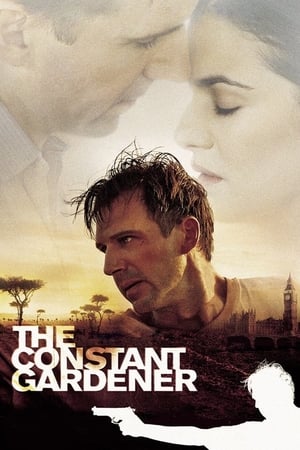
Justin Quayle is a low-level British diplomat who has always gone about his work very quietly, not causing any problems. But after his radical wife Tessa is killed he becomes determined to find out why, thrusting himself into the middle of a very dangerous conspiracy.
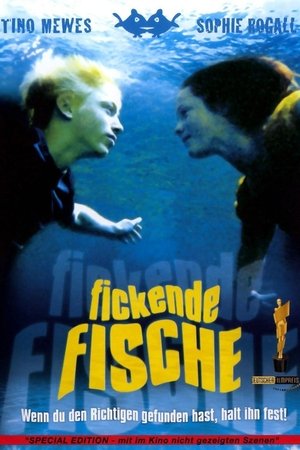
16-year old Jan is absent-mindedly strolling through the streets when he's run over by roller-skating Nina. As fast as she has stormed into his life, however, she rushes off again. Nina is 15 years old and full of crazy ideas. She lives together with her brother, her father and his new girlfriend. Her mother isn't in touch much. That's why there is the unconventional Angel whose own daughter disappeared years ago and who is Nina's best friend and substitute mother.
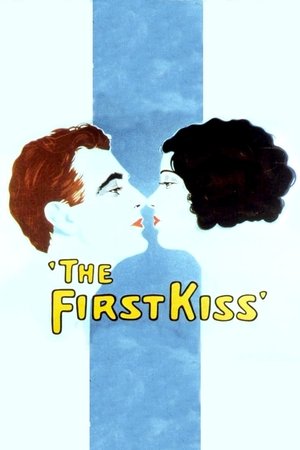
The Talbots, formerly one of the Eastern Shore's first families, have gone to seed: Pap is a drunk, soddenly decaying in his ruined ancestral home, and three of his sons (William, Carol, and Ezra) are lazy, shiftless young men. Mulligan, Pap's second son who supports the entire family by oyster fishing, falls in love with wealthy Anna Lee, but when he first kisses her, she calls him "white trash."
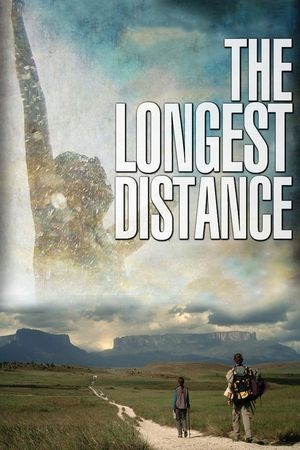
Two sides of the same country: a chaotic and violent city contrasting against a natural paradise where the oldest mountains on the planet can be found. Two main characters that find each other at a crucial moment. Two fearless journeys, one that begins as a childlike adventure and ends up on the other side of the country and a one-way journey, free and determined. The same destiny will inevitably bond a woman with her grandson. Without knowing it they are part of an unbreakable family circle that deeply unites them. Second opportunities will arise while individual freedom of choice will become imposing. Everything comes together to tell us: there is only one destiny, the one you choose for yourself.
Oskar Roehler's drama Der Alte Affe Angst (Angst) is about the dissolution of a couple. Robert (Andre Hennicke) and Marie (Marie Baumer) have little in common other than their sex life. Since Robert is going through a bout with impotency, they are having a very rocky time. Robert learns that his father, whom he is estranged from, has died. This disturbs Robert so much that he visits a prostitute, and is able to engage in sex with her. Marie discovers the infidelity, and the prostitute has a surprise of her own. Angst was screened at the 2003 Berlin Film Festival.
Eleven-year-old petty criminal Maroa lives with her violent grandmother Brigida in Caracas. After her boyfriend Carlos is involved in a shooting, Maroa is arrested and sent to a school where Joaquin conducts the youth orchestra, and he asks the naturally talented Maroa to join. Days now revolve around the classes that Joaquin, the shy and unconventional teacher, gives her. He is immediately interested in this talented young girl, who lacks all notion of discipline. Joaquin, the only person to offer hope in the midst of her rejection, finds that through Maroa, his world has also changed forever.
Award-winning actress Ruby Dee narrates this powerful documentary about the impact of AIDS on the families, friends and members of the acclaimed Turtle Creek Chorale. In the past decade, 145 member of the Chorale have died, most from HIV and AIDS. Although grief is a constant presence, After Goodbye: An AIDS Story shows that the singers and their loved ones are also engaged in a continual process of healing. This ultimately uplifting and inspirational video is a testament to the amazing strength of the human spirit.
Así Pasó