For three decades now, Qatar, this small desert kingdom, has not stopped being talked about; because of its financial power and the secrecy that surrounds it, the royal family that runs it fascinates as much as it frightens.
Documentary film with play scenes about the rise and fall of the short-lived Bavarian Soviet Republic in 1919 from the perspective of various well-known poets and writers who experienced the events as contemporary witnesses.
Covering China's powerful leader, his signature foreign policy, U.S.-China trade and technology wars, how Chinese technology helps stifle dissent, and more. A collaboration with the Pulitzer Center on Crisis Reporting, PBS NewsHour conducted more than 70 on-camera interviews in eight Chinese cities and across eight countries.
Cinecitta is today known as the center of the Italian film industry. But there is a dark past. The film city was solemnly inaugurated in 1937 by Mussolini. Here, propaganda films would be produced to strengthen the dictator's position.
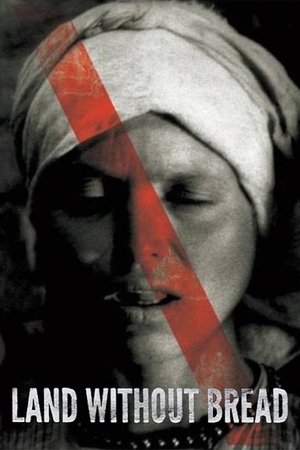
An exploration —manipulated and staged— of life in Las Hurdes, in the province of Cáceres, in Extremadura, Spain, as it was in 1932. Insalubrity, misery and lack of opportunities provoke the emigration of young people and the solitude of those who remain in the desolation of one of the poorest and least developed Spanish regions at that time.
Thirty years after the release of his film JFK (1991), filmmaker Oliver Stone reviews recently declassified evidence related to the assassination of President John F. Kennedy, which took place in Dallas on November 22, 1963.
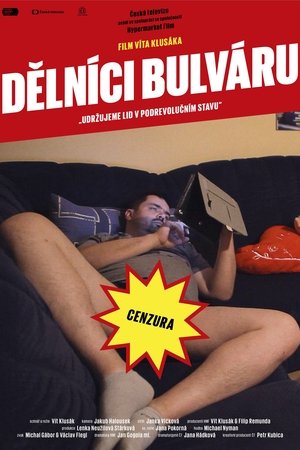
Documentary about young people who are dedicated to cleaning windshields in Ciudad Nezahualcóyotl to survive.
THE ARYANS is Mo Asumang's personal journey into the madness of racism during which she meets German neo-Nazis, the US leading racist, the notorious Tom Metzger and Ku Klux Klan members in the alarming twilight of the Midwest. In The ARYANS Mo questions the completely wrong interpretation of "Aryanism" - a phenomenon of the tall, blond and blue-eyed master race.
A view of the religious tensions between Muslims and Buddhist through the portrait of the Buddhist monk Ashin Wirathu, leader of anti-Muslim movement in Myanmar.
In November 1936, a few months since the beginning of the Spanish Civil War, the government of the Second Republic moves to Valencia. In this situation, several Valencian artists and intellectuals decide to build four fallas — satirical plasterboard sculptures created to be burnt — to mock fascism.
Cruelty, psychological and sexual violence, humiliations: reality television seems to have gone mad. His debut in the early 2000s inaugurated a new era in the history of the audio-visual. Fifty years of archives trace the evolution of entertainment: how the staging of intimacy during the 80s opened new territories, how the privatization of the biggest channels has changed the relationship with the spectator. With the contribution of specialists, including philosopher Bernard Stiegler, this documentary demonstrates how emotion has made way for the exacerbation of the most destructive impulses.
A video about Neo-Nazis originating in Sweden provides the starting point of an investigation of extremists' networks in Europe, Russia, and North America. Their propaganda is a message of hatred, war, and segregation.
A haunting story of the FBI's dark hand in American life. In 2015, Khalil Abu-Rayyan was just a young Muslim man in Detroit, Michigan: to get by, he delivered food for his family's pizzeria. Depressed and lonely, Khalil found solace in smoking weed and looking at extremist material online. Then two young women started messaging him, and he fell in love. But one of them suggested he start doing increasingly violent things. Nothing was as it seemed. And Khalil's life would never be the same. A documentary by Garret Harkawik for the Gravel Institute.
Hiding in the Walls unwinds the fraught history of lead poisoning in Baltimore and follows the adult survivors who are on a mission to reclaim the narrative.
In the midst of a publishing revolution, The Atlanta Journal-Constitution, one of America's most storied institutions of journalism, is experimenting with new tools to tell stories in preparation for the end of print in the digital era.
An 8-year journey into divided America, The American Question examines the insidious roots of polarization and distrust through past the past and present, revealing how communities can restore trust in each other to unite our country.
The Jeepney is a common affordable transportation in the Philippines. Made from abandoned American Jeeps during World War II, the Jeepney remains a symbolic figure of the Philippine identity.
Grandchild fraudsters scare their victims on the phone with so-called "shock calls". The losses run into millions. Month after month. Many victims are left severely traumatized. But the scam has a weak point. And the izzy team has found it. During a year-long investigation, izzy figurehead Cedric Schild pretends to be an elderly person and supposed victim on the phone. This not only makes for a few laughs, but also drives the perpetrators crazy - at the same time, the editorial team penetrates deep into the structures of the criminal clans. Thanks to more than 1200 minutes of recorded conversations from real shock calls, the izzy film "Die Enkeltrick Betrüger" shows all the tricks used by fraudsters for the first time and thus makes an important contribution to prevention. In cooperation with the law enforcement authorities, the perpetrators are arrested in front of the cameras.
Lawyers, an ex-police investigator and a former judge denounce Japan's criminal justice system as defendants in a high-profile 2003 election-rigging case in Kagoshima explain how detectives tried to extract false confessions on trumped-up charges of vote-buying. Those who buckled under the pressure and confessed spent over a year in prison. All the "suspects" were finally acquitted, but remain permanently scarred by the ordeal. This documentary is a dramatic reminder that indiscriminate arrests and convictions should be fought with the full force of the law.
Journalist Émilie Tran Nguyen invites the viewer to follow her in her quest and discover, at the same time as her, the historical origins of this anti-Asian racism. Told in the first person, alternating archive images, interviews with historians, sociologists and field sequences, this film traces the making of prejudices in the French imagination and pop culture, to twist the neck of stereotypes, deconstruct and act.