Jomo Kenyatta's death in 1978 brought to an end a political career that encompassed more than 50 years of African history. Kenyatta entered politics in the mid-1920s and then spent 17 years in exile in Europe. He returned to Kenya in 1946, and was elected president of the nationalist movement, the Kenya African Union. Arrested and imprisoned in 1952 for allegedly leading 'Mau Mau', he was released in 1961 and two years later became Kenya's first Prime Minister. In power, the man whom European settlers had once reviled as "the leader to darkness and death" was eulogized by them as a pillar of stability, while former allies challenged him by creating a left-leaning political opposition. Kenyatta weaves archival and contemporary images with interviews with friends and relatives, comrades and opponents, to create a biographical portrait of a key figure in 20th century politics, and a case study of what Frantz Fanon called the pitfalls of nationalism as a political force in Africa.
A dedicated park ranger has protected his population of critically endangered black rhinos so well that they have run out of space. Cornered by ruthless poachers, the rhinos are at risk of turning on each other. His team must implement a daring plan to move 21 rhinos across the country and open a new safe haven.
When his family tries to kill him, Sidney, who is intersex, flees to Nairobi where he meets a group of transgender friends. Together, they fight discrimination and discover life, love and self-worth.
A documentary detailing an indiscriminate terrorist attack that left 71 dead in Kenya.
A look at the Mau Mau Rebellion of the 1950s as experienced by filmmaker Donald McWilliams.
As if they were showing their film to a few friends in their home, the Johnsons describe their trip across the world, which begins in the South Pacific islands of Hawaii, Samoa, Australia, the Solomons (where they seek and find cannibals), and New Hebrides. Thence on to Africa via the Indian Ocean, Suez Canal, North Africa, and the Nile River to lion country in Tanganyika. (They are briefly joined in Khartum by George Eastman and Dr. Al Kayser.) Taking a safari in the Congo, the Johnsons see animals and pygmies, and travel back to Uganda, British East Africa, and Kenya.
Das Wunder von Nairobi - Noten der Hoffnung
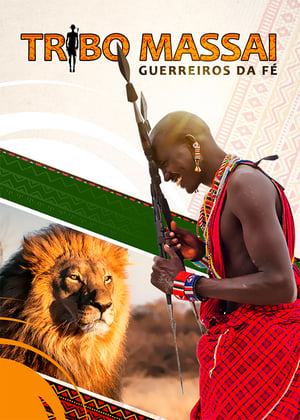
Leah and Purity are rangers in the Kenyan bushland. They roam around Amboseli National Park every day to track down wildlife. The Maasai shepherds also have their villages here. Conflicts can hardly be avoided. The young women are often called to missions to mediate or comfort. The two Maasai women themselves have to fight against discrimination
A story about the lives of Leila Avakh and Sedigheh Momennia who have chosen, with much love and passion, carpentry as a profession, a profession that is considered extremely masculine in the traditional society of Iran. As such, these two face many difficulties and obstacles. However, they are determined to prove to themselves and their society that it is not impossible to achieve your dreams. Leila and Sedigheh are amongst the first female carpenters in Iran.
Des blouses pas si blanches
Three intersex individuals overcame shame, secrecy and unauthorized surgery throughout their childhoods to enjoy successful adulthoods, choosing to ignore medical advice to conceal their bodies and coming out as who they truly are.
In the Namunyak Wildlife Conservancy in Kenya drought is a menace to both humans and animals. This documentary follows two Elephant Guardians in their tireless work to protect this endangered species.
Award winning short documentary by Ibrahim Snoopy, tracks the journey of the MTC martial arts team, which decides after a civil revolution that occurred in Sudan (2018-2019). Facing of lack of the state support and weak financial means, ambitious athletes found themselves forced to travel by land from Sudan to Kenya through Ethiopia to participate in an international championship "LionHeart 2019 Nairobi Open" in Nairobi, Kenya. A journey filled with determination, resilience, hope, and full of difficulties and challenges in order to raise the name of Sudan high in international sports forums and to solidify the art of Jiu-Jitsu in Africa.
This documentary provides a window into the extraordinary life of activist and Nobel Laureate Wangari Maathai, a Kenyan woman who has worked to regain ownership of her country and its fate after years of colonialism. While gentle and thoughtful, Maathai carries a powerful message: the First World holds much of the responsibility for the environmental, economic and social struggles of the developing world.
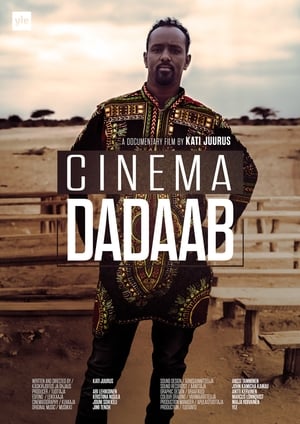
The region of Lake Turkana, located in Kenya and Ethiopia, is considered to be “the Cradle of Humankind”. Among other finds, primate fossils from millions of years ago have been discovered in the region. But what about the region’s modern inhabitants and their relationship to their environment? Iiris Härmä, whose previous work includes the award-winning Leaving Africa, had the chance of joining Helsinki University’s researchers, Álvaro Fernández-Llamazares and Mar Cabeza, on their pre-pandemic trip to study the Daasanach people’s relationship to their environment through traditional animal tales. The researchers hope that storytelling would help to bridge the gap between people’s everyday lives and conservation efforts.
Adventurer and journalist Simon Reeve heads to Kenya and Uganda to uncover the stories behind Britain's favourite drink, meeting the people who pick, pack and transport tea.
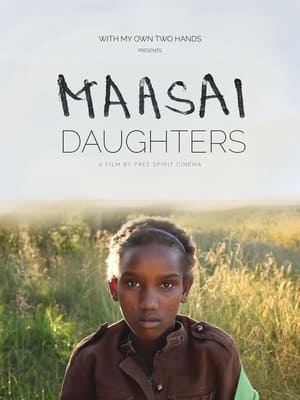
Short documentary about the lives of three girls and the women who rescued them from retrogressive cultural practices in their own Maasai community at the AIC Girls School and Rescue Center in Kajiado, Kenya. It is an intimate portrait of these women as they sacrifice everything to make a stand against female genital mutilation and early forced marriage happening within their own culture.
Over the last three decades, science has been advancing our understanding of stress: how it impacts our bodies and how our social standing can make us more or less susceptible. From baboon troops on the plains of Africa, to neuroscience labs at Stanford University, scientists are revealing just how lethal stress can be. Research tells us that the impact of stress can be found deep within us, shrinking our brains, adding fat to our bellies, even unraveling our chromosomes. Understanding how stress works can help us figure out ways to combat it and how to live a life free of the tyranny of this contemporary plague. In Stress: Portrait of a Killer, scientific discoveries in the field and in the lab prove that stress is not just a state of mind, but something measurable and dangerous.
Embark on an epic journey of family, courage, and coming home in this feature-length documentary. Join Athena, the majestic matriarch, as she leads her elephant herd across an unforgiving African landscape filled with vibrant wildlife.
A library on four legs, the world's only existing Camel Library is located in Northern Kenya. As they pass antelopes and giraffes, the heavily loadedcaravan of camels are routinely carrying books through the rough savannah.In the villages with their houses of mud and dung these tenacious desert ships are wishfully awaited by the people of the nomadic Muslim tribes. Under the shade of acacia trees, especially the children are excitedly turning pages of school books, novels and comics. However, 400 kilometers outside of the capital city of Nairobi the local librarians are still struggling with illiteracy, old traditions, insufficient funds, blistering sun and - stubborn camels... This is the story about the Camel Library, about inquisitive children, about the origins of a book and about a camel and an exceptional librarian in the heart of Africa within the UNESCO-world decade of alphabetization.