Centered around a vehement diatribe against pornography delivered by news reporter George Putnam, the film attempts to link explicit portrayals of human sexuality to the subversion and decline of American civilization, and briefly draws a parallel between pornography and Communist infiltration. Perversion for Profit illustrates its claims with still images taken from various softcore pornography magazines of the period-- though, 'sensitive' parts of the human anatomy have been obscured by colored bars. The film is in the public domain, and has become a popular download from the Prelinger Archives.
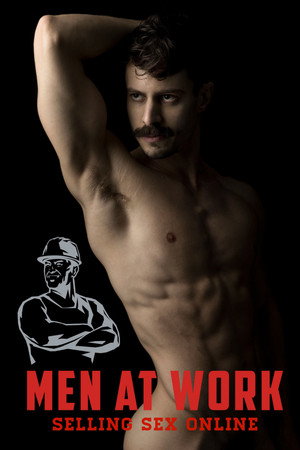
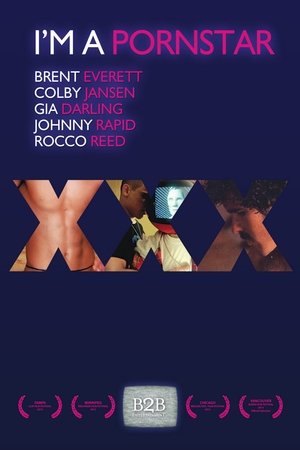
Paid 50 dollars for their time, 101 male prostitutes -- spanning all ages, ethnicities, and personal backgrounds -- are questioned by the filmmakers about their lives.
During the Nazi regime, there was widespread persecution of homosexual men, which started in 1871 with the Paragraph 175 of the German Penal Code. Thousands were murdered in concentration camps. This powerful and disturbing documentary, narrated by Rupert Everett, presents for the first time the largely untold testimonies of some of those who survived.
Harvey Milk was an outspoken human rights activist and one of the first openly gay U.S. politicians elected to public office; even after his assassination in 1978, he continues to inspire disenfranchised people around the world.
An intimate look at pioneering artist George Platt Lynes, who took radically explicit photographs of the male nude. The documentary reveals Lynes’ gifted eye for the male form, his long-term friendships with Gertrude Stein and Alfred Kinsey, and his lasting influence as one of the first openly gay American artists.
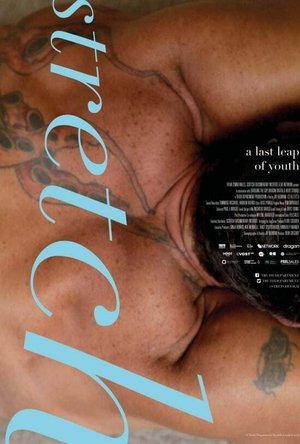
Gabrielle and Yoan are 18 years old. Even though they both grew up in Temiscamingue, their aspirations are opposite. While Yoan wants to leave the area to break away from his loneliness and explore his homosexuality, Gabrielle is torn at the thought of going over a hundred kilometers away from home to carry on with her studies.
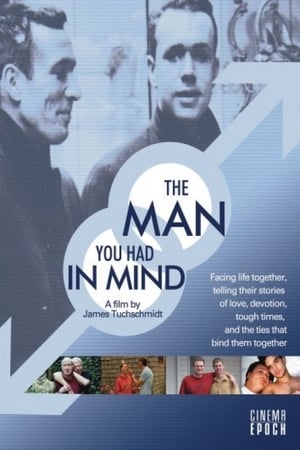
On November 4th, 2008, three states - California, Florida and Arizona - voted to amend their constitutions, denying and revoking the rights of same-sex couples to marry. On May 26, 2009, with Canadian allies, gay American families rally at a Vancouver demonstration to protest these amendments that persecute the LGBTQ community. Demonstration organizer Roger Chin relays the California Supreme Court's infamous decision on Prop 8. Subsequent speakers talk about couples living in exile. Weaving elements of public protest and intimate interviews, four families share their stories of how they met, their decision to escape to freedom in Canada, their Canadian experience and their dreams of returning to their home country, family and friends. In the end, the organizer celebrates the freedoms to marry that exists in Canada.
Travel journal under the form of a portrait series, silent intimate images filmed by François Reichenbach in 1954.
From the onset of the AIDS epidemic, author Larry Kramer emerged as a fiery activist, an Old Testament-style prophet full of righteous fury who denounced both the willful inaction of the government and the refusal of the gay community to curb potentially risky behaviors. Co-founder of both organization Gay Men's Health Crisis and the direct action protest group ACT UP, Kramer was vilified by some who saw his criticism to be an expression of self-hatred, while lionized by others who credit him with waking up the gay community — and, eventually, the government and medical establishment — to the devastation of the disease.
Israel is governed by Orthodox civil law and yet hosts the world's biggest gay pride. Is this a cynical marketing ploy or a political awakening?
As part of the organization of sporting, cultural and solidarity meetings between a team of amputee footballers from Gaza and the French amputee football team, the project coordinator, filmmaker-director followed with his camera the Palestinian footballers in Gaza before their departure, and during their stay in France.
A look beyond the shock and inhumanity of prison rape to the intricate social hierarchy that keeps it alive. A filmmaker goes deep inside Alabama's infamous Limestone penitentiary to uncover the long-term causes and consequences of prison rape. With a startling lack of inhibition, five inmates reveal the workings of an elaborate inner society.
David Vandenbrink seems like a healthy 21-year-old, bright and articulate young man. There is little to suggest that while in his mother's womb, he suffered permanent brain damage. His condition, fetal alcohol syndrome (F.A.S.), went undiagnosed for the first 18 years of his life, causing confusion, anger, and pain for both David and his non-Indigenous adoptive family. Fetal alcohol syndrome is a term used to describe a set of symptoms seen in some children born to women who drank alcohol during pregnancy. The damage can be subtle or severe, resulting in a wide range of symptoms in the areas of slowed growth, disfigurement, and damage to the brain. Associated behavioural problems include impulsiveness, poor judgment, and an inability to grasp the consequences of actions. This personal story, using video footage shot by David himself, along with the experiences of members of his family, is a hard look into the serious consequences of a little-known, but widespread, health problem.
A chronicle of gay culture in New York during the post-Stonewall, pre-AIDs era. Thirteen men and one woman look back at gay life and sex in Manhattan and Fire Island - from Stonewall (June, 1969) to the first reporting on AIDS (June, 1981). They describe the rapid move from repression to celebration, from the removal of shame to joy, the on-going search for "someone," the freedom before AIDS, the friendships, and brotherhood.
A professional company of actors with disabilities defies expectations by taking center stage in Chicago the musical.
As a visibly disabled person, filmmaker Reid Davenport is often either the subject of an unwanted gaze — gawked at by strangers — or paradoxically rendered invisible, ignored or dismissed by society. The arrival of a circus tent just outside his apartment prompts him to consider the history and legacy of the freak show, in which individuals who were deemed atypical were put on display for the amusement and shock of a paying public. Contemplating how this relates to his own filmmaking practice, which explicitly foregrounds disability, Davenport sets out to make a film about how he sees the world from his wheelchair without having to be seen himself.
Gay Positive is the story of one man trying to bring to attention the outdated ban on gay men donating blood in the United States of America. This documentary is meant to inform and educate people on this controversial issue. A woman who recently received her nursing degree presents facts that could suggest that in order to keep our blood supply clean and abundant, we must update our current screening process for potential donors. By taking the camera to the streets, Gay Positive captures the opinions of people from many walks of life regarding how they feel about the ban today. One of the questions posed was, "If you were in need of a blood transfusion and the donor was healthy, would it concern you if this generous individual was a gay male?" Recent history proves that when tragedy strikes, donor centers are often in short supply and struggle to meet demand. The ban forces organizations such as The Red Cross to reject willing, disease-free, healthy individuals.
A depiction of New York’s subway as an absurd obstacle course – revealing a system that shuts many out of a city in motion.
Pioneer erotic film maker Peter de Rome talks about his life and work.
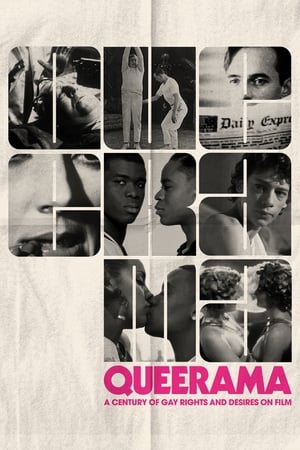
Leading activists and commentators explore the changes that have taken place since homosexuality was decriminalised in the UK in 1967 and the influence of gay culture on society.