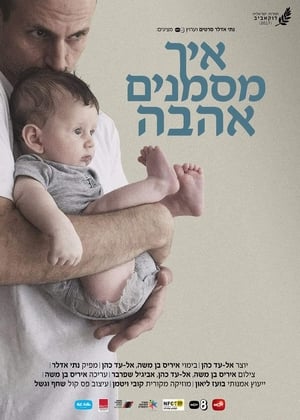
In his heartfelt documentary, co-director and subject Elad Cohen explores the meaning and experience of family. Growing up deaf and gay in a family of hearing people, Cohen never felt at home and always felt alone. That feeling of estrangement was exacerbated during his adolescence by the sudden death of his mother and the subsequent rift with his father as the family scattered in different directions. Cohen creates a sense of family with a small group of friends, including his best friend, Yaeli, a deaf woman. While he wants a child and a life partner, he fears that he won’t find the right man in the small deaf community in his “sweet little country.” Sharing a desire with Yaeli to be parents, the new “couple” decide to have a child in a shared parenting arrangement.
An aspiring classical pianist loses his hearing and, with the help of those closest to him, must find the strength to play again. . .
This film is a letter to my friend Vincent who died ten years ago. Vincent was Deaf. He introduced me to his language, his culture, his world. Through Vincent ‘s life, the film will examine the roots of the distress that plagues the Deaf, and also explore a rich and fascinating world, a people that struggles to preserve its Sign Language and Culture.
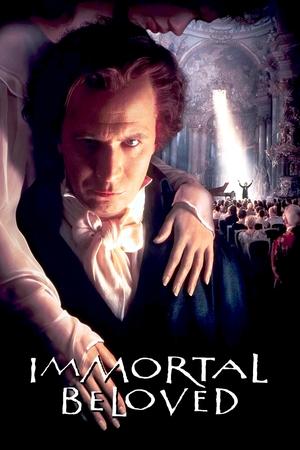
A chronicle of the life of infamous classical composer Ludwig van Beethoven and his painful struggle with hearing loss. Following Beethoven's death in 1827, his assistant, Schindler, searches for an elusive woman referred to in the composer's love letters as "immortal beloved." As Schindler solves the mystery, a series of flashbacks reveal Beethoven's transformation from passionate young man to troubled musical genius.
Nathan Quinell is a fully trained chef… he also happens to be legally deaf and blind. That’s never stopped him from chasing his dreams to become a full-time cook, but now Nathan must prove himself to his peers, his students and potential employers.
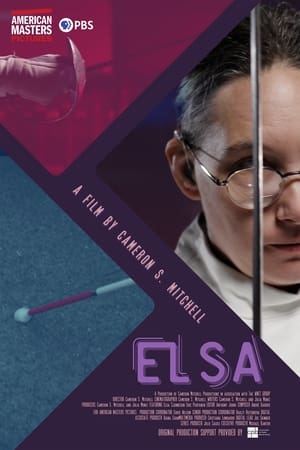
A Deafblind fencer and author competes in all arenas just for the right to be seen.
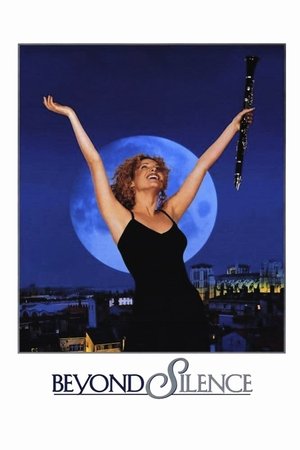
Beyond Silence is about a family and a young girl’s coming of age story. This German film looks into the lives of the deaf and at a story about the love for music. A girl who has always had to translate speech into sign language for her deaf parents yet when her love for playing music grows strong she must decide to continue doing something she cannot share with her parents.
Metal drummer Ruben begins to lose his hearing. When a doctor tells him his condition will worsen, he thinks his career and life is over. His girlfriend Lou checks the former addict into a rehab for the deaf hoping it will prevent a relapse and help him adapt to his new life. After being welcomed and accepted just as he is, Ruben must choose between his new normal and the life he once knew.
Through examining Fini Straubinger, an old woman who has been deaf and blind since her teens, and her work on behalf of other deaf-blind people, this film shows how the deaf-blind struggle to understand and accept a world from which they are almost wholly isolated.
Six deaf performers share struggles and dreams of a new Deaf generation. These poetic self-portraits in sign language show empowerment and confidence, and the vulnerabilities that come with being different.
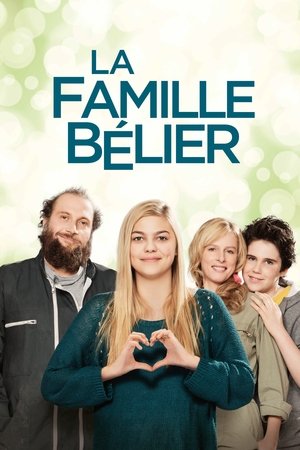
The whole Bélier family is deaf, except for sixteen year old Paula who is the important translator in her parents' day to day life especially when it comes to matters concerning the family farm. When her music teacher discovers she has a fantastic singing voice and she gets an opportunity to enter a big Radio France contest the whole family's future is set up for big changes.
Lotte (18) and Roos (16) are sisters and both have Usher syndrome. That means they will soon become deaf and blind. It is not known how fast that will go, but they already see and hear a lot worse than their peers. How do these two high-spirited girls deal with their development into adulthood, while the time bomb of deafness and blindness ticks inexorably? They are not deterred from getting the most out of life: Lotte is studying to become a photographer and Roos is passing her final exams. At the same time, they also want to do a few things before it is too late, such as seeing the Northern Lights with their own eyes. Director Kim Smeekes followed Lotte and Roos for the film for two years.
A portrait of a Deaf activist and his formerly incarcerated daughter who build new bonds through their experiences in the criminal justice system.
A spate of robberies in Southern California schools had an oddly specific target: tubas. In this work of creative nonfiction, d/Deaf first-time feature director Alison O’Daniel presents the impact of these crimes from an unexpected angle. The film unfolds mimicking a game of telephone, where sound’s feeble transmissibility is proven as the story bends and weaves to human interpretation and miscommunication. The result is a stunning contribution to cinematic language. O’Daniel has developed a syntax of deafness that offers a complex, overlaid, surprising new texture, which offers a dimensional experience of deafness and reorients the audience auditorily in an unfamiliar and exhilarating way.
The profound impact of technology on the lives and identities of young deaf adults is explored in The Listening Project. Fourteen deaf people tell stories beginning with a childhood wide-eyed about sound, into the growing pains of adolescence and, eventually, their professional lives. Sometimes humorous, always tender, The Listening Project is a timely coming of age story, one we haven't heard before.
ADAM IS A CLASSICAL MUSIC STUDENT WHO, AFTER LIVING HIS ENTIRE LIFE UNDER THE SHADOW OF HIS FATHER, IS ABOUT TO TAKE HIS FATHER'S TITLE OF THE YOUNGEST CONCERTIST IN HIS COUNTRY. BUT A SPONTANEOUS ILLNESS THREATENS TO LEAVE HIM WITHOUT HEARING AND TOGETHER WITH HIS BEST FRIEND, LUCHO, HE MUST DECIDE BETWEEN HIS HEALTH AND HIS GOAL OF BEATING HIS FATHER. ADAM SHOULD EVALUATE HIS PRIORITIES AND UNDERSTAND THAT HIS MUSIC AND PASSION REACHES BEYOND HIS RIVALRY WITH HIS FATHER.
Unseen footage from the British Deaf Association archives is used to tell the story of the Deaf community's fight for civil rights.
Filmmaker Irene Taylor Brodsky aims her camera at her own life to capture the remarkable transformation of her deaf parents, who decided to undergo a life-changing procedure to restore their hearing after spending 65 years in silence. Chronicling her parents' experiences over their first year of having sound in their lives, Brodsky tells a deeply personal tale that moved viewers to bestow it with the Documentary Audience Award at Sundance 2007.
Young-Chan comes from planet of snail where deaf blind people live slow and quiet lives. When Young-Chan came to Earth, nobody understood his language and he was desperate. Then an angel walked into his life. Soon-Ho knows how it is to be lonely and soon becomes an inseparable part of his life. Young-Chan also discovers an amazing world under his fingers as he learned to read books with braille. Hopes began to grow and he dreams of writing a book. However, Soon-Ho cannot always be there for him because of her own problem of spine disability. The couple now should learn to survive alone. While Soon-Ho uneasily spends her first day waiting for his return, Young-Chan goes out for the biggest adventure of his life.
Frida, a deaf girl, shows us La Casa del Sordo through her eyes and hands: a space where deafness ceases to be a barrier and becomes the identity of an entire community.