This shocking documentary reveals the plight of young Nigerians branded as witches.
Afrika tanzt
A Luta Continua explains the military struggle of the Liberation Front of Mozambique (FRELIMO) against the Portuguese. Produced and narrated by American activists Robert Van Lierop, it details the relationship of the liberation to the wider regional and continental demands for self-determination against minority rule. It notes the complicit roles of foreign governments and companies in supporting Portugal against the African nationalists. Footage from the front lines of the struggle helps contextualize FRELIMO's African socialist ideology, specifically the role of the military in building the new nation, a commitment to education, demands for sexual equality, the introduction of medical aid into the countryside, and the role of culture in creating a single national identity.
In Uganda, AIDS-infected mothers have begun writing what they call Memory Books for their children. Aware of the illness, it is a way for the family to come to terms with the inevitable death that it faces. Hopelessness and desperation are confronted through the collaborative effort of remembering and recording, a process that inspires unexpected strength and even solace in the face of death.
America has long been called a Christian nation. In fact, over 70% of adults in America identify themselves as Christian. Yet when filmmaker Brandon McGuire heads to the streets to ask a few clarifying questions about how Christianity is defined within our culture, he is shocked by the answers he finds. This provocative documentary takes us deep within the American mind and brings to the surface the big ideas that have influenced the way we think about ourselves and about God.
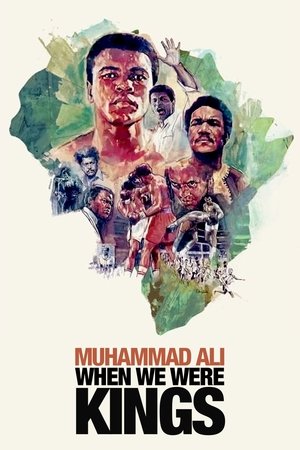
It's 1974. Muhammad Ali is 32 and thought by many to be past his prime. George Foreman is ten years younger and the heavyweight champion of the world. Promoter Don King wants to make a name for himself and offers both fighters five million dollars apiece to fight one another, and when they accept, King has only to come up with the money. He finds a willing backer in Mobutu Sese Suko, the dictator of Zaire, and the "Rumble in the Jungle" is set, including a musical festival featuring some of America's top black performers, like James Brown and B.B. King.
Silent adventure film
A humorous documentary about a historic hunt in 1929 through the African savannah and Indian jungle with lots of animal footage.
Between 1933 and 1935, the painter Wilhelm Eggert and his wife Dora Kuster traveled the African continent. Their expedition took them from Mediterranean Algiers through the Sahara and parts of the African west coast to the Congo and Kenya. Not only did the couple explore vast stretches of land that were almost completely unknown, at least to private travelers at the time, they also captured this journey on film. A screenable documentary film was compiled from the original 12,000m of film material. In cinemas and film clubs, European audiences were presented with a film that was evidently able to satisfy an interest in foreign, 'wild' cultures and exotic landscapes, albeit one that was always Eurocentric. The spectacular shots of African lifestyles and nature, which in many respects were new to European viewers who were almost completely unfamiliar with Africa, were praised and appreciated precisely because of their supposed authenticity.
L'Afrique rêvée Senegal
Hans Schomburgk reflects on his life as a researcher. He recounts experiences, adventures, and insights he has gathered over the course of 60 years between Cape Town and Congo. The film shows the changes that Africa has undergone in terms of nature and culture during this period, comparing yesterday and today.
Sexual decisions have deadly consequences. Can a small group of college students from Botswana challenge conventional wisdom about AIDS in Africa to save their generation? "The Road We Know" explores the impact of HIV/AIDS in Botswana through the efforts of these young adults who boldly advocate for behavior change to save lives. Facing cultural taboos and difficult travel, this small group sets out across the nation for five weeks with three tents, one car, and a radical solution to save lives.
In this comedic travelogue movie, filmmaker Alex Suszko ventures to the country of Mauritius where he attempts to understand the cultural differences as a lower-middle class American abroad.
Drawing from never-before-seen footage that has been tucked away in the National Geographic archives, director Brett Morgen tells the story of Jane Goodall, a woman whose chimpanzee research revolutionized our understanding of the natural world.
Kids from Brooklyn, NY housing projects try to change the world when they are paired with Sierra Leonean pen pals orphaned by a civil war.
Shot in New York, Cape Town, St Helena and the Atlantic Ocean, Sathima's Windsong, is a lyrical portrait of South African jazz singer, Sathima Bea Benjamin. In her Chelsea Hotel apartment, home for over thirty years, she patches together her journeys, from apartheid's 'pattern of brokenness', to a chance meeting and recording with Duke Ellington in Paris, to making a life in New York. The narrative of her journeys are inter-woven with her music and the musings of folks who know her work. Like her haunting song, Windsong, the film is a meditation on displacement, exile and belonging.
Introducing a generation of young Africans determined to be the first free of AIDS.
"Africa Light" - as white local citizens call Namibia. The name suggests romance, the beauty of nature and promises a life without any problems in a country where the difference between rich and poor could hardly be greater. Namibia does not give that impression of it. If you look at its surface it seems like Africa in its most innocent and civilized form. It is a country that is so inviting to dream by its spectacular landscape, stunning scenery and fascinating wildlife. It has a very strong tourism structure and the government gets a lot of money with its magical attraction. But despite its grandiose splendor it is an endless gray zone as well. It oscillates between tradition and modernity, between the cattle in the country and the slums in the city. It shuttles from colonial times, land property reform to minimum wage for everyone. It fluctuates between socialism and cold calculated market economy.
A musical trip through southern Africa to the tunes of the post-apartheid generation. Kwaito music originated in the 1950's in the dusty streets of South Africa's townships such as Sophiatown, Pimville and subsequently in Soweto. It is inseparable from the Pantsuela culture of the rebellious youth gangs during the Apartheid regime. Since there was no money for musical instruments or for extravagant costumes, they concentrated on their dancing and singing skills and, turning the streets into their stage. Currently almost fifty years later - Kwaito culture is experiencing a renaissance in a manner completely inconceivable in those days.
This documentary of repressive political realities in Cameroon begins with the 1990 publication of an open letter to President Biya calling for a national conference - and the immediate arrest of the letter's author and publisher. The narration then examines the nation's colonial history, beginning with the first German missionary in 1901, the establishment of schools, French occupation following World War I, the paucity of books written by and published by Cameroonians, and the repression of the CPU, a leftist organization of the 1950s and 1960s. Cameroon and its people are the lark, its feathers plucked first by colonialism and then by native strongmen: 'Alouette, je te plumerai.'