Set at the end of the Sengoku period to early Edo period, "Sanada Ten Braves" follows 10 members of a ninja group who all serve under samurai warrior Yukimura Sanada.
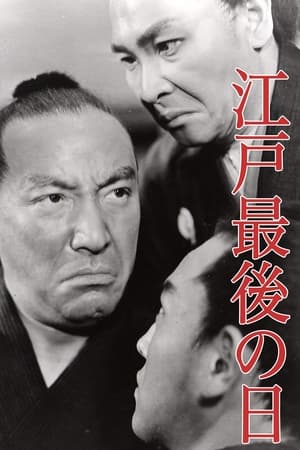
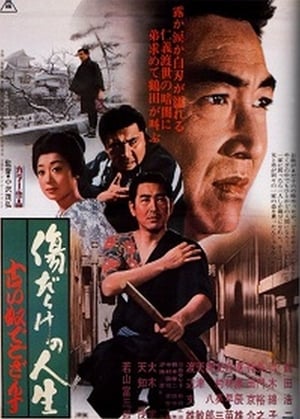
The Man's Crest: I Shall Kill
In a world where vendettas are officially sanctioned, the people sometimes needed help in carrying out their vengeance. Sanada Hiroyuki stars as Sukeroku the Helper, a ‘cool and rambling yakuza’ that has made a business out of helping victims carry out their revenge. When he returns to his hometown to pay a visit to his mother’s grave he meets a deadly ronin who carries a secret which eventually leads him into a vendetta of his own.
It is the Taisho era in Japan. A man has quit the Yakuza after five years and returned to Shikoku in order to begin his life anew as a ferryman. His boss, however, became ill and the boat is taken due to unpaid debts to the local thugs. His new life has not begun well and he is determined to rebuild the shattered business. The Yakuza, however, have added the ferry business to the rest of their portfolio of local concerns.
Two lone wolf yakuza (Hideki Takahashi and Kunie Tanaka) rob a gambling den, then split up when pursued by the angry gang. They eventually meet again at Tanaka's mother's rural farmhouse. By then, one-eyed Kobayashi has wrangled his way into the scenario, intending to get a split of the proceeds (since he had helped them get away). Although there is some dissension amongst the three, they eventually close ranks to fend off their stubborn, relentless pursuers. Unhappily, Tanaka’s mother (Chieko Naniwa) is killed in the process. There are also love interests (Yoshiko Machida and Kayo Matsuo) and some humor along the way. An admirably different approach to the formulaic ninkyo yakuza programmer, filmed largely in sweltering summer countryside locations.
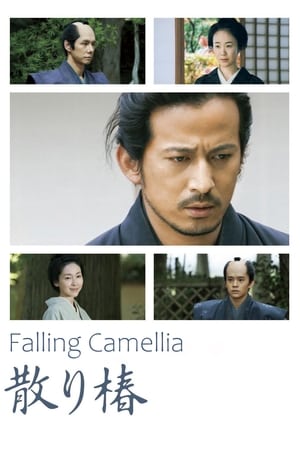
While her son, Kichi, is away at war, a woman and her daughter-in-law survive by killing samurai who stray into their swamp, then selling whatever valuables they find. Both are devastated when they learn that Kichi has died, but his wife soon begins an affair with a neighbor who survived the war, Hachi. The mother disapproves and, when she can't steal Hachi for herself, tries to scare her daughter-in-law with a mysterious mask from a dead samurai.
Returning to their lord's castle, samurai warriors Washizu and Miki are waylaid by a spirit who predicts their futures. When the first part of the spirit's prophecy comes true, Washizu's scheming wife, Asaji, presses him to speed up the rest of the spirit's prophecy by murdering his lord and usurping his place. Director Akira Kurosawa's resetting of William Shakespeare's "Macbeth" in feudal Japan is one of his most acclaimed films.
Aspiring to an easy job as personal physician to a wealthy family, Noboru Yasumoto is disappointed when his first post after medical school takes him to a small country clinic under the gruff doctor Red Beard. Yasumoto rebels in numerous ways, but Red Beard proves a wise and patient teacher. He gradually introduces his student to the unglamorous side of the profession, ultimately assigning him to care for a prostitute rescued from a local brothel.
After Shogo Ogami’s death in Hiroshima, Detective Shuichi Hioka successfully implemented Shogo Ogami’s plan, which was to control the yakuza to prevent further gang wars and save innocent people from getting harmed. Shuichi Hioka manages the criminal organizations, but, due to one evil person who gets released from prison, the situation drastically changes.
Sen no Rikyu (Ebizo Ichikawa) is the son of a fish shop owner. Sen no Rikyu then studies tea and eventually becomes one of the primary influences upon the Japanese tea ceremony. With his elegant esthetics, Sen no Rikyu is favored by the most powerful man in Japan Toyotomi Hideyoshi (Nao Omori) and becomes one of his closest advisors. Due to conflicts, Toyotomi Hideyoshi then orders Sen no Rikyu to commit seppuku (suicide). Director Mitsutoshi Tanaka's adaptation of Kenichi Yamamoto's award-winning novel of the same name received the Best Artistic Contribution Award at the 37th Montréal World Film Festival, the Best Director Award at the 2014 Osaka Cinema Festival, the 30th Fumiko Yamaji Cultural Award and the 37th Japan Academy Film Prize in nine categories, including Best Art Direction, Excellent Film and Excellent Actor.
Two New York cops get involved in a gang war between members of the Yakuza, the Japanese Mafia. They arrest one of their killers and are ordered to escort him back to Japan. However, in Japan he manages to escape, and as they try to track him down, they get deeper and deeper into the Japanese Mafia scene and they have to learn that they can only win by playing the game—the Japanese way.
A touching action film about a young yakuza who becomes infected with evil because he has the ability to easily decipher the mechanism of a safe. After being released from prison, he hopes to be rehabilitated thanks to the love of his family and risks his life to fight the evil that stands in his way.
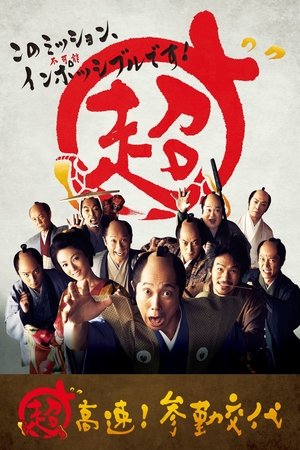
In the third entry into this mega-hit series, Isshin Tasuke, a spirited fishmonger in Edo who looks just like Shogun Iemitsu undergoes a series of unforeseen troubles in his newly wedded life.
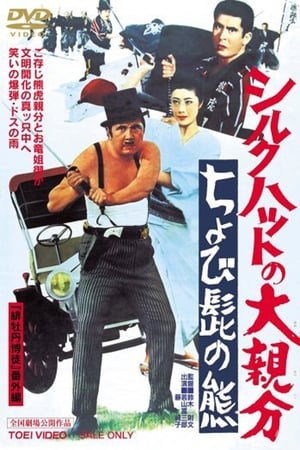
A Japanese Yakuza gangster's deadly existence in his homeland gets him exiled to Los Angeles, where he is taken in by his little brother and his brother's gang.
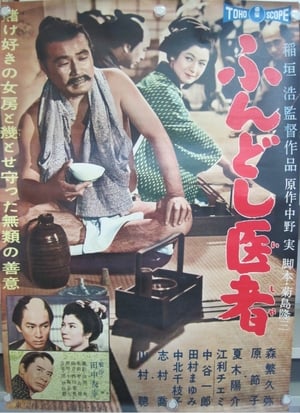
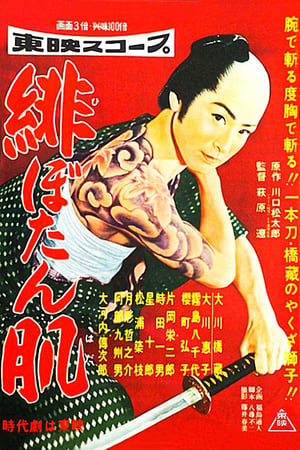
A romantic story about a knight who becomes involved in the murder of his brother's wife and ultimately confronts the local yakuza.
During the reign of Hidetada, the second shogun of the Tokugawa dynasty, the advisor Okubo Hikozaemon (Ganjiro Nakamura) entrusts the young Takechiyo (Hiroshi Kawaguchi) to the fishmonger Isshin Tasuke (Kazuo Hasegawa) to help him understand the world. Tasuke, who does not know that Takechiyo is the shogun's heir, trains him harshly. Tasuke's wife Naka (Michiko Ai) is concerned about his harsh teaching style, but Takechiyo gains strength day by day and adapts to his new life. Soon, Takechiyo begins secretly talking about love with a city girl named Otoyo (Hitomi Nozoe), but...
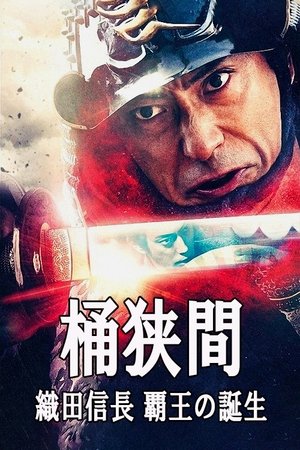
From birth Hideyoshi was a restless, defiant spirit--a child of the poorest of the poor. Cast out of his peasant cottage, he would live by his wits, driven by his burning ambition to become a samurai and to find a warlord worth pledging his sword to. This is the story of his rise, and the thunderous battle he pinned his hopes on. The challenge that had already ruined and bloodied the armies of higher-ranking samurai than Hiyoshi. The battle that brought him rank, fame and fortune and transformed him into Hashiba Hideyoshi, right-hand man to the ruthless Lord Oda Nobunaga, and would drive him on to conquer Japan.
Blind traveler Zatoichi is a master swordsman and a masseur with a fondness for gambling on dice games. When he arrives in a village torn apart by warring gangs, he sets out to protect the townspeople.
A samurai answers a village's request for protection after he falls on hard times. The town needs protection from bandits, so the samurai gathers six others to help him teach the people how to defend themselves, and the villagers provide the soldiers with food.
Dolls takes puppeteering as its overriding motif, which relates thematically to the action provided by the live characters. Chief among those tales is the story of Matsumoto and Sawako, a young couple whose relationship is about to be broken apart by the former's parents, who have insisted their son take part in an arranged marriage to his boss' daughter.