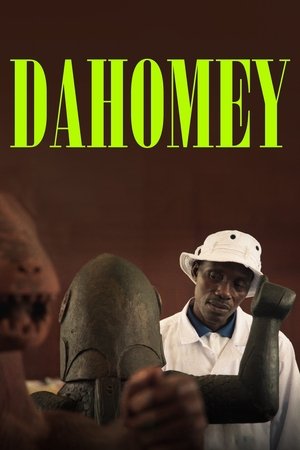
Thousands of royal artifacts of Dahomey, a West African kingdom, were taken by French colonists in the 19th century for collection and display in Paris. Centuries later, a fraction returned to their home in modern-day Benin. This dramatized documentary follows the journey of 26 of the treasures as told by cultural art historians, embattled university students, and one of the repatriated statues himself.
"A Walk to Beautiful" tells the story of five women in Ethiopia suffering from devastating childbirth injuries. Rejected by their husbands and ostracized by their communities, these women are left to spend the rest of their lives in loneliness and shame. The trials they endure and their attempts to rebuild their lives tell a universal story of hope, courage, and transformation.
This film tells the dramatic story of Megeti, a lone wolf who wanders across the highlands on a quest to find a new home after losing her pack and suddenly being left to fend for herself. For the young wolf to survive, it is vital that she finds a new family and this quest pushes her into foreign territory, occupied by cattle breeders and other wolves.
Running Movie is a documentary film that focuses on Israeli long-distance runner Ayele Seteng (a.k.a. Haile Satayin), the oldest marathon runner to compete in the 2008 Summer Olympics in Beijing, and his efforts to participate in the 2012 Summer Olympics in London. Satayin has been a long-distance runner since he was a young boy in Ethiopia, but he only became a marathon runner after immigrating to Israel in the early 1990s. Now, at the age of 55, he keeps on running. We follow him as he practices in Ethiopia, far from his wife and eight children, and witness his moments of victory and defeat, as he competes in marathons around the world—from Berlin, Germany, to Tiberias, Israel.
When a massive Chinese factory complex attempts a high-stakes expansion in rural Ethiopia, three women in search of prosperity have their faith in industrialization tested to the limit. Filmed over four years with singular access, Made in Ethiopia lifts the curtain on China’s historic but misunderstood impact on Africa, and explores contemporary Ethiopia at a moment of profound crisis. The film was awarded the Jury Special Mention at Tribeca Festival.
Jomo Kenyatta's death in 1978 brought to an end a political career that encompassed more than 50 years of African history. Kenyatta entered politics in the mid-1920s and then spent 17 years in exile in Europe. He returned to Kenya in 1946, and was elected president of the nationalist movement, the Kenya African Union. Arrested and imprisoned in 1952 for allegedly leading 'Mau Mau', he was released in 1961 and two years later became Kenya's first Prime Minister. In power, the man whom European settlers had once reviled as "the leader to darkness and death" was eulogized by them as a pillar of stability, while former allies challenged him by creating a left-leaning political opposition. Kenyatta weaves archival and contemporary images with interviews with friends and relatives, comrades and opponents, to create a biographical portrait of a key figure in 20th century politics, and a case study of what Frantz Fanon called the pitfalls of nationalism as a political force in Africa.
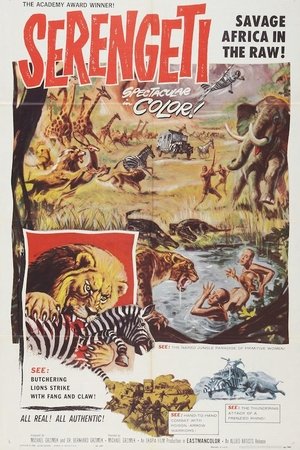
The film tells of the beginnings of the Serengeti National Park in Tanzania. At the end of the 1950s, the Tanzanian National Park Administration wanted to fence in the protected area around the Ngorongoro Crater. Bernhard and Michael Grzimek were invited by the national park administration in 1957 to get a precise picture of the animal migrations and to provide the national park administration with the values they needed for their project. Using a new counting method with two airplanes, the Grzimeks found out that the migration of the herds was different than assumed.
In Brussels, Belgium, the Royal Museum of Central Africa is undertaking a radical renovation, both physical and ethical, to show with sincerity, crudeness and open-mindedness the reality of the atrocities perpetrated against the inhabitants of the Belgian colonies in Africa, still haunted and traumatized by the ghost of King Leopold II of Belgium, a racist and genocidal tyrant.
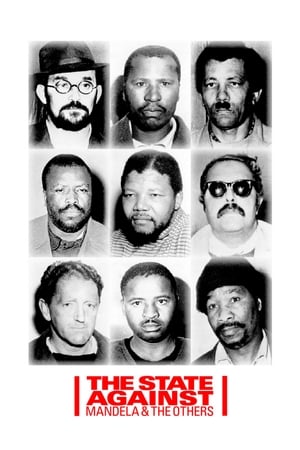
South Africa, July 11th, 1963. Several members of the African National Congress, an organization declared illegal, are arrested in Rivonia, a country house near Johannesburg. The detainees, along with Nelson Mandela, imprisoned since 1962, are charged with serious crimes for their radical activism against the apartheid regime.
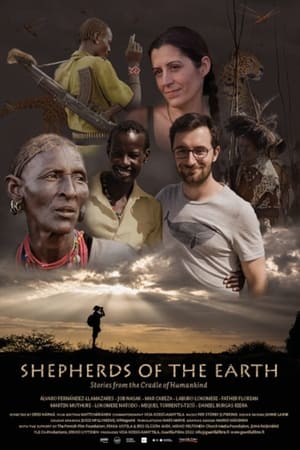
The region of Lake Turkana, located in Kenya and Ethiopia, is considered to be “the Cradle of Humankind”. Among other finds, primate fossils from millions of years ago have been discovered in the region. But what about the region’s modern inhabitants and their relationship to their environment? Iiris Härmä, whose previous work includes the award-winning Leaving Africa, had the chance of joining Helsinki University’s researchers, Álvaro Fernández-Llamazares and Mar Cabeza, on their pre-pandemic trip to study the Daasanach people’s relationship to their environment through traditional animal tales. The researchers hope that storytelling would help to bridge the gap between people’s everyday lives and conservation efforts.
An examination of how Africa's mythological stories have served as the basis for the world religions that came after, especially in Western civilization.
First aired on TV on the BBC Two on 29 September 1989, this second episode of the documentary series "Under African Skies", a grand project aimed at presenting the rich diversity of contemporary African music of those days and known for its unforgettable memento "A celebration of the new sounds of a continent. " traverses the nostalgic roots and the euphoric contours of Ethiopian music of the '80s.
75% of all enslaved Africans coming to America came in through Beaufort and the sea islands of South Carolina. This beautiful and picturesque tourist destination, by its unique history is the epicenter of the Gullah culture and the foundation of African American history; the result of the mingling of West African slaves with the plantation culture awaiting them in America.
A sentimental, delightful journey along the former railway route “Porečanka” that connected Trieste and Poreč from 1902 until 1935. Then it was dismantled and the tracks to be used in Mussolini’s war in Abyssinia but they sank in the Mediterranean – an ironic turn of history, an ideal subject for Karpo Godina, the master of tender wit.
Éthiopie, le mystère des mégalithes
The armies of Fascist Italy conquered Addis Ababa, capital of Abyssinia, in May 1936, thus culminating the African colonial adventure of the ruthless dictator Benito Mussolini, by then lord of Libya, Eritrea and Somalia; a bloody and tragic story told through the naive drawings of Pietro Dall'Igna, an Italian schoolboy born in 1925.
A short film documenting Ethiopian musician Hailu Mergia's life as the leader of the Walias Band in the 1970, his immigration to the United States and his subsequent re-emergence as a performer in 2014.
Sudan, Southern Kordofan, the Nuba Mountains in Africa. Scenes from the forgotten war that the fighters of the Nuba people have held since 2011 against the government of President Omar al-Bashir and the Sudanese army, which crudely show the hard daily life of Hannan, a brave woman fighting for the survival of her family; Jordania, a promising student; Mosquito, a reckless journalist; and Al-Bagir, a rebel leader.
A celebration of the diversity of Ethiopia's culture and wildlife. It journeys from North to South - spanning mountains, rainforests and the hottest place on Earth. It documents Muslims mixing with Christians as they have for over a millennia and the 'honey people' of the forest, filmed here for the first time. Visually stunning and unsentimental, this is Ethiopia as you've never seen it before.
Dukas Dilemma