Poet John Betjeman is shown visiting locations including Vauxhall Park, Aldersgate Street station, Camden Town and Hatfield, where he recites a handful of his poems.
The short film Jamal (1981) by Ibrahim Shaddad is a report from the life of a camel, most of which plays out in a dreary, small room – a sesame mill.
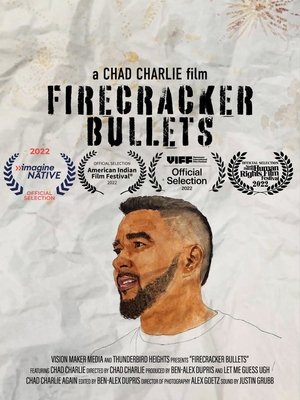
An examination of how the American flag can be reclaimed as a symbol of unity for all Americans, with a focus on the LGBTQ community.
This short explores the possibility that Louis XVII, son of King Louis XVI and Marie Antoinette, escaped death during the French Revolution and was raised by Indians in America.
Drawing on the collections of major Russian institutions, contributions from contemporary artists, curators and performers and personal testimony from the descendants of those involved, the film brings the artists of the Russian Avant-Garde to life. It tells the stories of artists like Chagall, Kandinsky and Malevich - pioneers who flourished in response to the challenge of building a new art for a new world, only to be broken by implacable authority after 15 short years and silenced by Stalin's Socialist Realism.
A look at the unusual process used in the making of the film Shortbus (2006) featuring interviews, behind the scenes footage and clips from the feature film. Director John Cameron Mitchell starts with the concept of using real sex in a film with a positive message. The cast of unknowns is selected from homemade audition tapes and then a callback audition workshop. More acting workshops are used to develop the characters and script. The project overcomes a number of obstacles and the rest of the film's development is followed up until its premiere at the Cannes Film Festival.
Filmmakers Laura Mulvey and Mark Lewis use rare archival footage and interviews with artists, art historians, and museum directors to examine the fate of Soviet-era monuments during successive political regimes, from the Russian Revolution through the collapse of communism. Mulvey and Lewis highlight both the social relevance of these relics and the cyclical nature of history. Broadcast on Channel Four as part of the 'Global Image' series (1992-1994).
Fidgeting fish, dancing on the train, big stages – we scroll through a phone gallery. How do you find your own identity between ever-changing trends? When do the borders between real and virtual life blur? A documentary about a self-made musician who wants to stand her ground in a digital world.
Distressing accounts and images of historical warfare and the ongoing issues of a population suffering from hunger fill this short documentary about the North Ethiopian region of Tigray.
John Milius narrates this featurette on the Clint Eastwood classic.
The Dardenne brothers discuss their early documentary films, their relationship with Armand Gatti (who inspired them to become filmmakers), the impact various political events had on their career and work and the shooting of When Leon M.s Boat Went Down the Meuse for the First Time.
In interviews, various actors and directors discuss their careers and their involvement in the making of what has come to be known as "cult" films. Included are such well-known genre figures as Russ Meyer, Curtis Harrington, Cameron Mitchell and James Karen.
Choosing the fate of a rock musician was similar to being a dissident. From the 60s, the Soviet Union tried to discourage and restrict the expansion of rock music by any means. They called it the “rotten fruit of degraded capitalism, demoralizing the minds of Soviet youth”. Despite that, rock music broke the wall – made a hole in the Iron Curtain – and gained the hearts and minds of tens of thousands of young people.Rock musicians were on the frontline of the rebellion against the Soviet regime. Despite censorship, they managed to deliver, in a hidden, roundabout way through lyrics and music, the spirit of nonconformity and freedom of choice to their audience. A film about Latvian and Soviet rock pioneers, their lives and destinies.
The Making of feature for the George Lucas movie 'THX 1138'.
Featuring Interviews with Noel Cunningham, Sean S. Cunningham, Kane Hodder and Todd Farmer. Discussions include writing and pre-production, the influence of Scream's success on the film, early concepts for the film, settling on outer space, plot and setting details, shooting 3-perf film, visual effects, ditched concepts, über Jason, audience reaction, and more.
Almost 50 years after the film’s release, all the Overlook Hotel’s sets are thought to have been destroyed, but one last filming site remains.
A doc about the Cree and Chippewa people of northern Manitoba. Made in the mid 20th century, it is dated in tone, but provides insight into the vital relationship that existed between First Nations and the caribou herds that sustained them.
Sir Ian McKellen and Richard Loncraine talking about making the film.
Short film made on the production of HOWL OF THE DEVIL.
The long lasting Palestinian-Israeli conflict has created appaling phenomenons that have horrified the Israeli society. the "politically conscience-refusals" or those individual soldiers refusing to fight in the occupied territories, are one of those phenomenons. In opposition to them stand a thousand immigrants from the former Soviet Union, ex-military men from the Red Army, who yearn to be recruited into the IDF and fight for Israel, but who are denied the right to serve in the army. Through the stories of Oleg and Alex, immigrants and the battalion's charismatic commanders, the story of the Russkii Battalion is told. It is a story of contrasts between the hardships of the daily struggles they face as new immigrants against the pride and the sense of belonging they find in the battalion. The Russkii Battalion is a film about a militaristic social bubble, in a country that is in constant war.