Wildlife biologist Karsten Heuer and his wife, environmentalist Leanne Allison follow a herd of 120,000 caribou on foot across 1500 km of Arctic tundra, hoping to raise awareness of the threats to the caribou's survival. Along this journey, they brave torrid conditions, dangerous wildlife and treacherous terrain all in the hopes of learning the truth about this epic migration.
An educational film about the life cycles of various types of pond life.
Valhalla
Os Xetá da Serra do Dourado
The film follows Tarcísio Amaro, a retired miner living in the vicinity of Serra da Estrela, interweaving thoughts on the past and the present, and looking at the decline of rural life in the deserted Portuguese hinterland.
Samirah, a grandmother who lived three parts of her life, starting with her daughter who married and then converted, the death of her husband and ending with loneliness.
Plant Based News end of year vegan documentary.
AMIN portrays Qashqai musician Amin Aghaie, a young modern nomad and his family who despite facing steep financial, cultural and political obstacles are dedicated to their art and culture. Amin travels to remote towns and villages to record the music of the surviving masters whose numbers decline each year. His nomadic family are selling their meager belongings to help support their son's education in performance and ethnomusicology at Tchaikovsky's Conservatory in Kyiv, Ukraine, but it is not enough. Amin, desperate to finish his academic education, sells his violins one at a time just to pay for his tuition.
TWO OR THREE THINGS I KNOW ABOUT EDWARD HOPPER is an immersive experience in 3D, that takes its viewers on a journey into the world of Hopper, sharpening their senses for some aspects of his unique work.
A couple of artists travels through the Mexico desert to present their puppet show.
Le Goût de la savane : Herbivores et carnivores, festins croisés
After consolidating itself as a tourist destination in the mid-1960s, this small coastal village has become the dormitory town for the workers of a Nuclear Power Plant. With the liberal promise of prosperity and socioeconomic wellfare, many workers left their homes to move to the small city and started working at the new Nuclear Power Plant. The collective unrest and the silence, cut off by the great gusts of wind, articulate the landscape of the village that is now under the aid of the Nuclear Power Plant.
Footage filmed in Spain, subjected a new visual effects process. Deslaw devoted himself to the discovery of a new machine that enabled film to be developed while using a new method called solarisation.
The two brothers Jean and Pierre Ravier have opened almost all the "classic" (difficult) routes in climbing and mountaineering in the Pyrenees. Roped together at the waist using a few flat knots and little equipment, the two twin brothers achieved more than 200 firsts across the entire massif. A unique style and commitment, a state of mind made up of adventure, literature, inventiveness and friendship. Unclassifiable and outgoing, after 60 years of Pyrenees, their desire for the mountains is intact. When does a race start? How does the idea, the desire, come about? What sense does it make to only achieve firsts? And what is the role of the Pyrenees themselves in this reciprocal and endless game of attraction?
A provocative and poetic exploration of how the British people have seen their own land through more than a century of cinema. A hallucinated journey of immense beauty and brutality. A kaleidoscopic essay on how magic and madness have linked human beings to nature since the beginning of time.
A documentary about the life of wild animals.
In the daily struggle for survival, terrible thirst drives wildlife to water...even when the water is just inches away from the jaws of a crocodile. During one harsh season, a punishing drought draws some of Africa's most magnificent creatures to the shrinking pools of the Luvuvhu River. Its dwindling waters provide relief for baboons, impala, elephants, lions, water birds and bee-eaters - but also a refuge for scores of hungry crocodiles. Amidst the stunning scenes of nature at its harshest, strange things happen. A baby crocodile basks on top of a hippopotamus. Baboons attack a crocodile that has taken a youngster from the troop. Crocodiles harass a heron and steal its hard-won catch. And hippos calmly wade into the middle of a crocodile feeding frenzy. But the power of nature and her relentless drought may prove greater than even that of the most fearsome beasts. This cruel season may turn out to be the LAST FEAST OF THE CROCODILES.
The last two surviving members of the Piripkura people, a nomadic tribe in the Mato Grosso region of Brazil, struggle to maintain their indigenous way of life amidst the region's massive deforestation. Living deep in the rainforest, Pakyî and Tamandua live off the land relying on a machete, an ax, and a torch lit in 1998.
In their spare time, after their studies or their work, children and adolescents between the ages of eight and sixteen meet at the School of Bullfighting in Madrid to learn the Art of Cúchares: Torear. In their stomachs there is no hunger as in the past, their dreams do not lie in having a farmhouse and being famous. Their only dreams are to be in front of a bull, animal with which death goes, fact of which they are fully aware, as their teachers continually remind them. These, retired bullfighters, some by age, others by force and all with their bodies full of scars produced by the horns of a bull. The nude bullfighting scene is fascinating without being exploitive, and it serves as an analogy for the vulnerability these young bullfighters have when in the ring with the bulls.
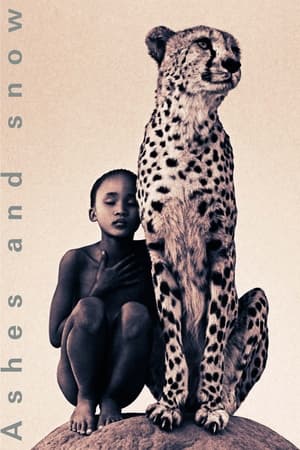
Ashes and Snow, a film by Gregory Colbert, uses both still and movie cameras to explore extraordinary interactions between humans and animals. The 60-minute feature is a poetic narrative rather than a documentary. It aims to lift the natural and artificial barriers between humans and other species, dissolving the distance that exists between them.