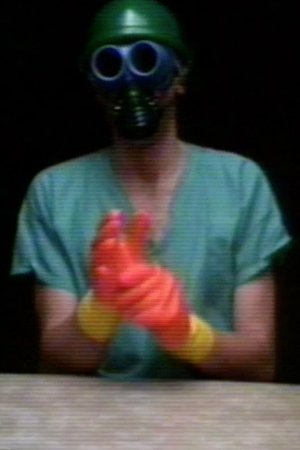
This fragmented body… usually manifests itself in dreams when the movement of the analysis encounters a certain level of aggressive disintegration in the individual.it then appears in the form of disjointed limbs, growing wings and taking up arms for intestinal persecutions.
An exiled magician finds an opportunity for revenge against his enemies muted when his daughter and the son of his chief enemy fall in love in this uniquely structured retelling of the 'The Tempest'.
In the deep of autumn, a woman faces fragments of memory and unease, unsure if she's mourning the past or herself.
A sitting man listens to his thoughts, but can't catch any of them.
Solitude d'adolescence
in my darkest moment, fetal and weeping, the moon tells me a secret, a confidant As full and bright as I am, this light is not my own and a million light reflections pass over me, the source is bright and endless. She resuscitates the hopeless. Without her, we are lifeless satellites drifting.
Distorted memories, hidden rituals. The journey of a soul returning to its essence through a silent funeral.
After his mother's death, a young man edits the family's home videos to bring back her image. As he delves into the occult he begins to reveal the paradoxical magic of memories and cinema.
Writes Ando, "Oh! My Mother was the first work I made using a newly bought 16mm camera I had purchased with the writer Shuji Terayama in Paris. This piece was selected for the Oberhausen International Film Festival. In 1969, there were, of course, no video cameras like ones we see now, and color TVs were only found at broadcast television studios. I had just been employed at the TBS (Tokyo Broadcasting System), and I often snuck into the studios after hours to experiment with the equipment. Oh! My Mother was made using the feedback effect, which is produced by infinitely expanding the image by looping the video."
A dying man in his forties recalls his childhood, his mother, the war and personal moments that tell of and juxtapose pivotal moments in Soviet history with daily life.
Begotten is the creation myth brought to life, the story of no less than the violent death of God and the (re)birth of nature on a barren earth.
Landscapes revealed themselves through text, paper through movement, while the sun gave them relief. This is a journey across found words, enunciating a discovery, their textures constructing the sea and the waves, in a travelogue from the first exploration, the first step over the sand towards the shore. “Amor” writes this joy to underline it in its time, captured on paper. This film has been composed through a scanner, and it’s the first chapter of the “Reír al Sol” series.
Cartas de Arapuca
A ritual of grids, reflections and chasms; a complete state of entropy; a space that devours itself; a vertigo that destroys the gravity of the Earth; a trap that captures us inside the voids of the screen of light: «That blank arena wherein converge at once the hundred spaces» (Hollis Frampton).
As an ode to her grandfather, choreographer Daria Titova returns to the rural land he cherished in Sokur, Russia. Through movement and evocative visual language, she explores memory, family heritage, and a sense of belonging — inviting the audience to reconnect with their own roots.
An intimate stream of memories reaching out across time and space, taking on a uniquely experimental form that cuts the viewer adrift in a weave of old footage rising to the surface of consciousness like a dream.
A bleak, cryptic vision of life in contemporary Iran that eschews overt social commentary in favour of a very personal vision of stifled lives. Directed remotely by Rashidi from Ireland over Skype, the making of this unique film reflects the alienation it so compellingly portrays.
Surreal and mysterious, in equal parts absurd and intense, Mutual Admiration Society is part of the noted multi-film collaboration between actor James Devereaux and experimental filmmaker Rouzbeh Rashidi. Based entirely around a silent, tour-de-force one-man performance by Devereaux as a man who appears to be haunting and threatening himself, Mutual Admiration Society uses startling visual techniques and editing rhythms to create a claustrophobic hall of mirrors with Devereaux’s tormented protagonist at its centre.
“Persistencies of Sadness & Still Days”, is a four hour feature film by Maximilian Le Cain and Rouzbeh Rashidi. Structured in two sections or ‘takes’ of two hours each, this dream-like, experimental project offers two complementary explorations of cinematic form that skirt around possible narratives, ducking through a series of fluctuating audio-visual categories and intensities.
Little is known of Jean Speck (1860-1933) beyond the fact that he opened Zurich’s first cinema. Rouzbeh Rashidi and Jann Clavadetscher consider the flittering black and white ghosts and shadows that he left in his wake in their phantasmagorical experimental feature film. This journey through a cinematic night probes the very essence of the cinematic image.