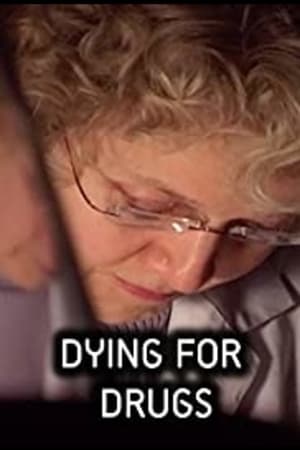
Every year many new drugs come to market which offer hope to the sick and dying. This documentary film investigates just how far drug companies are prepared to go to get their drugs approved, what they will do to make sure they get the prices they want, and what happens when profits are put before people.
A documentary chronicling the adolescent years of Elie Wiesel and the history of his sufferings. Eliezer was fifteen when Fascism brutally altered his life forever. Fifty years later, he returns to Sighetu Marmatiei, the town where he was born, to walk the painful road of remembrance - but is it possible to speak of the unspeakable? Or does Auschwitz lie beyond the capacity of any human language - the place where words and stories run out?
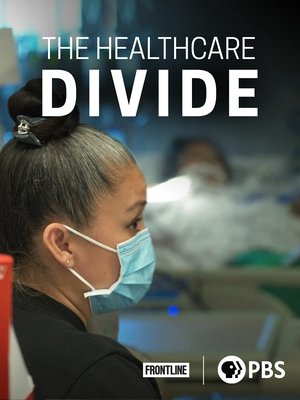
FRONTLINE and NPR investigate the growing inequities in American healthcare exposed by COVID-19. The Healthcare Divide examines how pressure to increase profits and uneven government support are widening the divide between rich and poor hospitals, endangering care for low-income populations.
The story of the first Hungarian NBA player.
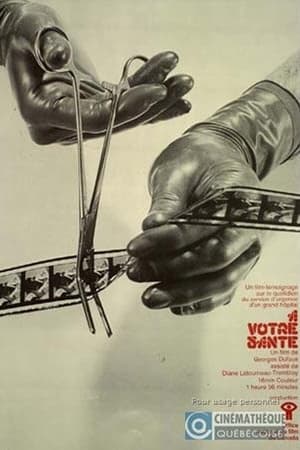
Focuses on the state of the Quebec health system in the early 1970s. This film reveals the harsh reality of emergency rooms. There, medical teams, facing a serious shortage of staff, are facing a real invasion of patients. The technical means, often insufficient, make the task even more difficult.
The Aszú of Tokaj, a sweet wine of Hungary, was once cherished by King Louis XIV, Queen Victoria, Peter the Great, Goethe and Beethoven. But the world has since forgotten the noble Aszú, two world wars, the enforced collectivisation of the Communist regime and the deadly filoxera epidemic had all wreaked havoc on the vines. Three dedicated heroes, one passion: to create The Great Wine that can return to the most refined tables of the world.
For almost three years, nature filmmaker and ecologist David Cebulla has been observing wild Common hamsters. He not only tries to learn more about the species, but also documents why hamsters are globally threatened with extinction. David travels from the western border of the distribution area in France via Germany, Poland, Austria and Hungary to the eastern border of the distribution area in the Kazakh steppe. In the process, he manages to capture some unique and fantastic images. But during the project, it becomes increasingly difficult to find animals living in the wild.
In a world where 92 million Americans rely on statins as their lifeline, one man's unexpected health journey uncovers a medical mystery that could upend everything we think we know about heart health, cholesterol, and the ketogenic diet.
The Angelmakers is a 2005 documentary that provides insight into the epidemic of arsenic murders by women, known as The Angel Makers of Nagyrév, in 1929. The film is shot on location in the rural Hungarian village of Nagyrév, alternating between portraits of the surrounding landscape and first-hand narrations by the elderly inhabitants.
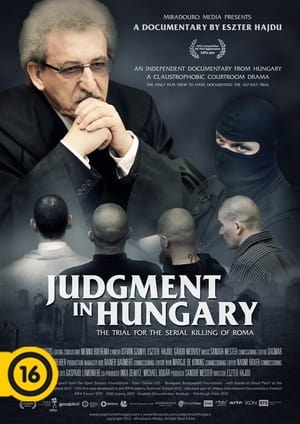
Hungary was the site of serial murders on ethnic basis. Over the course of one year, the murderers killed and seriously injured Roma children and adults. The state charged 4 men with committing the crime with racial motivation. This historical trial started March, 2011, and ended August, 2013 in Budapest. The 167 days of hearings was only documented continuously by our crew. We had exclusive permission to use multiple cameras in the court-room. The film is a classical chamber-drama, taking place in a small, claustrophobic court room, in the middle of Europe. What will be the outcome of the marathon, 3 year-long trial?
It is the year 2546. Corporations rule the world, and an agent is on a secret mission to explore the untold stories of the past. His journey leads him into a secret virtual reality where one corporation has recreated the 1980s, an era that witnessed the birth of video game development, an event in which a politically and economically restricted small European country, Hungary, had a significant role. He discovers a strange but exciting world, where computers were smuggled through the Iron Curtain and serious engineers started developing games. This small country was still under Soviet pressure when a group of people managed to set up one of the first game development studios in the world, and western computer stores started clearing room on their shelves for Hungarian products.
The documentary that answers the question: is having month-long double paid vacations, no fear of homelessness, and universal health care the nightmare we've been warned about? The answer may surprise you.
Captured by the Red Army during World War II, Hungarian soldier András Toma was admitted to a Soviet psychiatric hospital. After disappearing from prisoner-of-war records, he was presumed dead in Hungary. Because his name was incorrectly recorded in medical documents and he spoke only Hungarian—mistaken by staff for incoherent speech—Toma spent decades misunderstood and isolated in the institution. Fifty-three years later, a visiting Slovak doctor recognised his language, triggering an investigation by Hungarian authorities. Toma was repatriated in 2000, believed to be the last prisoner of war from World War II to return home.
Poradila teta Beta
The title of the film is the date on which the editorial staff of Hungary’s largest opposition newspaper, Népszabadság, was fired. The filmmaker tore up copies of that day’s issue, layered them, and then turned them into an urgent collage expressing his yearning for the free expression of opposition viewpoints. The visible edges of the film emphasize the impossibility of presenting information in a complete context.
This Traveltalk series short visits the rural agricultural areas of Hungary.
What causes women all over the world to be told that they are hysteric or overreacting when seeking for medical help? Why are so many women diagnosed: Overdramatic? The female body has only recently started to be researched, which lead to a big lack of information on women's physical and mental health. This documentary relies on the knowledge of Dorte Rytter (researcher) and Stine Sophie (medicine student) to tell us how this issue affects women everyday and in what ways.
How a patient-centered philosophy can improve outcomes and enrich the lives of patients.
Follows the birth of a political and social movement from the inside, with Péter Magyar as its face. For more than a year, the filmmakers accompanied him on country tours, campaign sites, and background conversations, as well as being present in those quiet, intimate moments – many times in his own home – that have remained hidden from the public until now.
Each year in the United States, unparalleled innovations in medical diagnostics, treatment, and technology hit the market. But when the same devices designed to save patients end up harming them, who is accountable?