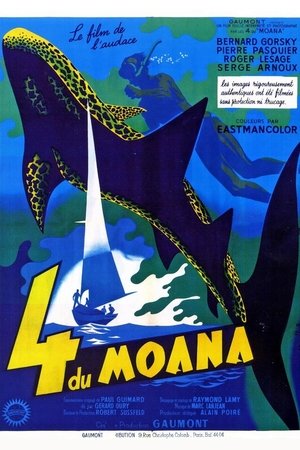
Documentary focused on underwater shootings and hawaiian dances.
From 2019 Maui Film Festival This powerful documentary celebrates the historic Malama Honua Worldwide Voyage that connected countless individuals and communities from around the globe. A voyage that also represented the fulfillment of the vision of Nainoa Thompson and his contemporaries, the passing of the mantle to the next generation of kanaka maoli who will retain the skills of their ancestors and perpetuate this tradition for generations to come so the legacy of Hokulea can last for 1,000 generations.
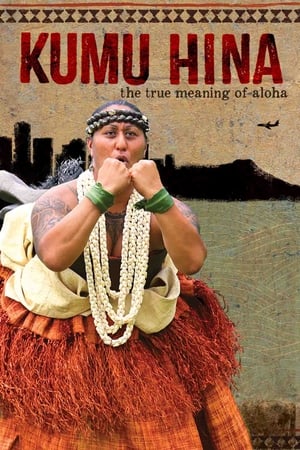
A powerful film about the struggle to maintain Pacific Islander culture and values within the Westernized society of modern day Hawaiʻi. It is told through the lens of an extraordinary Native Hawaiian who is both a proud and confident māhū, or transgender woman, and an honored and respected kumu, or teacher, cultural practitioner, and community leader.
A short documentary that talks about how ocean conservation managers from around the world come together to collaborate on ways to save our oceans. It also discusses the importance of including indigenous and traditional knowledge to start solving challenges. We produced this in collaboration with Big Ocean Managers and Conservation International.
A documentary surf film that explores the lives of female surfers who have chosen to paddle head first into the male dominated sport of surfing and along the way found a place of their own.
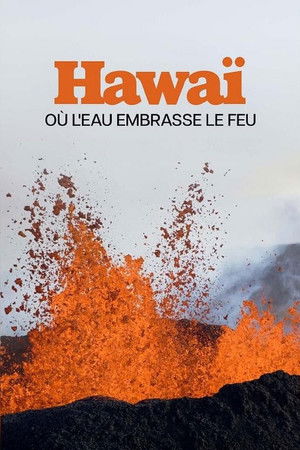
Hawaii, with its tropical rainforests and diverse coral reef is a spectacular natural paradise for travellers, surfers and all fans of breathtaking sandy beaches and lush green mountains. But life on the American island chain also has a dangerous side: permanently active volcanoes, lava caves, and even burning lava pours into the sea! Here you can see black smoke rise up, spray the red-hot magma into the sky and feel how the earth trembles. Located on the Pacific plate is unusual for volcanoes, Hawaii is thus researchers a fascinating destination. At Kilauea, the most active volcano on earth, the inhabitants have to live in constant danger found over the centuries cope. Lava Land - Glowing Hawaii takes you into the world of researchers and residents on the Big Iceland, the largest island of Hawaii.
As a rising star in the field of abstract mathematics, Michael discovered that he could see beauty and pattern where others could not. But his path was not to be inside academia, or even inside society. He went on a grand adventure to unify his Buddhism with his ability to see an expanded view of reality. He created beauty in a place where nobody else would, and made his friends amongst dolphins.
What if you are made to feel ashamed when you speak your "mother tongue" or ridiculed because of your accent? "Pidgin: The Voice of Hawai'i" addresses these questions through its lively examination of Pidgin - the language spoken by over half of Hawai'i's people.
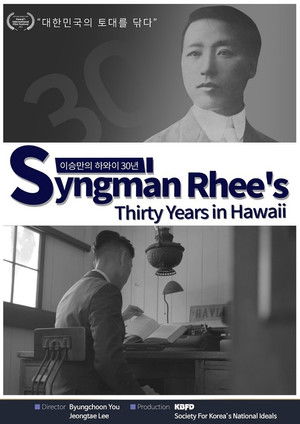
Syngman Rhee, the founding president of the Republic of Korea spent a total of thirty years in Hawaii. The first 25 years occurred before he was elected the founding president and five years were after he resigned from the presidency. What is the significance of 30 years in one’s life span?
This film portrays Hawaii as a multifaceted American territory, far more than just a tourist destination with picturesque beaches and palm trees. It describes Hawaii as a group of volcanic islands in the Pacific, serving as a crucial crossroads for shipping and air travel between North America, Asia, and Australia. The film highlights Hawaii's fertile soil, conducive to agriculture, with major crops being sugar cane and pineapples, cultivated historically by a significant Asian workforce. Cities like Honolulu are presented as modern, diverse urban centers blending various cultures, including the native Hawaiian heritage. The film also notes Hawaii's strategic importance, with historical sites like Pearl Harbor, emphasizing its unique combination of cultural richness, economic vitality, and historical significance.
As if they were showing their film to a few friends in their home, the Johnsons describe their trip across the world, which begins in the South Pacific islands of Hawaii, Samoa, Australia, the Solomons (where they seek and find cannibals), and New Hebrides. Thence on to Africa via the Indian Ocean, Suez Canal, North Africa, and the Nile River to lion country in Tanganyika. (They are briefly joined in Khartum by George Eastman and Dr. Al Kayser.) Taking a safari in the Congo, the Johnsons see animals and pygmies, and travel back to Uganda, British East Africa, and Kenya.
A homeless man with schizophrenia slowly embraces antipsychotic medication under Hawaii's only willing psychiatrist and a court mandate, while a man in recovery offers rare insight into mental illness as he fights to reclaim stability.
Documenting the Kapu Aloha movement, as they take a stand to defend Mauna Kea in the wake of the Thirty Meter Telescope protests.
Generations of vibrant racing communities have flourished in Hawai'i since the arrival of the first automobiles and motorcycles at the turn of the 20th century. Follow Mark Hanson, Psychology Professor and lifelong island "gearhead," as he explores the history, people and passion of the uniquely gracious speed culture that has been evolving in Hawai‘i for over a century.
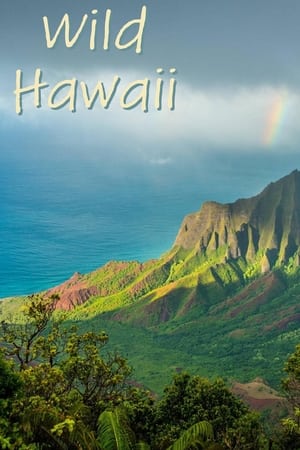
Witness the unique marine life at the depths of the Pacific Ocean, and journey to shores of the archipelago in this one-hour documentary, which reveals a new facet of this tropical location.
Nihi is a film biography of Titus Kinimaka, one of the last remaining professional big-wave riders of pure Hawaiian descent. As a boy, he won surf contests against those twice his age; by his teens, he was recognized as one of the best surfers to have ever hit the waves. In 1996 at age 41, Titus was named Waterman of the Year by the Hawaiian Lifeguard Association for outstanding rescues as a lifeguard. He has spent over twenty years spreading aloha spirit, traveling the world as an ambassador for surfing and Hawaiian culture
A passionate ukulele player, cartoonist Joann Sfar ("The Rabbi's Cat") flies to Hawaii to explore the history of the little instrument, as well as the culture that surrounds it. For the pocket guitar, imported in 1879 by the Portuguese from Madeira who had come to harvest sugar cane, is the vector of a philosophy specific to the archipelago: the spirit of "Aloha", which condenses hospitality, joy, love and respect. With brushes in hand, Joann Sfar set out in search of the ideal instrument, meeting craftsmen, musicians, dancers and guardians of Hawaiian culture.
Honeymooners, tourists and surfers flock to Hawaiian shores every year, but life wasn't always serene in the tropical paradise. In the 1890s, the islands -- ruled by Queen Liliuokalani -- faced financial ruin thanks to colonial business interests and the U.S. government, which rescinded Hawaii's preferential sugar market position. "The American Experience" recounts the events and intrigues that resulted in the monarch's ouster ... at gunpoint.
An original short film narrated by Academy Award-nominee Sigourney Weaver featuring excerpts from Georgia O’Keeffe’s personal letters to her husband written during her journey to and around the Hawaiian Islands.
Golden Globe - Hawaii