After two intifadas and the construction of the Israeli wall, the only Palestinian zoo is still there and is now seeking for international recognition and to replace their lost giraffes.
A 1962 West German documentary film directed by Hermann Leitner and Rudolf Nussgruber.
Original 35mm nitrate negative film shot by naturalist David Fleay at Beaumaris Zoo, Hobart in December 1933. Colorized by Samuel François-Steininger at the Paris-based, Composite Films, from a 4K scan of the negative by the National Film and Sound Archive Australia.
The documentary investigates the challenges and practices of animal welfare in the Rio de Janeiro Biopark, addressing how different species are cared for outside their natural habitats. The production reveals the work of specialized Biologists and Veterinarians, highlighting essential aspects such as the population plan and environmental enrichment.
A woman narrates the thoughts of a world traveler, meditations on time and memory expressed in words and images from places as far-flung as Japan, Guinea-Bissau, Iceland, and San Francisco.
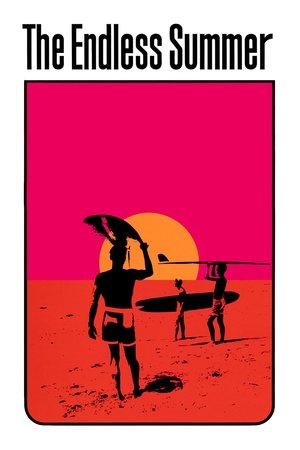
Bruce Brown's The Endless Summer is one of the first and most influential surf movies of all time. The film documents American surfers Mike Hynson and Robert August as they travel the world during California’s winter (which, back in 1965 was off-season for surfing) in search of the perfect wave and ultimately, an endless summer.
A documentary about Cairo Jazz Festival's Amr Salah and his struggle every year to bring people and arts together in a country where 70% of people are under 30 and the Officials do not care about culture too much.
When the Cows Come Home introduces audiences to Tilly and Maggie, a pair of cows that musician, journalist, artist and cow whisperer, Andrew Johnstone has befriended and subsequently saved from slaughter. The garrulous herdsman is enthusiastic to expound his views on animal husbandry, bovine communication and the vagaries of life in general, before the film walks us back through the events that have shaped the singular farmer-philosopher. From personal family tragedy to warring with Catholic school authorities, innovating in Hamilton’s nascent music scene to creating guerrilla art installations; Johnstone’s life has had a truly idiosyncratic trajectory. Mental health issues may have seen him retreat to life on the farm, but the film makes clear its subject’s restless inquisitiveness is far from being put out to pasture.
Beginning with a private, rolling party on board one of Hong Kong's iconic streetcars, travel journalist Rudy Maxa and former chef and now Washington, D.C. restaurateur Daisuke Utagawa lead viewers through on of the worlds most exciting cities. Hong Kong takes cuisine from around the world and makes it its own. Explore the cuisine as well as the mostly unknown, lush side of Hong Kong where hiking trails and beaches rule. Bangkok - In a city where the weather is always hot, it is natural that residents spend so much time eating outside. Street food rules the capital of Thailand, and no visitor should miss the opportunity to follow local custom. Utagawa and Maxa taste their way through the city while exploring the Klongs (canals) and temples that make Bangkok a visitors paradise.
A 19-year-old high school graduate travels through Australia as a backpacker and accompanies his adventure with a camera.
Proximity Designs is a sustainable development group that works to improve the lives of the rural poor in Myanmar. Proximity Designs boosts agricultural productivity by designing, producing, and distributing affordable products for people living on less than $2 a day.
This Traveltalk series short visits an array of locations associated with England's heritage. Included are Runnymede, Windsor, Ascot, Lincoln, Wells, Salisbury, Glastonbury, and the ancient Stonehenge site.
This Traveltalk series short gives a glimpse into South African history, albeit from a white person's viewpoint. South Africa is a union of four separate states: the Transvaal, the Orange Free State, Natal, and the Cape Provence.
This travelogue begins with the vast agricultural wealth of the country, whose farmers can produce four times the amount required to feed the country's population. As such, the export of these agricultural products is a vital part of the country's economy. This agricultural tradition extends to its food consumption, as Denmark's vast array of open faced sandwiches is world renowned. It also extends to flower production and the Dane's love of flowers, which are sold in public markets. Denmark has a strong social support system, as witnessed by the free and mandatory public schooling, free medical services for expectant mothers and children, the provision of cooperative housing and housing for seniors, and the provision of old age pensions without premiums.
This Traveltalk series short looks at four of Spain's most famous cities, Granada, Seville, Toledo, and Madrid, with an emphasis on the Moors and their influence on the country.
This Traveltalk series short takes a trip on the Rhine river, with stops at Cologne, Bonn, and Koblenz.
Rudy can't get enough of the sheer vitality of Tokyo. Exciting, edgy, and full of life, Tokyo is shopping madness by day and a carnival at night. Join the throngs at one of the world's most exciting street intersections to witness its blazing neon and JumboTron shows. Greet the new day at the Tsukiji fish market, where a staggering 2,000 tons of seafood pass through each day. Get caught up in cherry blossom mania, visit distant neighborhoods via the subway, and wander the streets in search of new restaurants, a Tokyo obsession!
This Traveltalk series short highlights rural areas of England. We stop at the village of Bradford-on-Avon, with its thatched roofs, also Stoke Poges, the burial place of British poet Thomas Gray.
This Traveltalk series short takes us to Edinburgh, Scotland. We learn the importance of religion, science and the arts here and see various historic sites including Edinburgh Castle.
The Andes Mountains travel the western side of South America. Unlike many other mountain ranges of their altitude, the Andes do support human life on their high altitude slopes. Modern life is slowly making its way to the high altitude Andes, but the natives for the most part continue with the traditional ways of their ancestors, growing limited crops such as beans and potatoes - where the crop originated - raising sheep and pigs, and living in crude huts. The llama is the most useful of their work animals. The most conspicuous aspect of the native dress is their derby hats, the origins which are unknown. Further down the slopes, agriculture and ranching is more productive and is carried out by descendants of the Spanish settlers. There is a famous lake district in the Chilean part of the Andes, where resort hotels are located.